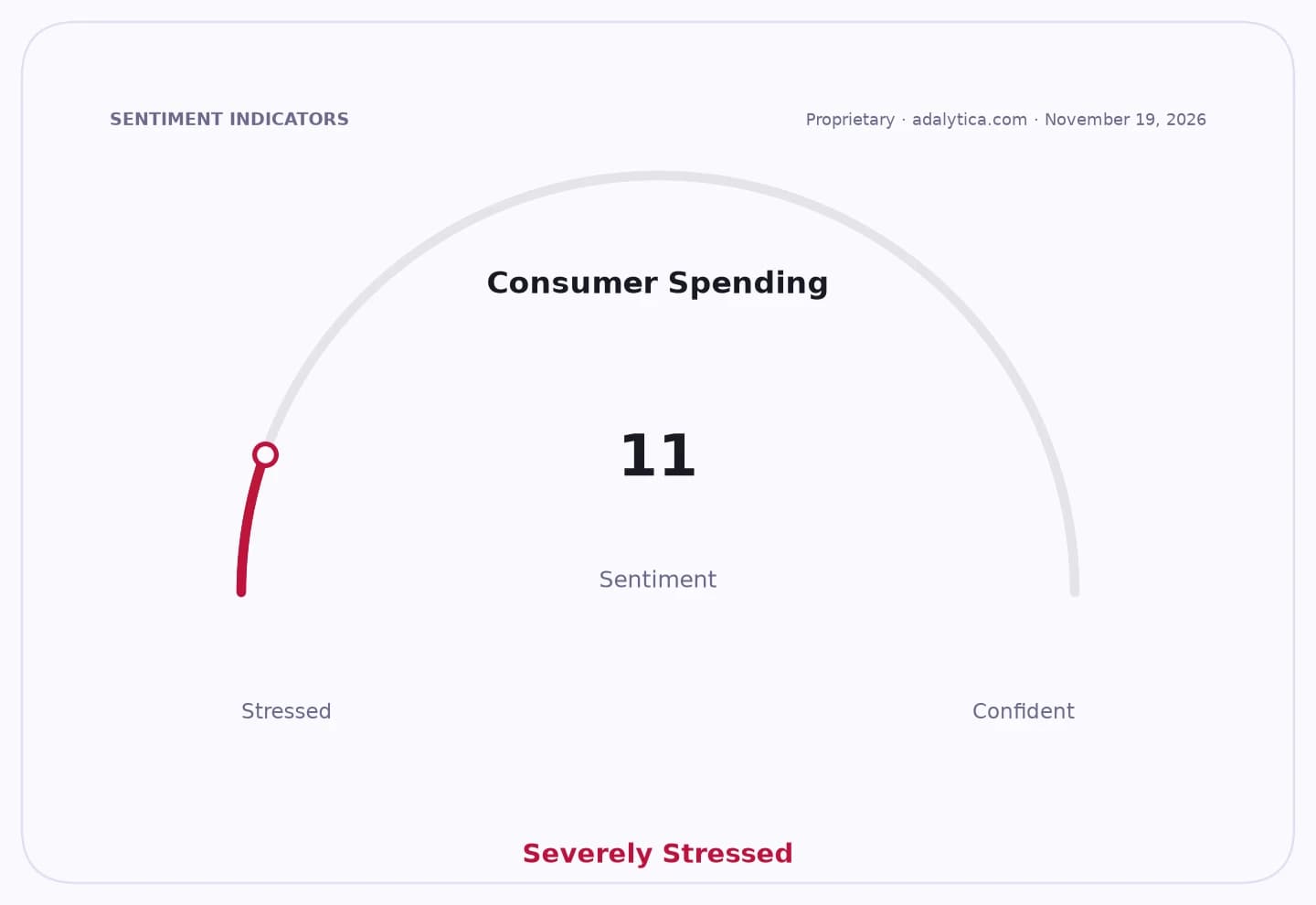
Utah households are pulling back on big-ticket purchases as higher living costs and elevated gasoline prices squeeze budgets, driving consumer sentiment to its lowest level since late 2022 and adding another warning sign for holiday demand.
Utah consumer sentiment falls on higher living costs
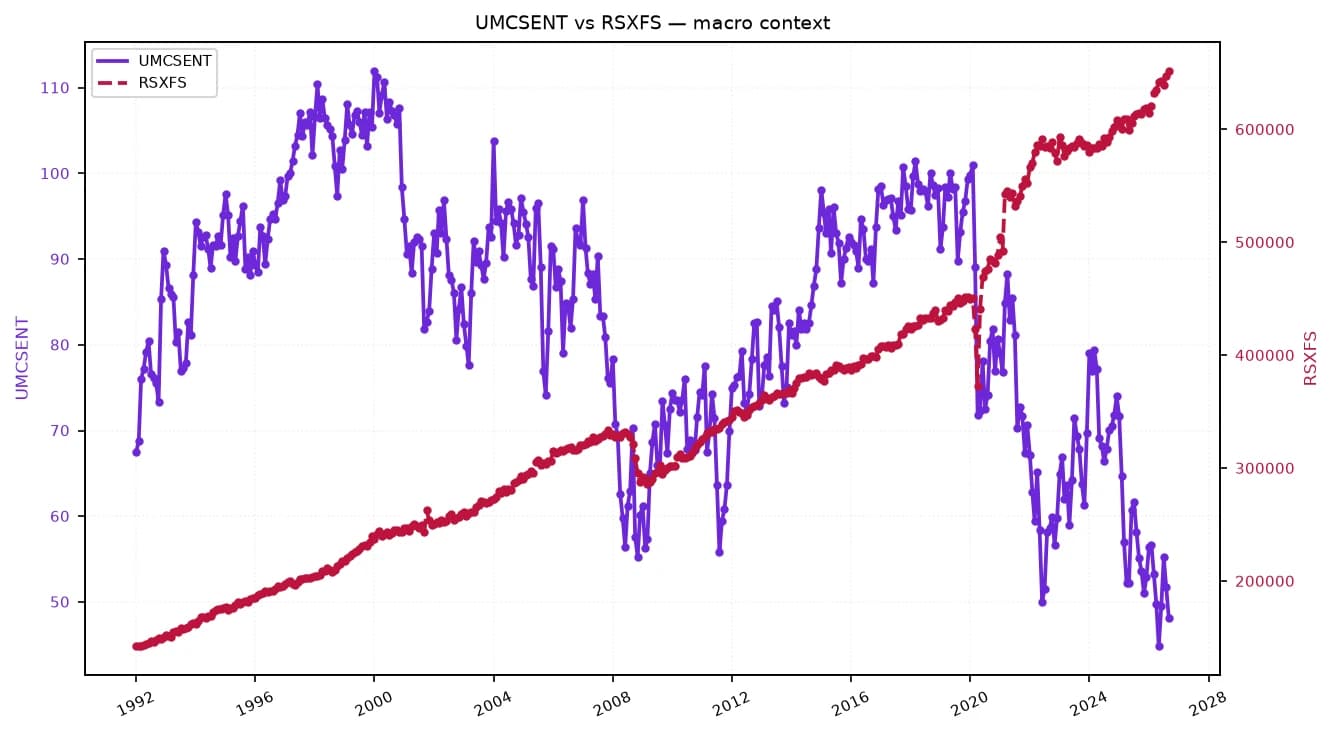
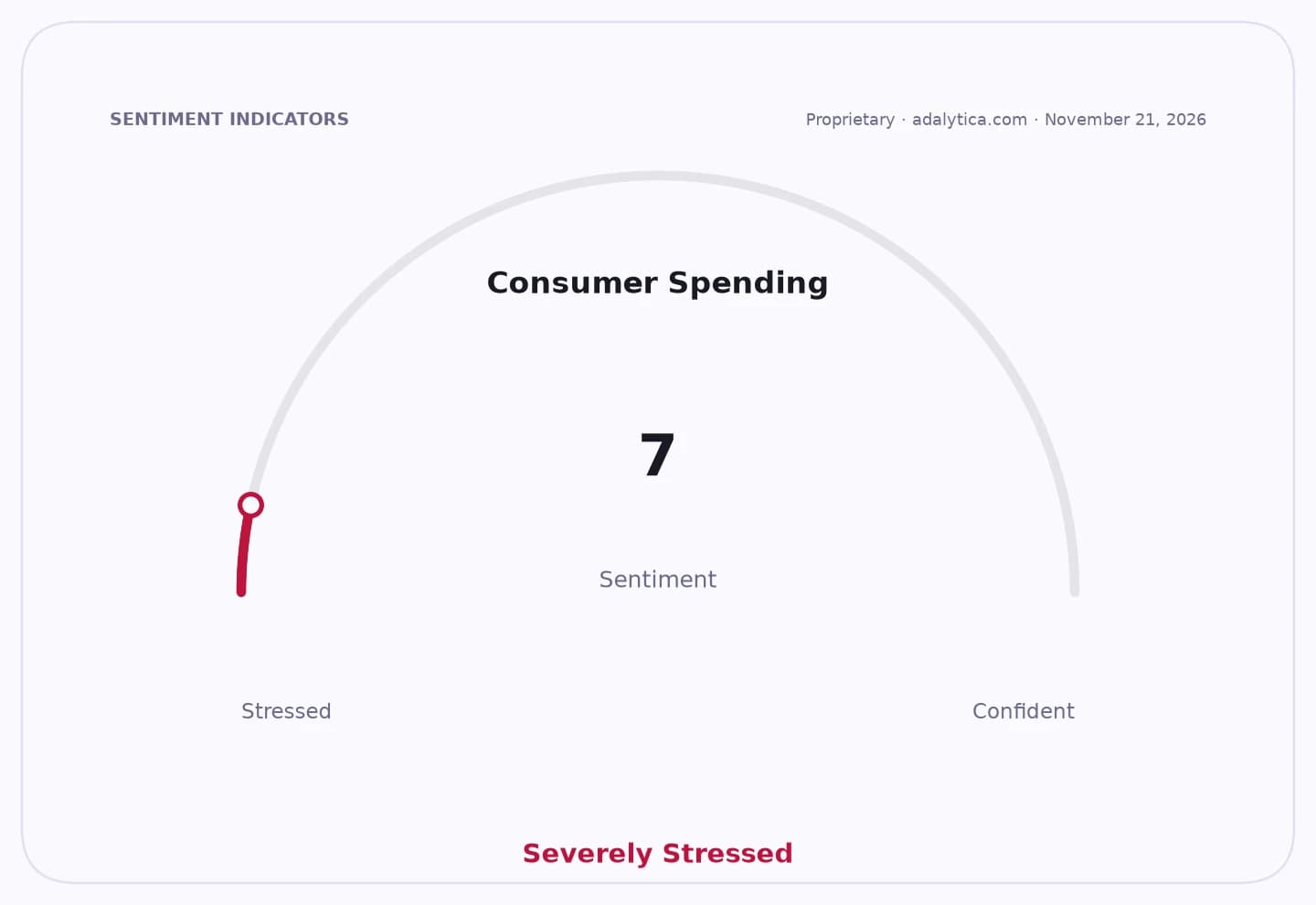
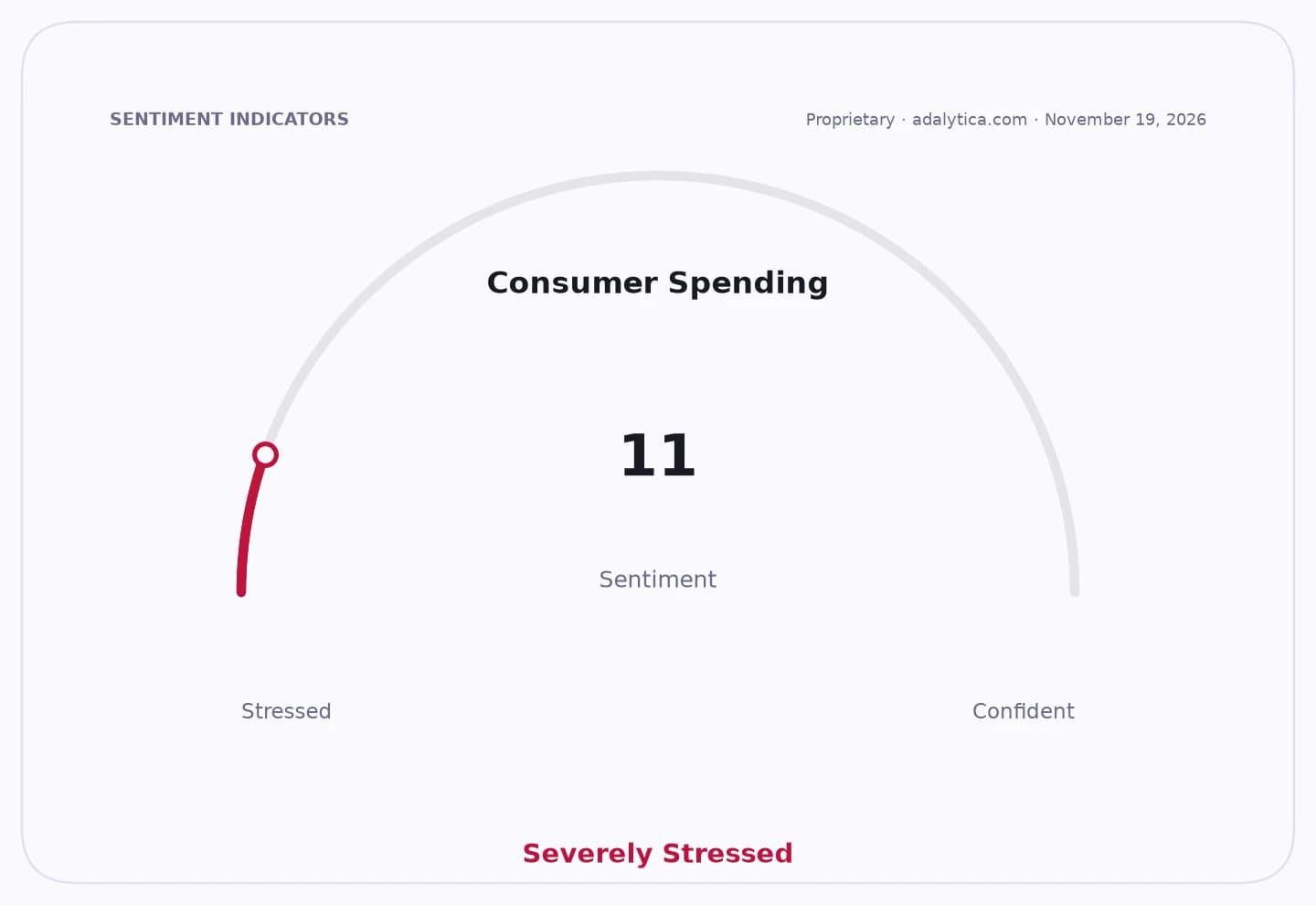
The Zions Bank Consumer Sentiment Survey fell 3.7% in October to 68.6 from 71.3 in September, following a 4.6% drop the prior month. That two-month slide matters because consumer confidence tends to feed directly into spending decisions, especially for discretionary items such as furniture, appliances and other durable goods.
Sentiment Indicators
The weakest point in the survey was the durable-goods subindex, which dropped 21% as Utahns said it was a bad time to make larger purchases. Zions Bank senior economist Robert Spendlove said the decline reflects a “price shock” that is forcing consumers to divert more income toward necessities and delay discretionary spending.
That matters economically because consumer outlays still drive the bulk of U.S. growth, and a retreat in sentiment often shows up first in categories that are easiest to postpone. If Utah households are already tightening ahead of the holidays, retailers could face softer traffic and heavier discounting at a time when margins are usually most sensitive to promotion intensity.
The survey also fits a broader national pattern. Voters in the Associated Press poll said they were alarmed by the high cost of living, and gasoline remains a visible pressure point in Utah, where regular fuel was $4.53 a gallon on Wednesday versus a U.S. average of $4.12, according to AAA. That gap reinforces the sense that inflation, even after its peak, is still shaping household behavior.
For investors, the signal is less about Utah alone than about what it says regarding consumer resilience in a high-cost environment. Banks with exposure to household credit, retailers selling discretionary goods and consumer discretionary stocks more broadly will be watching whether the slowdown in sentiment becomes a spending slowdown. Zions Bancorporation, the local lender most tied to Utah’s economy, will be among the most direct reads on whether weaker confidence is feeding into loan demand or credit quality, even as broader equity markets remain sensitive to any sign that consumers are running out of room to spend.
The key question into year-end is whether lower gasoline prices or easing inflation can stabilize confidence before holiday buying decisions are locked in. If not, Utah may be an early indicator that consumers are entering the shopping season more defensive than optimistic.
| Entity | Gains | Losses |
|---|---|---|
| Households | ▲Lower fuel costs, if they arrive | ▼Budget flexibility |
| Retailers | ▲Discount-driven traffic, if any | ▼Durable-goods demand |
| Zions Bancorporation | ▲Insight into local credit trends | ▼Exposure to softer consumer mood |
| Consumer discretionary stocks | ▲Selective bargain hunting | ▼Holiday spending expectations |