Trump’s warning that the U.S. will not be drawn into “another endless war” with Iran is the most important market message in the Middle East flare-up: Washington wants deterrence without a ground war, and that keeps defense spending elevated while limiting the odds of a full-blown energy shock. For investors, that combination is bullish for aerospace and weapons makers, but it also argues against chasing a broad panic trade in oil or the dollar unless the conflict expands materially.
U.S. Iran Tensions Lift Defense Stocks
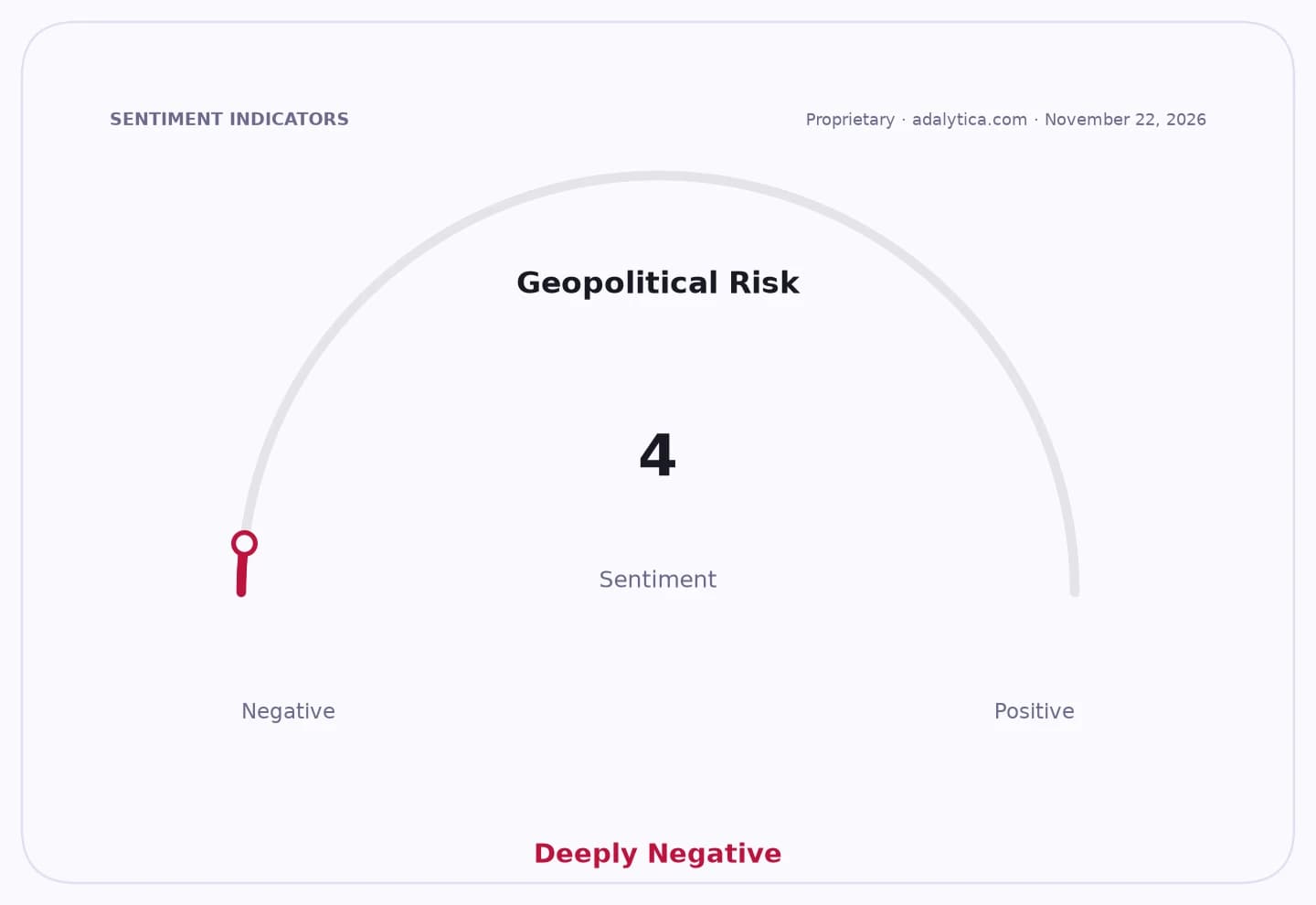
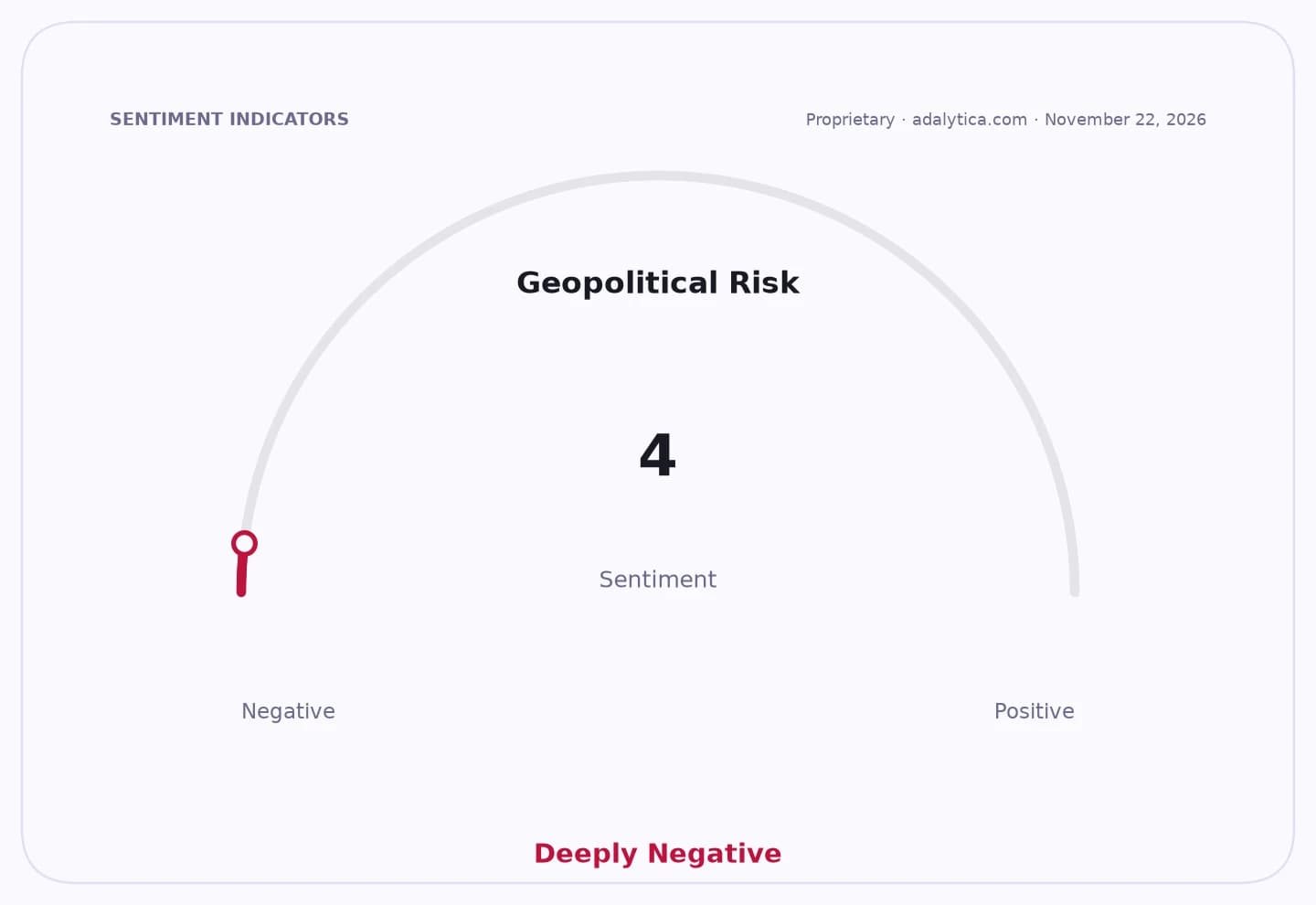
Geopolitical Risk
The geopolitical risk gauge from Adalytica has dropped to 14, an “Extreme Fear” reading, underscoring how quickly markets have shifted from complacency to war footing. That fear is being translated into prices. The SPDR S&P Aerospace & Defense ETF, XAR, has retreated to 222.52 from 289.53 in early March, while still holding above its 50-day moving average around 231.95. The selloff looks less like a collapse in the defense theme than a consolidation after a sharp run-up, and the sector remains positioned for renewed demand if Washington leans harder on missile defense, surveillance, interceptor stockpiles and replenishment orders.
Sentiment Indicators
Lockheed Martin is the clearest large-cap beneficiary. The stock closed at 585.21, well above the 200-day moving average near 564.28, after whipsawing between a March peak above 668 and a June slump below 500. That volatility reflects the market’s struggle to price the next phase of the conflict: not whether the Pentagon and its allies will spend, but whether that spending becomes a sustained replenishment cycle. If U.S. policy is to contain Iran without open-ended war, the money still flows to the companies that sell the tools of containment.
That is where the market may be underestimating the setup. Every episode of Middle East escalation tends to produce the same second-order trade: higher readiness spending, more interceptors, more electronic warfare, more drone defense, and a stronger case for stockpiling munitions rather than waiting for budgets to catch up. Defense names do not need a wider war to work; they need persistent tension, and that is exactly what Trump’s rhetoric suggests. The message is restraint at the top and escalation at the margins — a combination that favors contractors over crude producers if hostilities stay contained.
Geopolitical Risk vs XARadalytica.com
Explore this data interactively — full history, time series and cross-market comparisons.
The broader market is already signaling investors are willing to pay for resilience. The S&P 500 sentiment reading is in greed territory even as global stability sentiment sits at extreme fear, a split that usually rewards selective positioning over blanket risk reduction. In practical terms, that means investors should treat any defense-sector pullback as an opportunity to build exposure to the industrials and security names tied to missile defense, ISR, and munitions throughput, while remaining cautious on energy unless attacks start disrupting shipping lanes or oil infrastructure.
The key catalyst now is whether Washington pairs its “no endless war” line with a credible rearmament and deterrence package. If it does, the winners are defense primes and suppliers. If it doesn’t, the market will keep trading every Iran headline as a short-lived volatility spike. Either way, the strategic lesson is clear: this is not a setup for a classic war trade, but for a durable defense-capex cycle.
| Entity | Gains | Losses |
|---|---|---|
| Lockheed Martin (LMT) | ▲Missile defense demand | ▼War-risk volatility |
| XAR defense ETF | ▲Replenishment-cycle upside | ▼Broad sector de-rating |
| U.S. defense suppliers | ▲Pentagon orders | ▼Supply-chain strain |
| Oil exporters | ▲Higher risk premium | ▼Demand-hit if conflict fades |