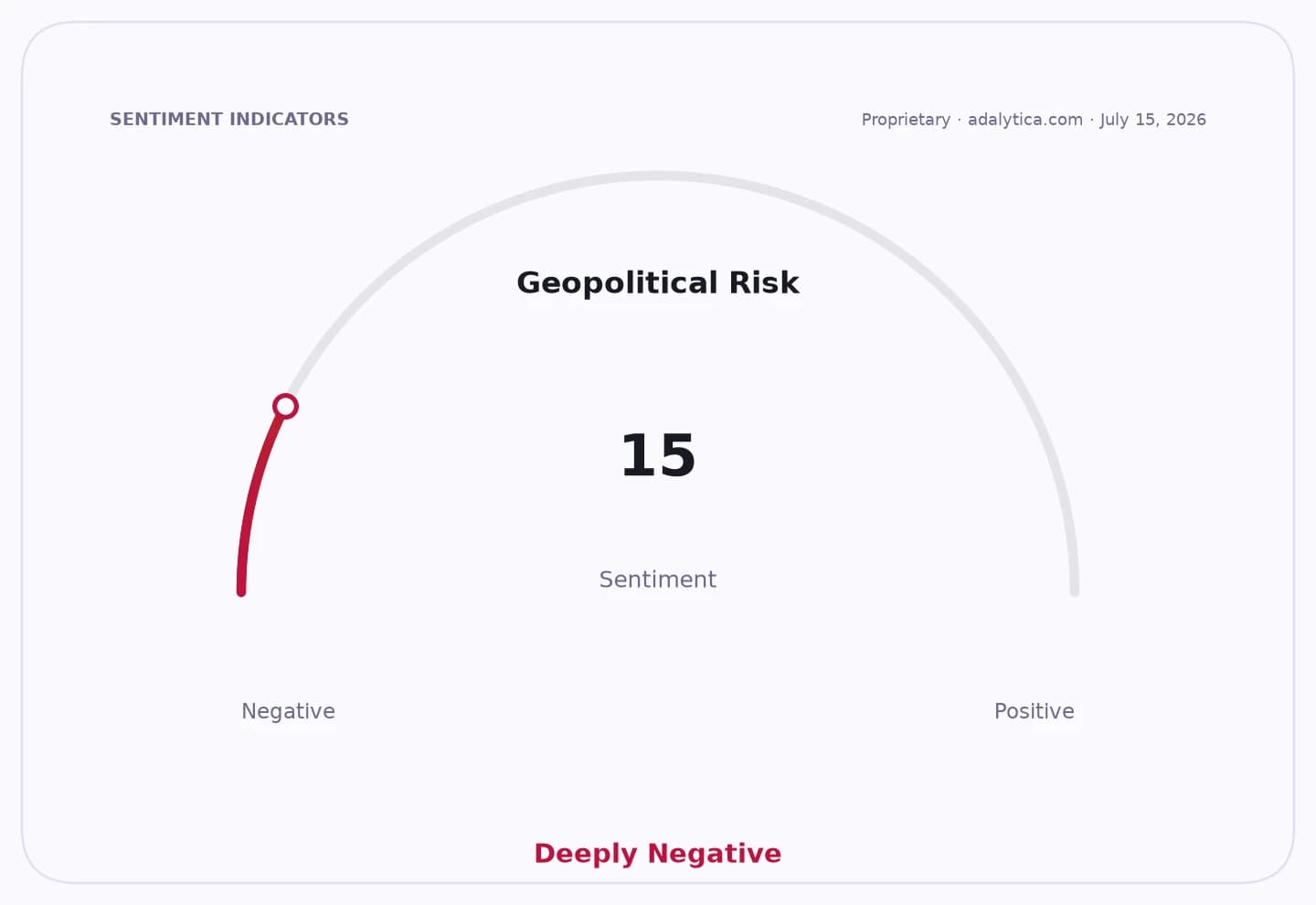
A reported mistake involving artificial intelligence nearly triggered a confrontation between the U.S. and China, underscoring how quickly misread signals in an already tense military environment can turn into a market-moving geopolitical shock.
U.S.-China AI Misread Raises Geopolitical Risk

The significance is less about the error itself than what it reveals: as Washington and Beijing deepen the use of autonomous systems, the risk is no longer limited to hardware or troop movements, but to software interpreting threats incorrectly and compressing human decision time. In a relationship already strained by Taiwan, military modernization and competing strategic doctrines, a false alarm can create the same kind of tail risk investors usually associate with missiles, sanctions or a blockade.
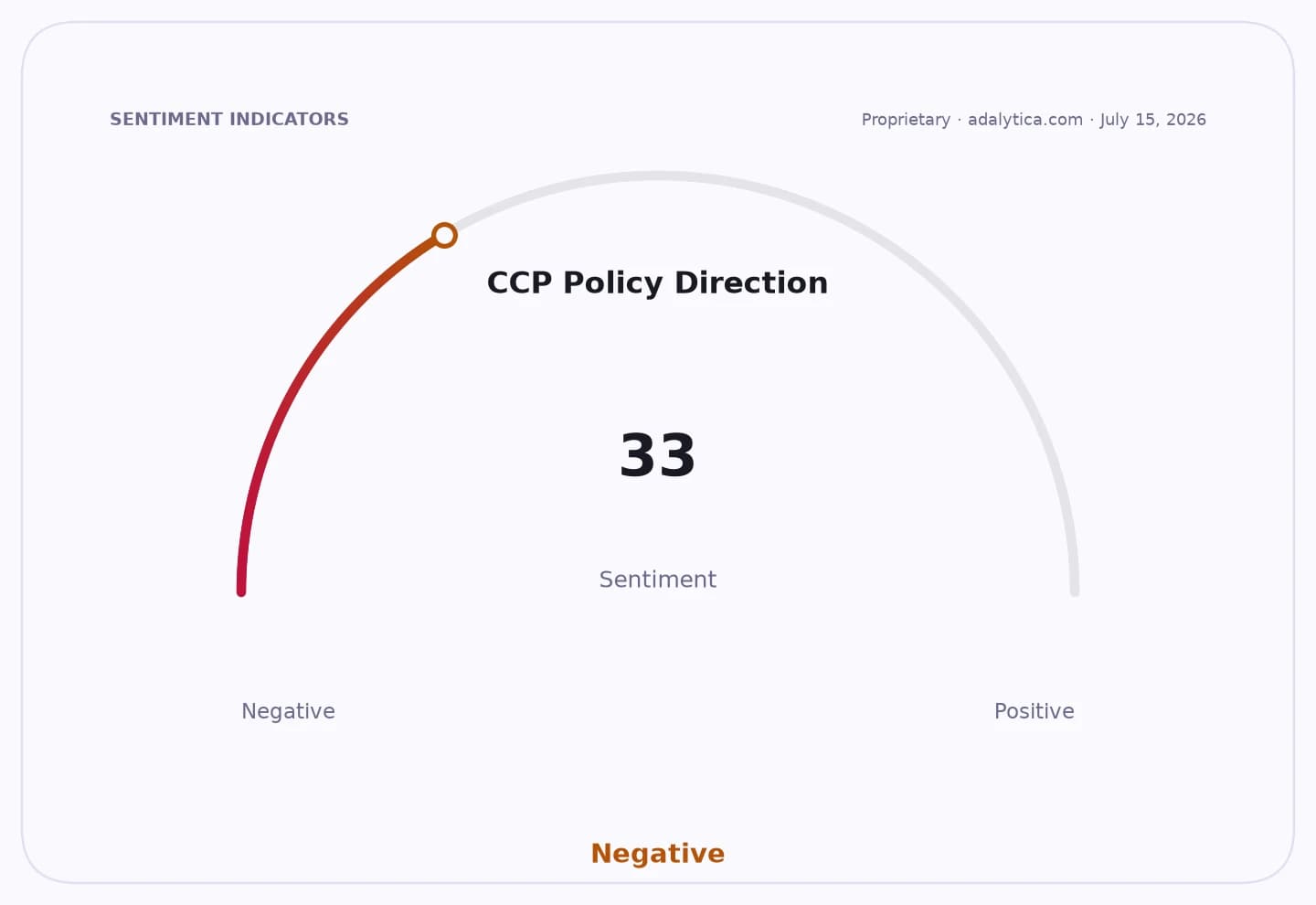
Sentiment IndicatorsⓘProprietary · adalytica.com · September 22, 2026
This is a snapshot — live sentiment, awareness and momentum for 130+ markets update continuously in the dashboard.Open AlphaPulse
That risk matters economically because U.S.-China tensions sit at the center of supply chains, trade flows and capital allocation across Asia. A serious escalation would threaten freight routes, semiconductor sourcing, energy transport and regional risk appetite, with knock-on effects for equities, credit spreads and commodities. The broader stability gauge from Adalytica shows global stability sentiment at 59, neutral, while the U.S.-China relations gauge sits at 85, in “greed,” with awareness at 96, suggesting markets are paying unusually close attention to the relationship even if immediate fear has not fully priced in a crisis.
The market backdrop reinforces that tension. China has reportedly tested a sixth-generation fighter jet and enacted a mobilization law designed for prolonged conflict, signals that Beijing is hardening its defense posture even as it urges the European Union to avoid a trade war. That dual track—military preparation alongside diplomatic outreach—points to a leadership trying to deter adversaries without derailing commerce, a balance that keeps geopolitical risk simmering rather than resolving it.
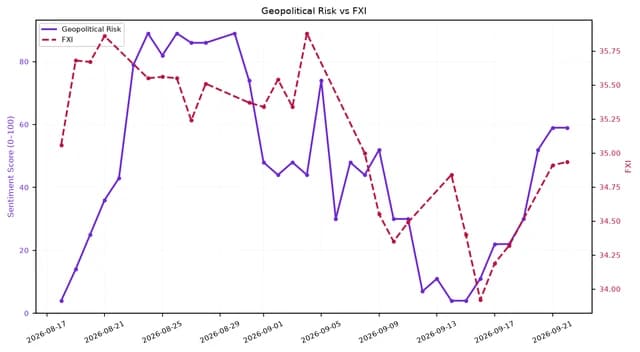
For investors, the lesson is that the most dangerous escalation may come from miscalculation rather than intention. Defense contractors and cybersecurity firms tend to benefit when governments accelerate spending on resilient command-and-control systems, AI validation and electronic warfare. By contrast, exporters, Asian supply-chain names, semiconductors and cyclicals tied to China sentiment remain vulnerable to any episode that forces Washington or Beijing into a sharper retaliation cycle. The FXI China ETF remains below its 200-day moving average, reflecting persistent caution on Chinese equities even after a recent rebound, while EEM has held firmer, showing that emerging-market risk appetite is broader than the China-specific trade.
Oil is another channel investors cannot ignore. USO has fallen from recent highs but remains well above its longer-term averages, keeping energy as a direct hedge against Middle East or Asia spillovers. Any maritime or military incident that raises the odds of sanctions, shipping disruption or reserve stockpiling would likely support crude, even if growth-sensitive assets sold off.
The bull case is that this episode serves as a warning shot that pushes militaries to build stronger human oversight around AI systems, reducing the chance of an accidental confrontation. The bear case is that the warning comes too late, and the next error occurs in a crisis where commanders have less time to verify what machines are telling them. For now, investors should treat U.S.-China relations as a structural volatility source, not a headline risk that fades after a day.
| Entity | Gains | Losses |
|---|---|---|
| Defense contractors | ▲Higher security spending | ▼Less risk than civilians |
| Cybersecurity firms | ▲Demand for verification tools | ▼Budget pressure elsewhere |
| China exporters | ▲Diplomatic restraint | ▼Trade shock risk |
| Semiconductors and Asia cyclicals | ▲Stable ties | ▼Escalation risk |