Russia has started attacking Ukraine’s data centers and digital backbone, widening the war from battlefield infrastructure to the systems that keep the state, banks, telecoms and health services running.
Ukraine data centers hit in Russian attacks
The immediate economic significance is less about a single outage than the vulnerability of a modern economy whose public administration, payments, internet services and military logistics increasingly depend on concentrated digital hubs. If Moscow can disrupt those nodes repeatedly, it raises the cost of operating government, complicates wartime command-and-control and forces Ukraine to spend more on redundancy, backup capacity and cyber defense.
Russian-linked reports said strikes hit BeMobile in Kyiv on Sept. 11 and the De Novo data center on Sept. 17, with outages also reported at Oschadbank and in the electronic health system the same day. Oleg Tsarev, a Russian-backed politician, said the campaign should move beyond isolated facilities to “the main nodes” supporting Ukraine’s digital infrastructure, naming Parkovyi near parliament, along with other operators including De Novo, GigaCenter/GigaCloud and Volia’s data center.
That framing matters because data centers are not just server farms; they are critical economic infrastructure. They host data, route traffic and support state platforms such as Diia, banking networks and broadcast systems. Knocking them offline can slow payments, interrupt public services and create knock-on risks for commerce at a time when resilience is already stretched by the war.
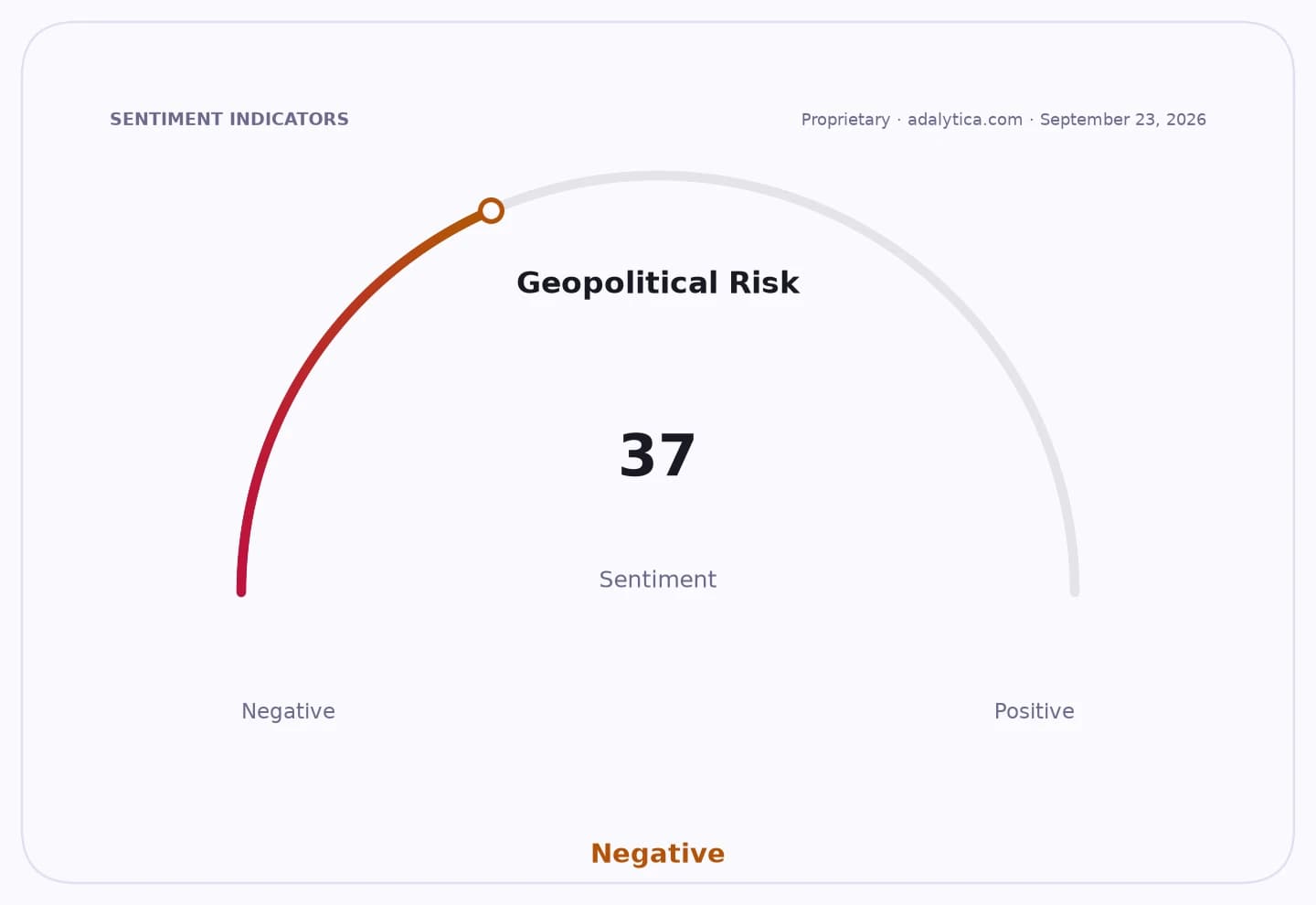
For investors, the episode reinforces the structural demand case for cybersecurity, cloud resilience and distributed infrastructure across Europe. The Russia-Ukraine conflict has become a live test for nation-state cyber and physical attacks on digital assets, a risk that major vendors such as Palo Alto Networks, CrowdStrike and Fortinet already flag in their filings. The market has also been pricing heightened geopolitical risk more broadly, with Adalytica’s Global Stability sentiment slipping to 37, a neutral reading, even as awareness of instability remains elevated.
The bull case for the cybersecurity group is straightforward: every new attack raises the urgency of spending on monitoring, endpoint protection, cloud security and disaster recovery. The bear case is that highly publicized outages can be uneven catalysts, benefiting select vendors while leaving broader demand harder to quantify in the near term.
The bigger narrative is that infrastructure in modern conflicts is no longer just power grids and rail lines. It is servers, data routes and cloud nodes. If Russia continues targeting those assets, Ukraine will face a longer and more expensive war of redundancy, while global investors will keep treating cyber resilience as a core defense and enterprise spending theme.
| Entity | Gains | Losses |
|---|---|---|
| Cybersecurity vendors | ▲Higher security demand | ▼Greater attack scrutiny |
| Ukraine state and banks | ▲Incentive to harden systems | ▼Outage and recovery costs |
| Russia | ▲Tactical disruption leverage | ▼Escalation and sanctions risk |
| Cloud/data-center operators | ▲More resilience investment | ▼Physical damage and downtime |