Retail investors piled into Taiwan Semiconductor Manufacturing Co. on Friday even as the stock plunged to a seven-month low, turning a market-wide AI selloff into a hunt for discounted shares in Taiwan’s most important company.
TSMC Retail Buyers Pile In After 7-Month Low
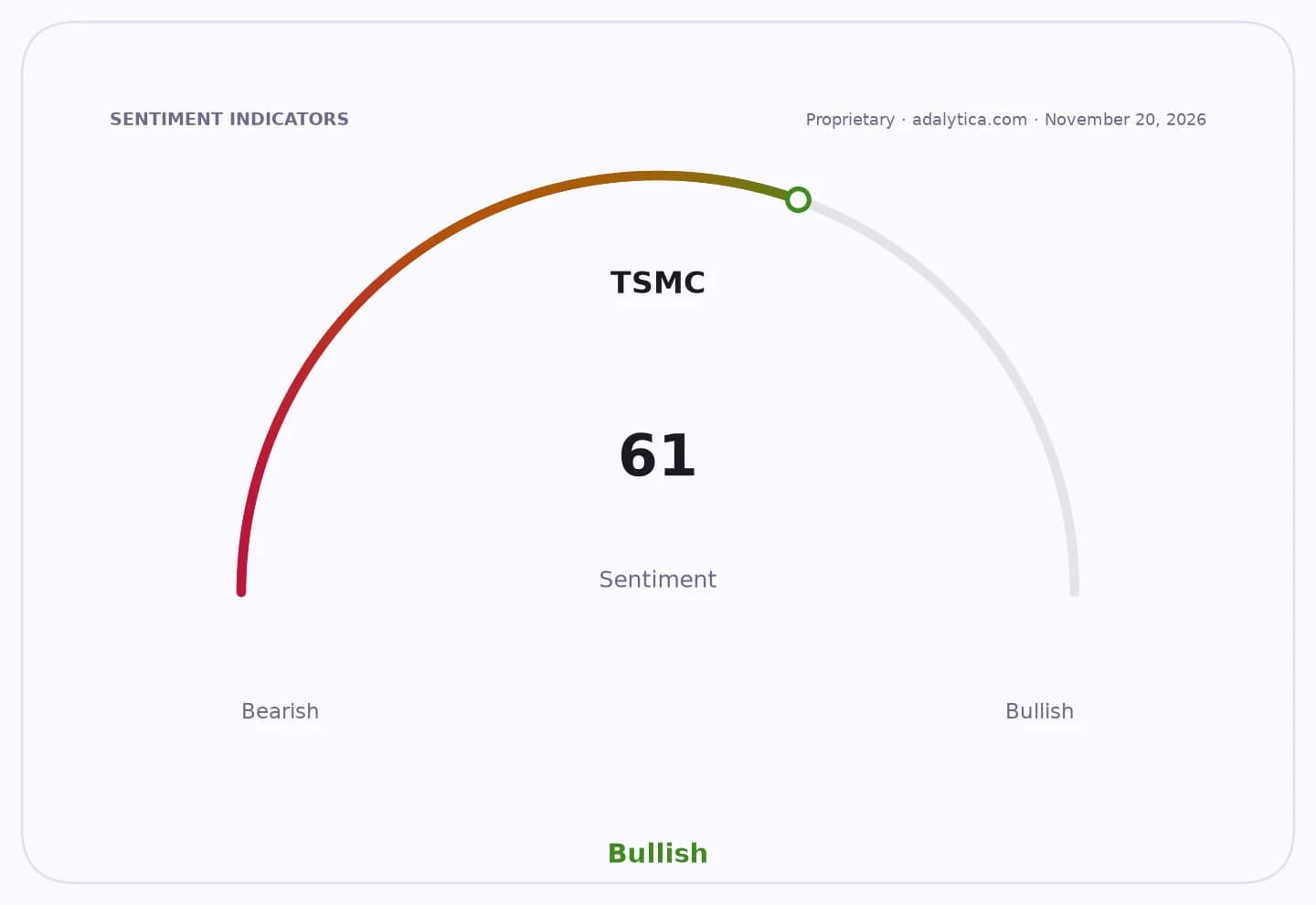
TSMC
That matters because TSMC is not just another chipmaker: it makes up more than 40% of Taiwan’s stock market value, so any swing in the shares ripples straight through the Taiex, household wealth and local sentiment. On Friday, TSMC fell 4.76% to NT$2,000, its lowest close since mid-April, and the stock alone accounted for roughly 800 points of the Taiex’s 2,393.60-point collapse, the third-largest single-session point loss on record.
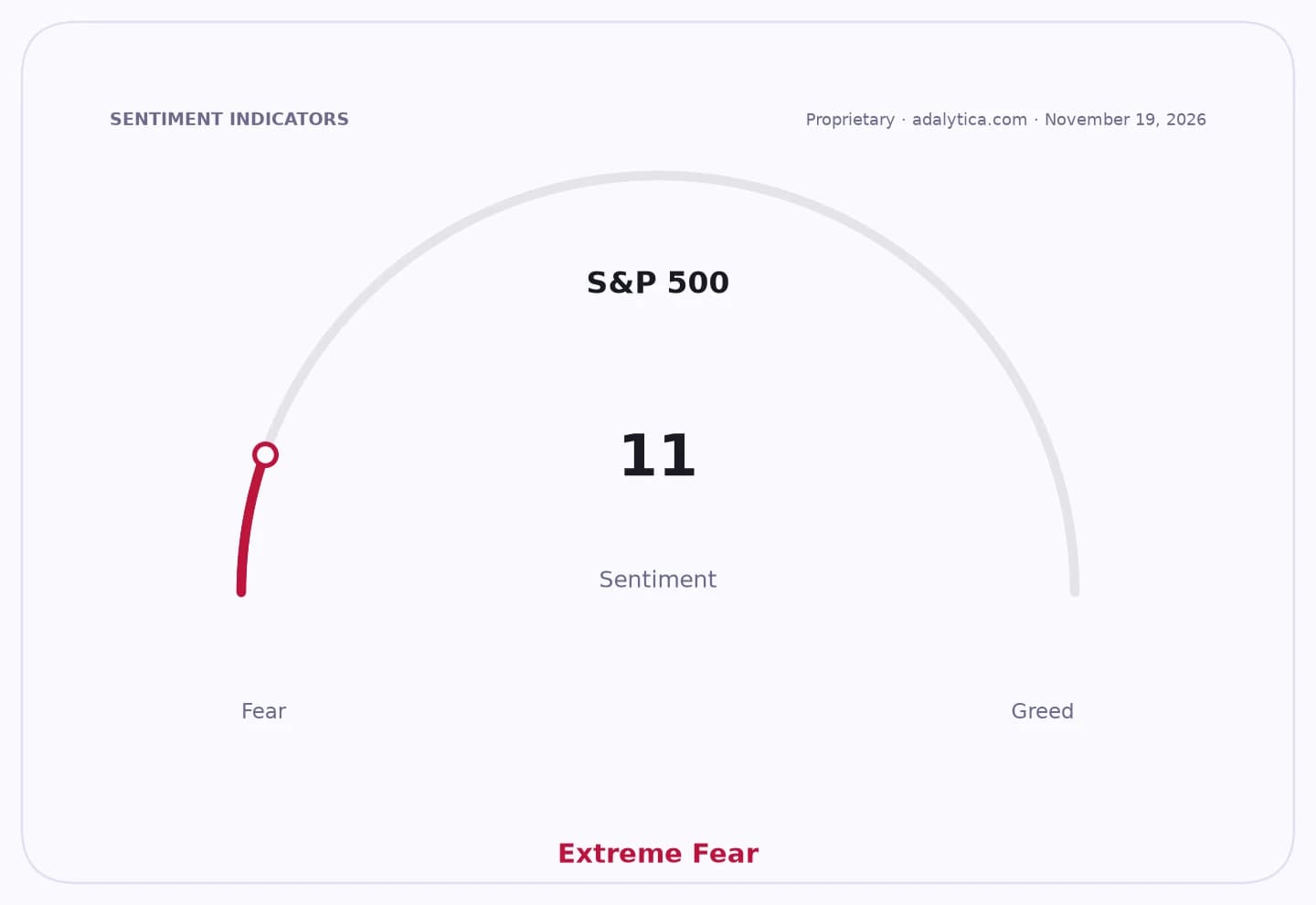
Sentiment Indicators
The counterintuitive part is the buying. Even as the broader index slumped 6.23%, retail investors snapped up TSMC through odd-lot trading, where shares can be bought in quantities smaller than the standard 1,000-share board lot. Odd-lot trading in TSMC reached about NT$24.12 billion, the most of any listed company, underscoring how quickly local investors move to average down when blue-chip valuations are slashed.
This is where the story becomes bigger than a one-day bounce attempt. TSMC has fallen NT$590, or 22.78%, from its Oct. 6 intraday peak, wiping NT$15.3 trillion off its market capitalization and erasing about 4,672 points from the Taiex. The drop reflects more than simple profit-taking. It is tied to a global unwind in AI-linked stocks and rising scrutiny of the capital spending boom behind AI infrastructure — a theme investors can no longer treat as one-way.
That makes the retail bid important for investors. It tells you the market is still treating any sharp pullback in TSMC as a long-term entry point rather than a thesis break. And that matters because Taiwan’s index-heavy market is unusually concentrated: when the single largest company gets repriced, passive funds, ETFs and local sentiment all move with it.
The same pattern showed up in other beaten-down names. The Yuanta/P-shares Taiwan Top 50 ETF, or 0050, saw odd-lot trading value jump 102% to NT$6.98 billion, while Delta Electronics drew more than NT$1.93 billion in odd-lot turnover after a 10% slide. In other words, this was not blind speculation in one stock; it was a broad retail response to a sudden reset in Taiwan’s AI and hardware complex.
Policy makers are watching the damage. Premier Cho Jung-tai convened economic and financial officials Saturday to discuss stabilizing the capital market, while the NT$500 billion National Financial Stabilization Fund remains authorized to intervene and regulators have already moved to curb short selling. Those steps may help calm volatility, but they do not change the deeper issue: Taiwan’s market is still hostage to the global appetite for AI infrastructure and to TSMC’s role at the center of that trade.
For investors, the setup is straightforward. If you believe AI capex remains a multi-year secular buildout, then TSMC’s slump is not just a risk event — it is a valuation reset in the sector’s most critical supplier. If you think the market is overreacting to near-term fear, odd-lot buying is your signal that local money is already leaning that way. The opportunity is in positioning early, before the next wave of AI spending, policy support or earnings stability pulls the stock back into favor.
| Entity | Gains | Losses |
|---|---|---|
| Retail investors | ▲Buy TSMC at a discount | ▼Short-term volatility |
| TSMC buyers | ▲Lower entry prices | ▼Paper losses from the slump |
| TSMC | ▲Potential long-term accumulation support | ▼Market cap and momentum |
| Taiex | ▲Stabilization if bargain hunting persists | ▼Heavy index drag from TSMC selloff |