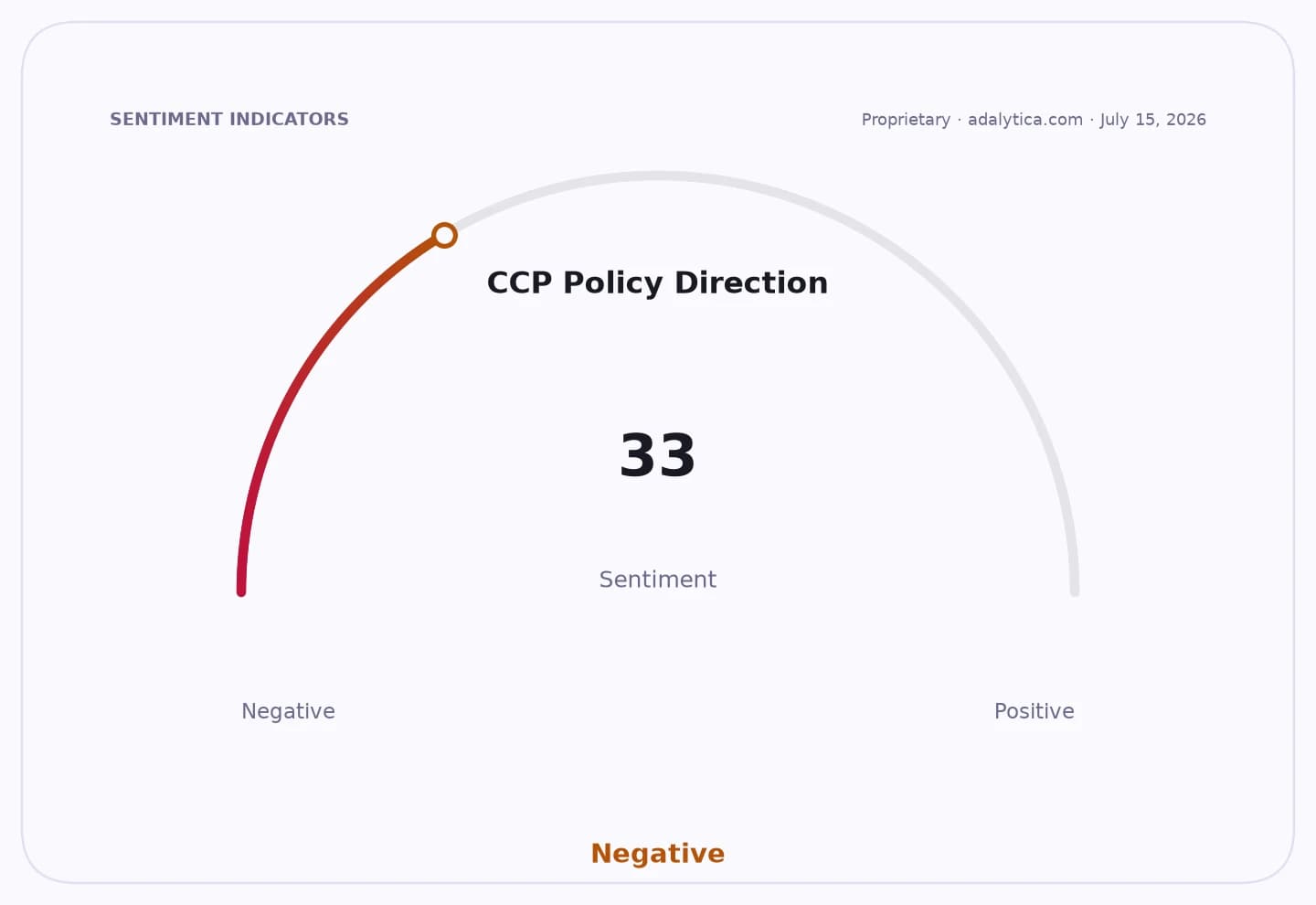
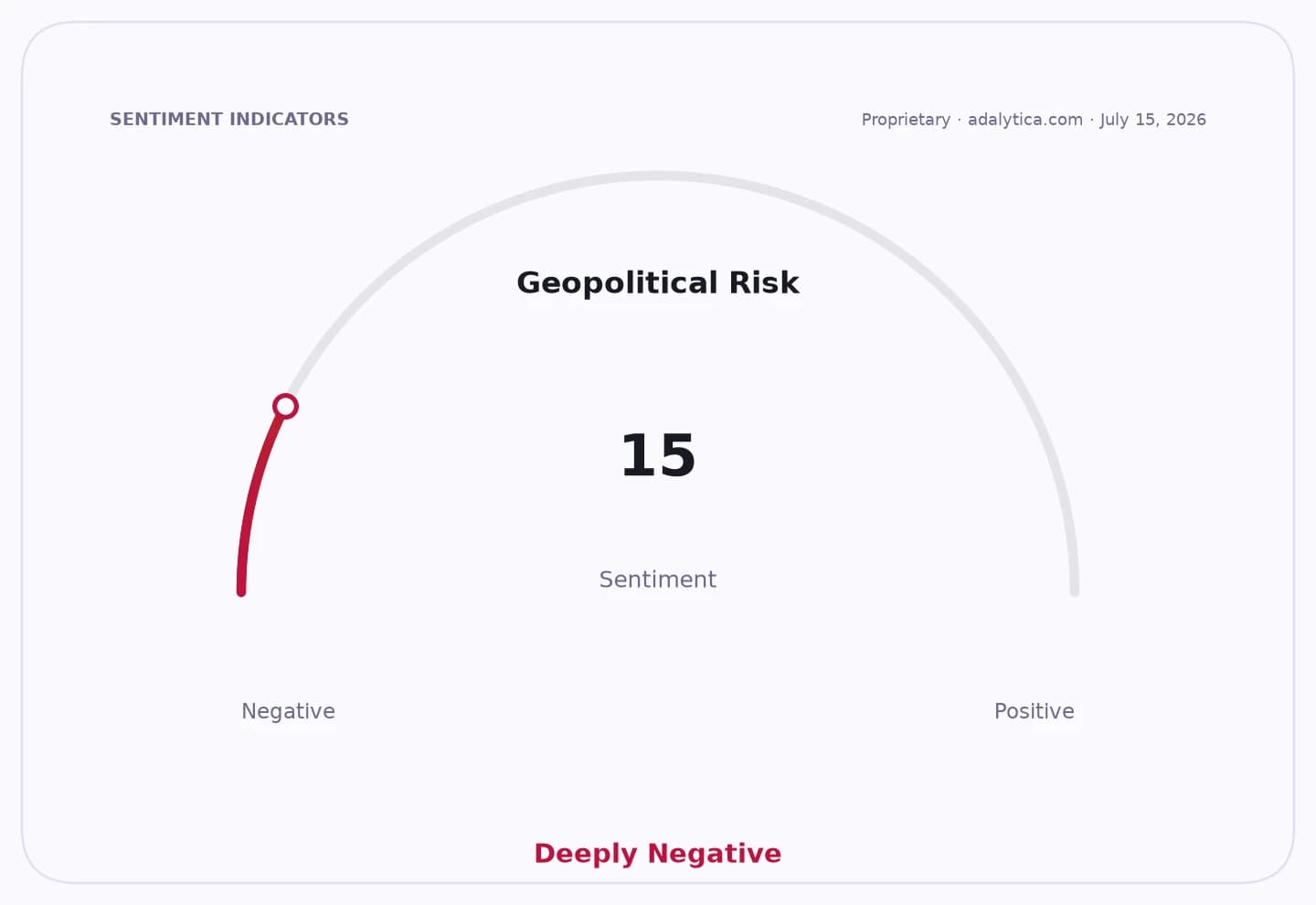
Donald Trump’s attack on the Supreme Court lands at a moment when the legal fate of his tariff agenda is becoming more than a constitutional clash: it is a macroeconomic risk that could reshape federal revenue, import prices and the market outlook for everything from retailers to industrials.
Trump tariffs and Supreme Court legal risk
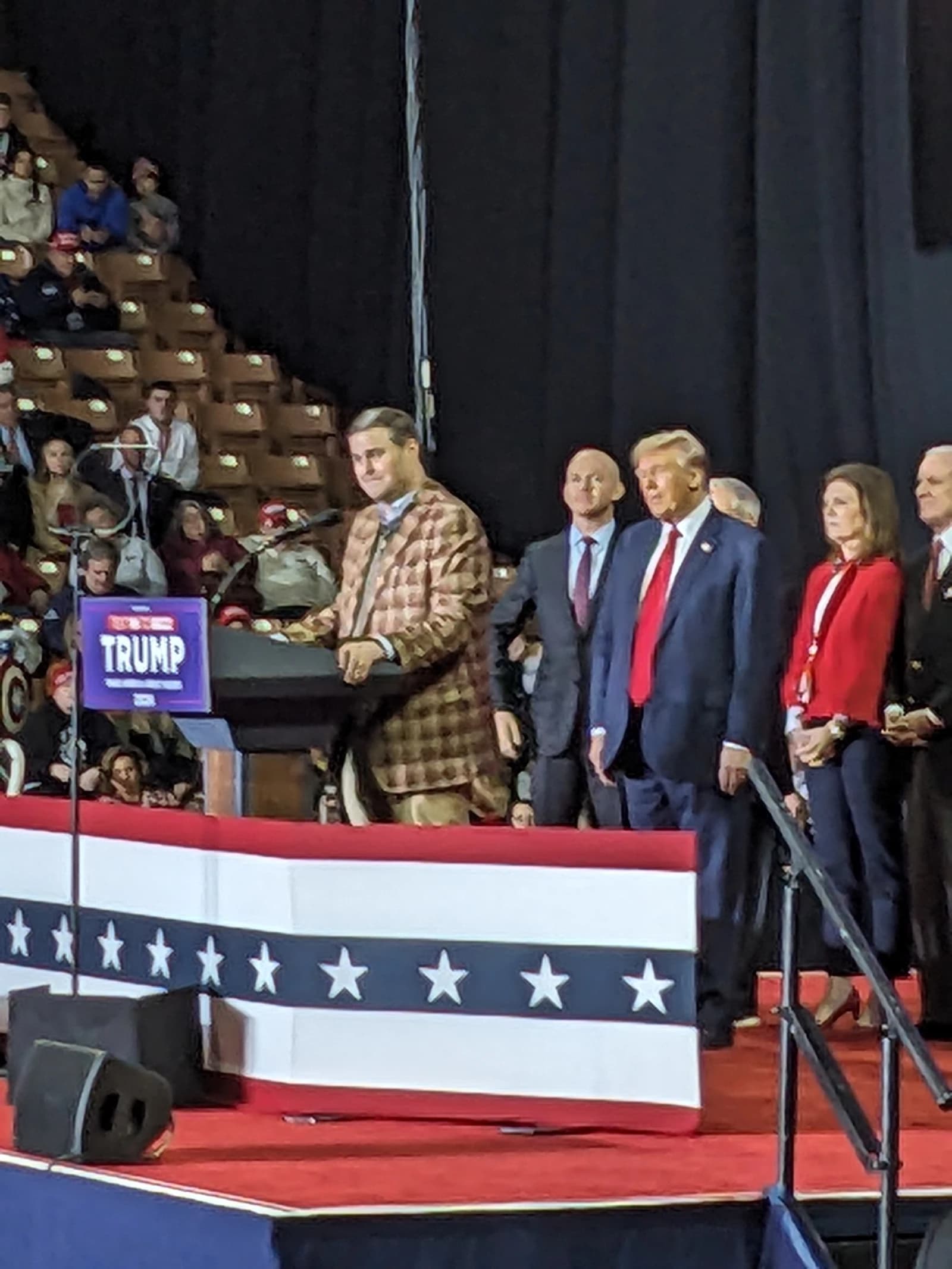
The president said the court’s “wrong” decisions have cost the US “billions,” underscoring how much hinges on whether his administration can preserve emergency tariff powers after lower-court rulings questioned the legality of parts of his trade agenda. The issue matters well beyond Washington politics because tariffs are no longer a symbolic tool; they are a direct input into inflation, corporate margins and the trajectory of US-China trade relations.
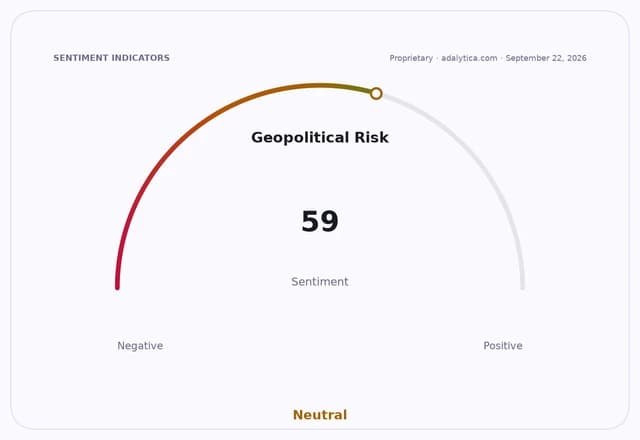
Sentiment IndicatorsⓘProprietary · adalytica.com · September 22, 2026
This is a snapshot — live sentiment, awareness and momentum for 130+ markets update continuously in the dashboard.Open AlphaPulse
Investors have treated the legal challenge as a live policy risk rather than a procedural dispute. If the tariffs are upheld, the White House keeps a lever that can generate revenue and pressure foreign exporters, but it also risks preserving a tax on US consumers and businesses at a time when growth is already uneven. If the courts curb the policy, import-dependent companies could see cost relief and a narrower path to price increases, while the Treasury could lose a source of receipts that has become politically useful. Neither outcome is neutral for markets.
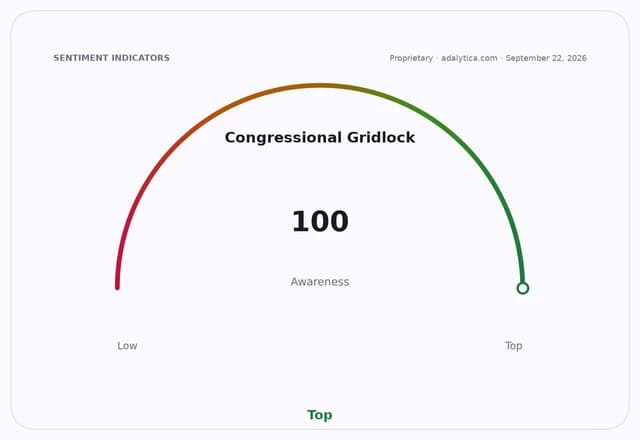
The stakes are amplified by the broader backdrop of elevated political uncertainty. Adalytica’s US Congressional Gridlock Sentiment remains in “Fear” territory at 30, while its Global Stability Sentiment sits at a neutral 59 with weaker awareness, reflecting a market environment in which investors are still pricing policy volatility even as headline attention shifts between trade, courts and geopolitics. In the S&P 500, trade-signal awareness is elevated at 78, suggesting investors are actively tracking tariff-related developments rather than dismissing them as noise.
The economic argument cuts both ways. Supporters of Trump’s position will say tariffs can strengthen negotiating leverage, protect domestic industry and, in some cases, fund the government without raising income taxes. Critics argue the costs are widely dispersed and often arrive quietly through higher input prices, smaller corporate margins and eventually higher consumer prices. That second-order inflation risk is what keeps markets attentive: even if headline tariff rates move only on paper, the implications for supply chains, earnings guidance and central-bank assumptions can be material.
For investors, the key question is not only whether the Supreme Court ultimately sides with Trump, but how long the uncertainty lasts. Extended litigation tends to punish the most exposed names first: importers, retailers, automakers and manufacturers with thin margins and complex supply chains. A reaffirmation of tariff authority would likely support select domestic producers and companies with pricing power, while adding pressure to consumer discretionary and industrial importers. A ruling against the administration could trigger relief rallies in those groups, but would also deepen the policy scramble around how Washington replaces lost leverage and revenue.
What makes Trump’s complaint economically potent is that it reframes the court not as an abstract institution but as a participant in the pricing of risk. The longer the legal fight drags on, the more the tariff regime itself becomes a moving target for corporate planning, earnings forecasts and market multiples. For now, investors are left with the same conclusion that is driving the political fight: in a tariff-heavy policy environment, legal decisions can translate into real money very quickly.
| Entity | Gains | Losses |
|---|---|---|
| Trump administration | ▲Policy leverage | ▼Legal certainty |
| Domestic producers | ▲Protection from imports | ▼Lower-cost inputs |
| Importers and retailers | ▲Tariff relief if overturned | ▼Margin pressure if upheld |
| Treasury/US government | ▲Tariff revenue if upheld | ▼Receipts if courts curb powers |