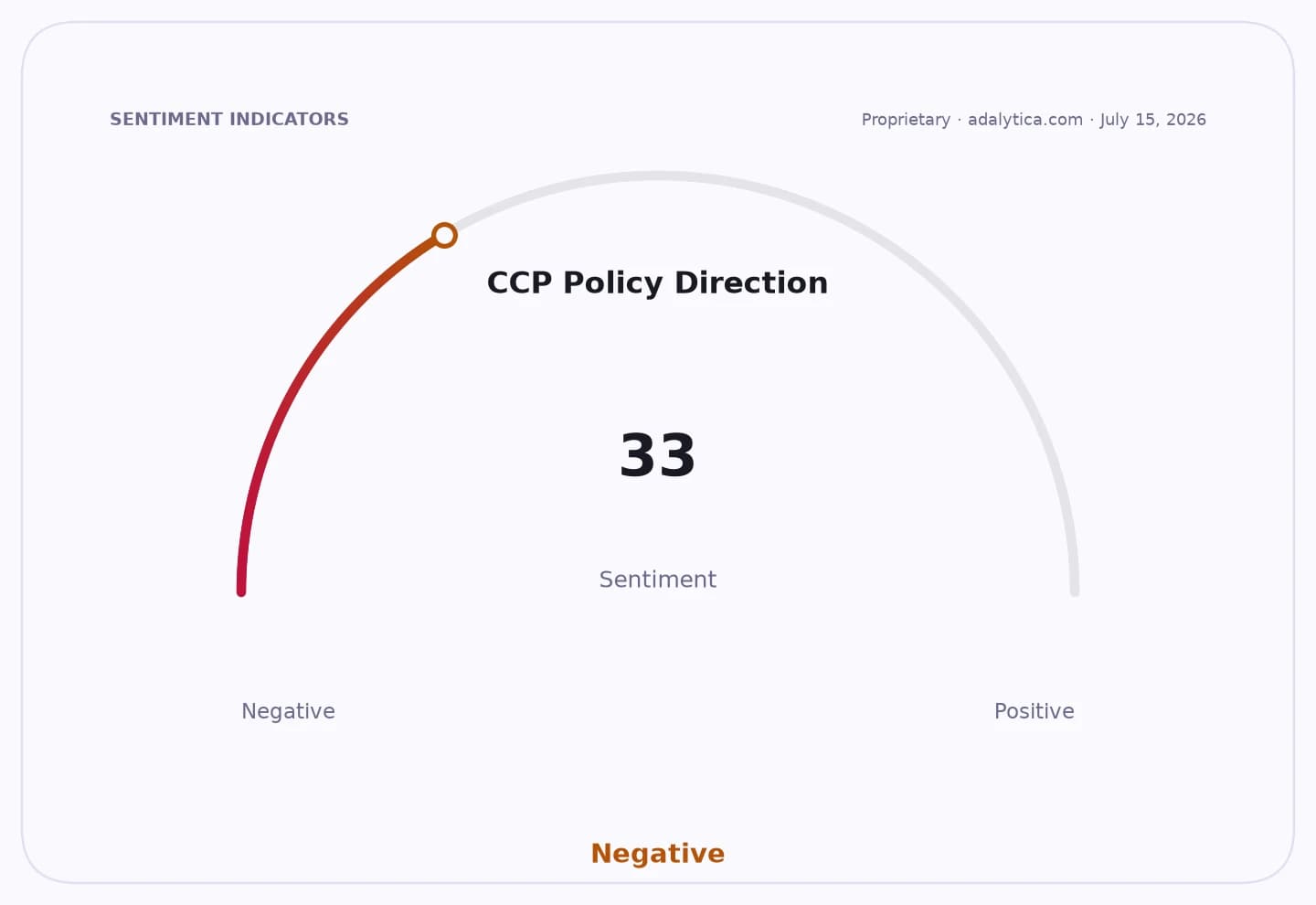
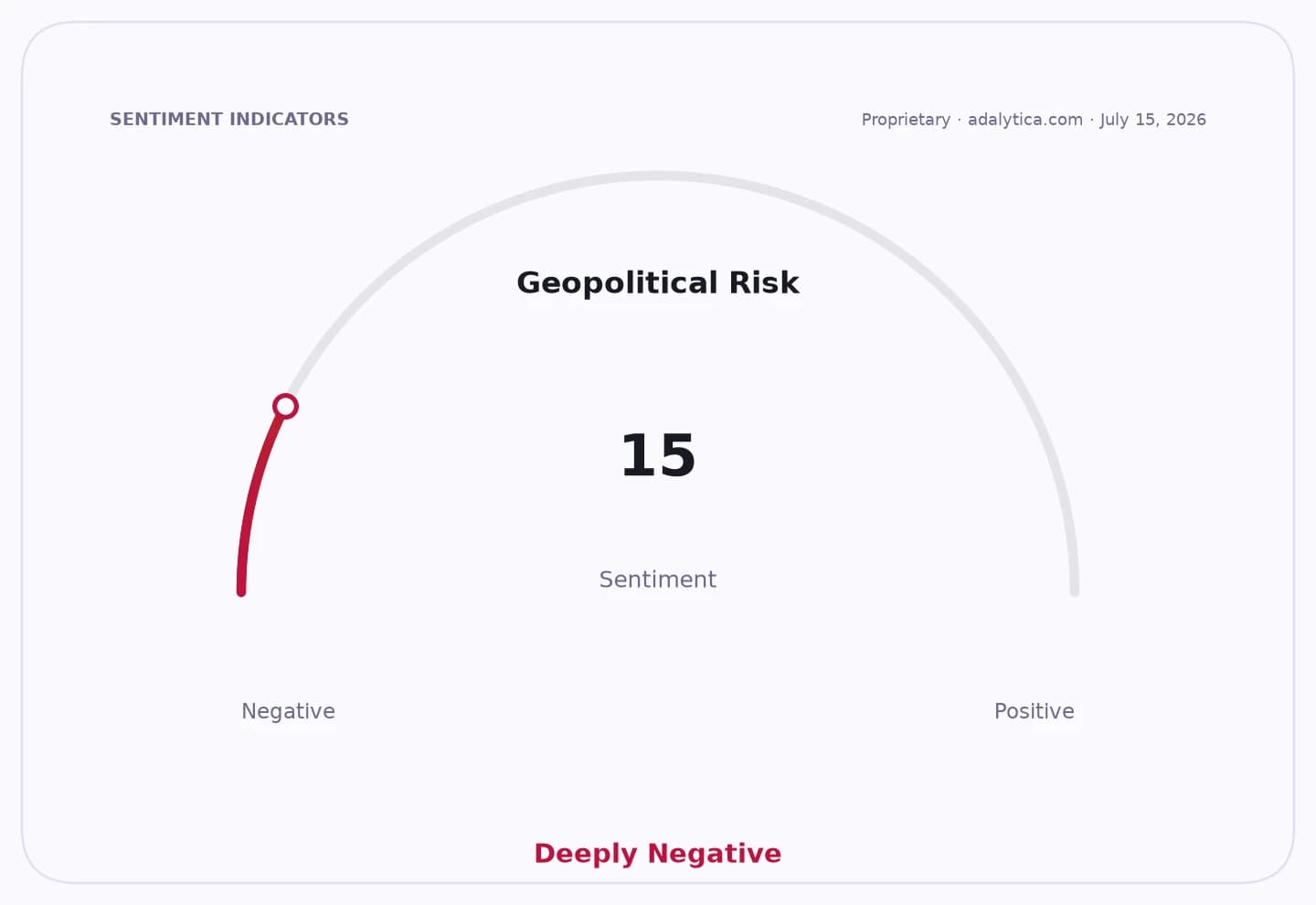
Donald Trump is trying to turn his policy record into an election-year asset, but the bigger political and economic reality is that voters appear far more focused on inflation, fuel prices and the cost of living than on the White House’s long list of achievements.
Trump Policy Record Meets Voter Inflation Focus

That mismatch matters because midterm elections are often a referendum on pocketbook conditions, and this one comes as the Iran conflict has helped push up gasoline and other prices, a combination that could shape control of Congress. Republicans need turnout and message discipline to protect their majorities, while investors are watching whether a stronger Democratic showing could lead to sharper checks on Trump’s policy agenda.
Sentiment IndicatorsⓘProprietary · adalytica.com · September 22, 2026
This is a snapshot — live sentiment, awareness and momentum for 130+ markets update continuously in the dashboard.Open AlphaPulse
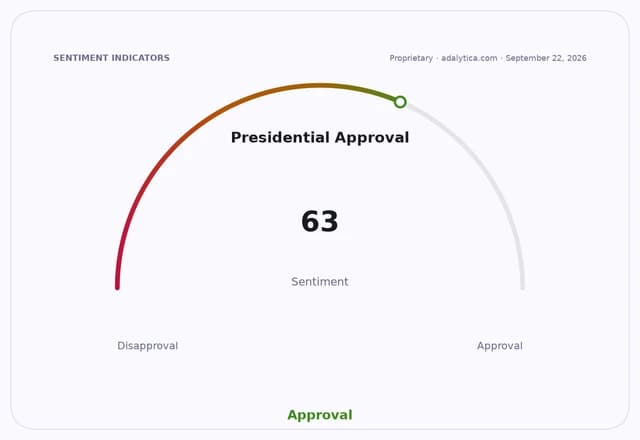
In a Truth Social post, Trump laid out 25 accomplishments spanning border enforcement, tax cuts, tariffs, military spending, drug prices, foreign policy and restrictions on diversity and transgender policies. He said his administration has created the “safest border in history,” claimed there have been no illegal entrants in 16 months, and said the U.S. has eliminated Iran’s uranium-enrichment capability.
The problem for Trump is that voters are grading the administration on the price of groceries, gasoline and rent, not on the sheer volume of policy wins. A Fox News poll taken Sept. 11-14 found 34% of voters named inflation or the cost of living as the top issue, ahead of 14% who chose the economy or jobs. A Marquette Law School poll taken Sept. 2-9 showed 37% of adults citing inflation and 16% picking the economy.
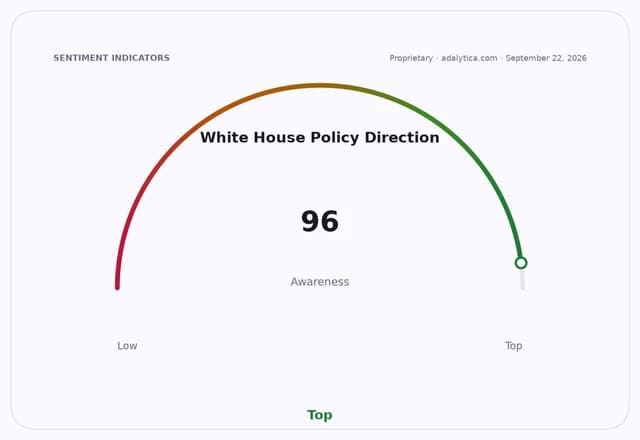
For investors, that means the election backdrop is still about policy risk, not just political theater. Tariffs, immigration limits, defense spending and foreign-policy escalation can all ripple through corporate margins, labor markets and energy costs. The more Trump leans on trade protection and aggressive executive action, the more companies with global supply chains, consumer exposure and import dependence have to plan for volatility.
The market angle is especially relevant for sectors tied to domestic manufacturing, defense and energy. Tariffs can help some U.S. producers, but they also raise input costs for importers and can squeeze retailers and manufacturers that rely on overseas sourcing. At the same time, heightened geopolitical tension tends to support defense stocks and can keep pressure on consumers already stretched by higher fuel prices.
Trump’s effort to recast his term as a string of victories also highlights how much the next phase of policy will depend on the election outcome. Republicans want to preserve congressional control to keep advancing their agenda; Democrats are organizing heavily around turnout and election monitoring, seeing a chance to slow or block it. For long-term investors, the practical takeaway is straightforward: politics can move markets, but the winning strategy is still to stay diversified, keep a multi-year horizon and avoid betting the portfolio on any one election result.
| Entity | Gains | Losses |
|---|---|---|
| Republicans | ▲legislative control | ▼turnout lag |
| Democrats | ▲anti-inflation message | ▼policy momentum |
| Consumers | ▲none | ▼higher prices |
| Defense and energy stocks | ▲spending tailwinds | ▼no clear loser |