Discount chains TJX, Ross Stores and Burlington are heading into the critical holiday period with a mixed but still resilient message for investors: consumers remain under pressure, but value retail still has room to win as shoppers trade down and buy more selectively.
TJX Ross Burlington Face Weak Holiday Demand
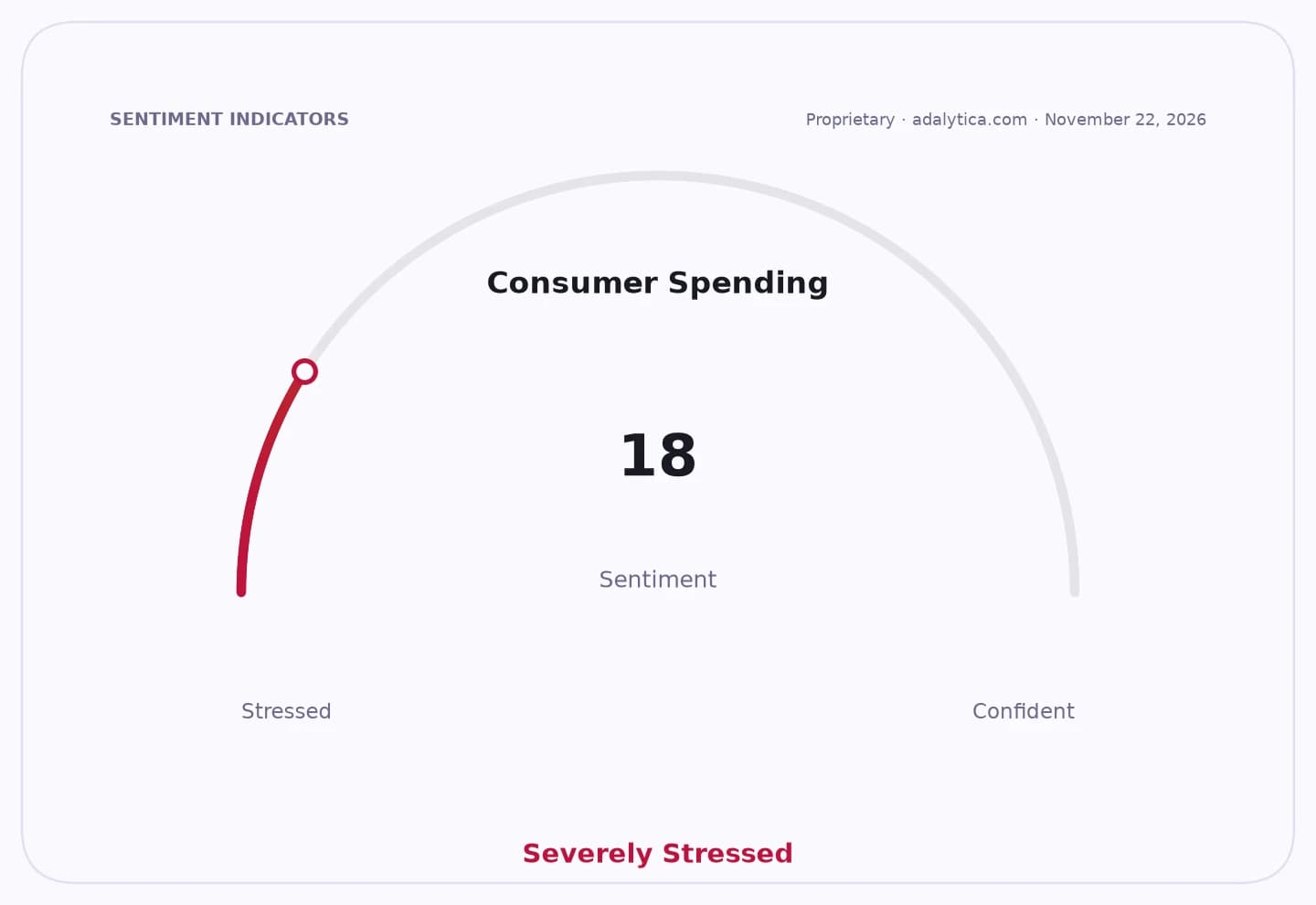
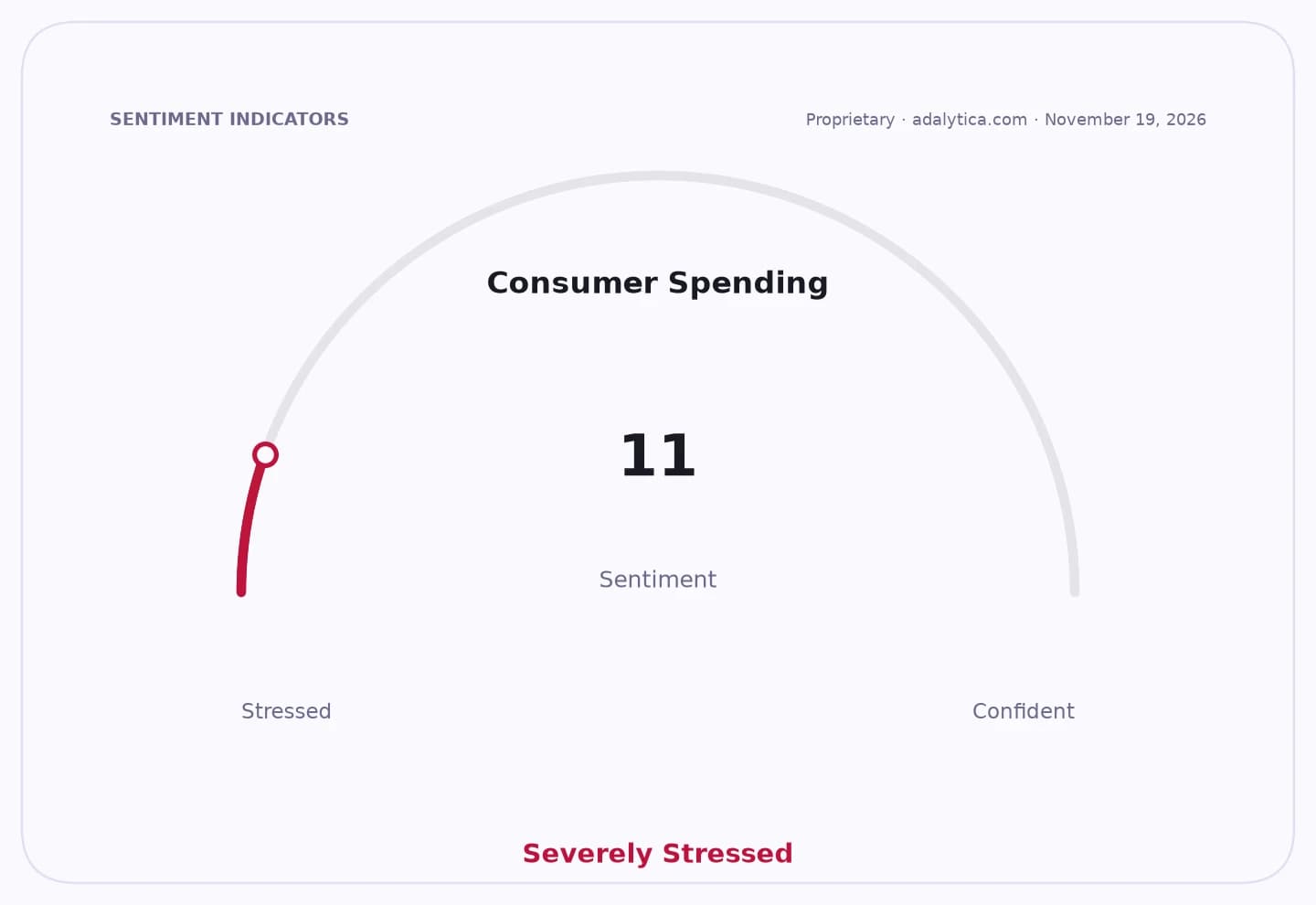
That matters because the latest consumer backdrop points to caution rather than collapse. A consumer-spending gauge from Adalytica shows sentiment at 4, or “Extreme Fear,” while retail-goods spending sentiment sits at 14, also “Extreme Fear,” underscoring how fragile discretionary demand remains. In that environment, off-price operators can capture budget-conscious shoppers even if overall apparel demand stays soft.
Sentiment Indicators
The Romanian outlet-market comments from FASHION HOUSE Outlet Centres reinforce the same theme: consumers are prioritizing quality-to-price ratios, shopping less impulsively and planning purchases more carefully. The company said 79% of consumers seek quality brands at reduced prices, while 57% are buying fashion less often than a year ago. That is the same behavioral shift that has long benefited off-price chains in the US.
On the tape, TJX has been the most stable of the trio but is still well below its 200-day moving average, suggesting investors are not paying up for a clean growth story. The stock closed at $132.95 on Nov. 16, below its 50-day average of $135.68 and far under its 200-day average of $149.33. Ross, which had outperformed earlier in the year, has also slipped back to $226.77, below its 50-day average of $231.57 and 200-day average of $224.39. Burlington has been hit hardest: it ended at $232.65, below both its 50-day average of $253.15 and its 200-day average of $304.74, reflecting a much steeper de-rating.
Consumer Spending — 30-day sentimentadalytica.com
Explore this data interactively — full history, time series and cross-market comparisons.
For investors, the question is not whether value retail still works, but how much of the benefit is already priced in. TJX remains the highest-quality name in the group because of its scale, sourcing power and broader category mix, which should help it absorb a weak demand environment better than Burlington. Ross offers a purer read on bargain-hunting traffic, but its narrower model can make it more sensitive to swings in apparel demand. Burlington looks the most exposed if consumers stay cautious, as its chart and distance from long-term averages imply the market is already discounting slower recovery and thinner margins.
Technical readings also argue for caution rather than momentum chasing. TJX’s RSI is 40.1, Ross’s is 47.5 and Burlington’s is 48.6, suggesting none are overbought after recent moves. TJX’s MACD has turned negative, Ross’s has flattened, and Burlington’s remains below its signal line, pointing to fading near-term momentum across the group.
The broader narrative is that off-price remains one of the few retail formats with structural support in a low-confidence consumer backdrop. But the trade is becoming more selective: investors are likely to favor the operators with the strongest balance sheets, the best inventory discipline and the clearest ability to keep attracting value-seeking shoppers without sacrificing margin.
| Entity | Gains | Losses |
|---|---|---|
| TJX | ▲Defensive traffic and scale premium | ▼Momentum buyers |
| Ross Stores | ▲Trade-down demand | ▼High-growth valuation case |
| Burlington | ▲Value-seeking shoppers | ▼Margin-sensitive shareholders |
| Full-price apparel retailers | ▲ | ▼Budget-conscious customers |