Thailand’s inflation is set to remain close to 4% through the first quarter of 2027, keeping pressure on the Bank of Thailand to balance price stability with a fragile recovery even as global oil prices retreat.
Thailand inflation stays near 4% into 2027

The central bank said headline inflation should hold near that level through the fourth quarter of 2026 and the first quarter of next year, driven mainly by higher energy and fresh food prices. It expects inflation to ease materially later in 2027, but the near-term path leaves little room for rate cuts and reinforces the monetary policy committee’s decision to keep the policy rate unchanged.
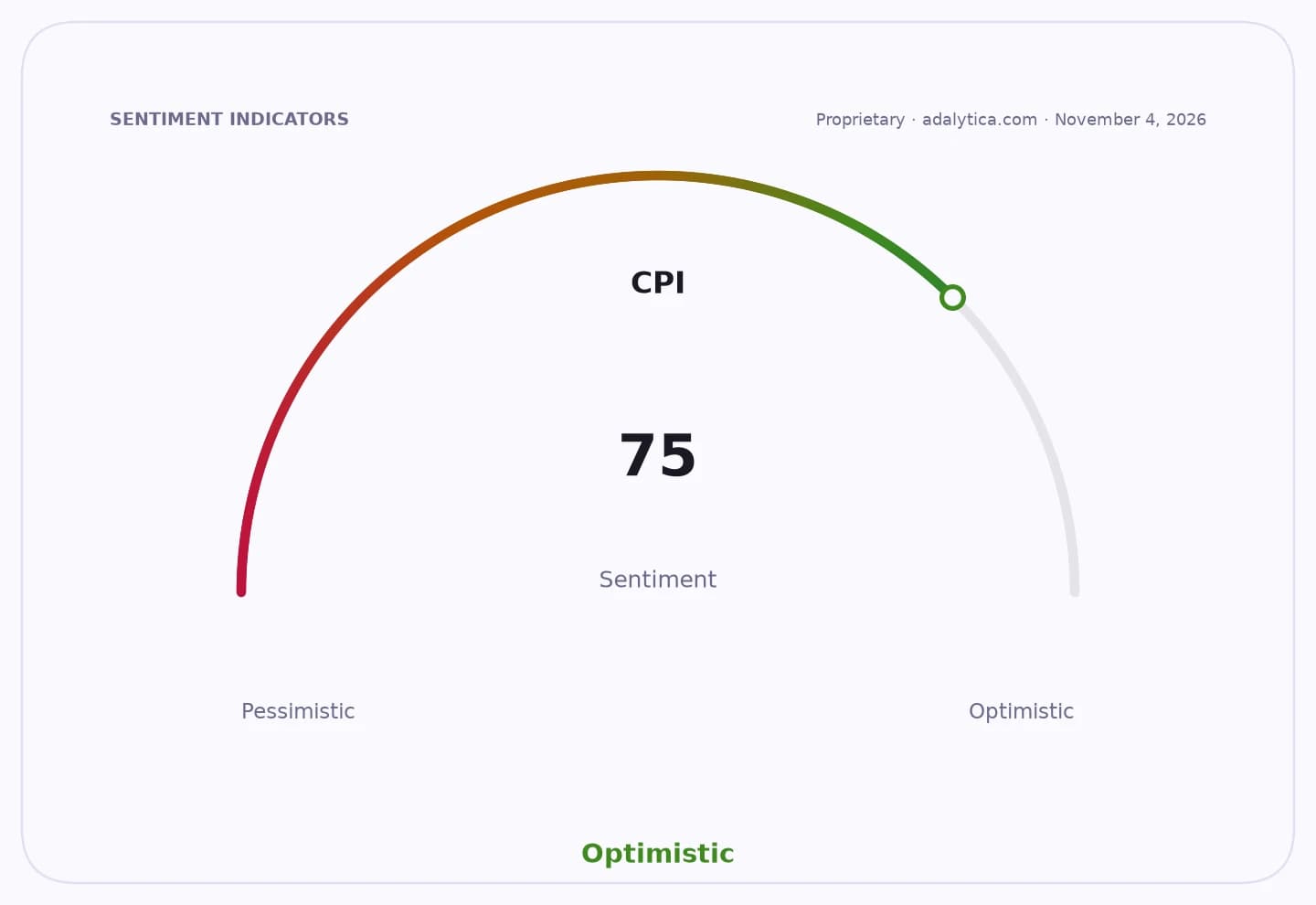
Sentiment Indicators
5-Year Breakevens
That matters economically because Thailand is facing a supply-driven inflation episode rather than one created by excess demand. Energy and food costs tend to filter quickly into household budgets, transport, manufacturing and services pricing, reducing real purchasing power while complicating the central bank’s effort to support growth. The BOT said it sees limited risk of inflation staying high for longer than forecast, but it is watching Middle East tensions, the scale of government fuel-price support and how much companies pass through higher costs.
For investors, the message is that Thai policy is likely to stay cautious. A stickier inflation profile generally means higher-for-longer rates, which can cap valuation expansion for local equities and keep pressure on rate-sensitive sectors such as property, utilities and domestic consumption plays. It also supports the baht only insofar as Thailand avoids a deeper growth scare; if inflation proves more persistent, the central bank may be forced to prioritize credibility over stimulus.
2% Target Confidence
The latest assessment comes after October inflation data broadly matched the BOT’s view, according to Assistant Governor Don Nakornthab. He also pointed to crude’s recent decline after the U.S. election, with Brent falling from $105.20 a barrel on Nov. 3 to $96.20 the next day, a drop of more than 8%. Even so, lower global oil prices may not quickly feed through to Thai consumers because fuel-price support is constrained by the Oil Fuel Fund’s deficit, which limits how fast domestic pump prices can fall.
That lag is important. It means relief from global energy markets may be slower than headline oil moves suggest, leaving Thai households exposed to elevated transport and living costs well into next year. It also means inflation expectations will remain under scrutiny, especially if businesses begin to embed higher input costs into final prices.
The near-term narrative is therefore not one of runaway inflation, but of stubbornly elevated prices that force the BOT to keep policy restrictive enough to preserve credibility while avoiding an unnecessary choke on recovery. The key catalyst now is whether energy prices continue to ease and whether government support measures can cushion consumers without worsening fiscal pressure.
| Entity | Gains | Losses |
|---|---|---|
| Bank of Thailand | ▲Policy credibility | ▼Room to cut rates |
| Thai households | ▲Slower inflation later | ▼Higher living costs now |
| Thai exporters | ▲Softer oil costs if realized | ▼Stronger baht risk if policy tightens |
| Rate-sensitive sectors | ▲Stable macro backdrop | ▼Higher financing costs |