Tesla’s next Full Self-Driving release is becoming a bigger investor story because it could determine whether the company’s autonomy push starts to look like a product cycle with measurable commercial value rather than a series of promises. Elon Musk said FSD version 15 will go to wide release next month and called it “something special,” framing the update as part of a holiday rollout and hinting at a meaningful step up in capability.
Tesla FSD v15 wide release set for next month
That matters economically because Tesla’s valuation increasingly rests on software, autonomy and the prospect of higher-margin revenue streams, even as its core auto business faces pressure. A credible advance in FSD would strengthen the case that Tesla can monetize its installed fleet through software upgrades, subscriptions and future robotaxi services. If the update is merely incremental, the market’s patience with autonomy timelines could wear thinner, especially after a year in which Tesla shares have remained volatile and technically fragile.
Sentiment Indicators
Tesla Inc
The timing is also important. Tesla stock closed at $345.82 on Nov. 20, well below its 50-day moving average of $375.64 and its 200-day average of $381.66, after a sharp drop that pushed the relative strength index to 33.3, a level that suggests the shares have been under sustained selling pressure. For investors, that means any autonomy milestone is arriving into a market that is already demanding evidence, not rhetoric.
Musk’s comments came after Tesla had already begun building a narrative around more advanced autonomy and AI-driven products. The company has been leaning harder on that theme in recent earnings disclosure, saying its launch of robotaxi service and Cybercab could unlock a service-driven model built on the same technology. FSD v15, if it materially improves real-world driving behavior, would be a supporting piece of that strategy by making Tesla’s software stack look more robust ahead of wider commercial deployment.
Tesla Inc — 30-day sentimentadalytica.com
Explore this data interactively — full history, time series and cross-market comparisons.
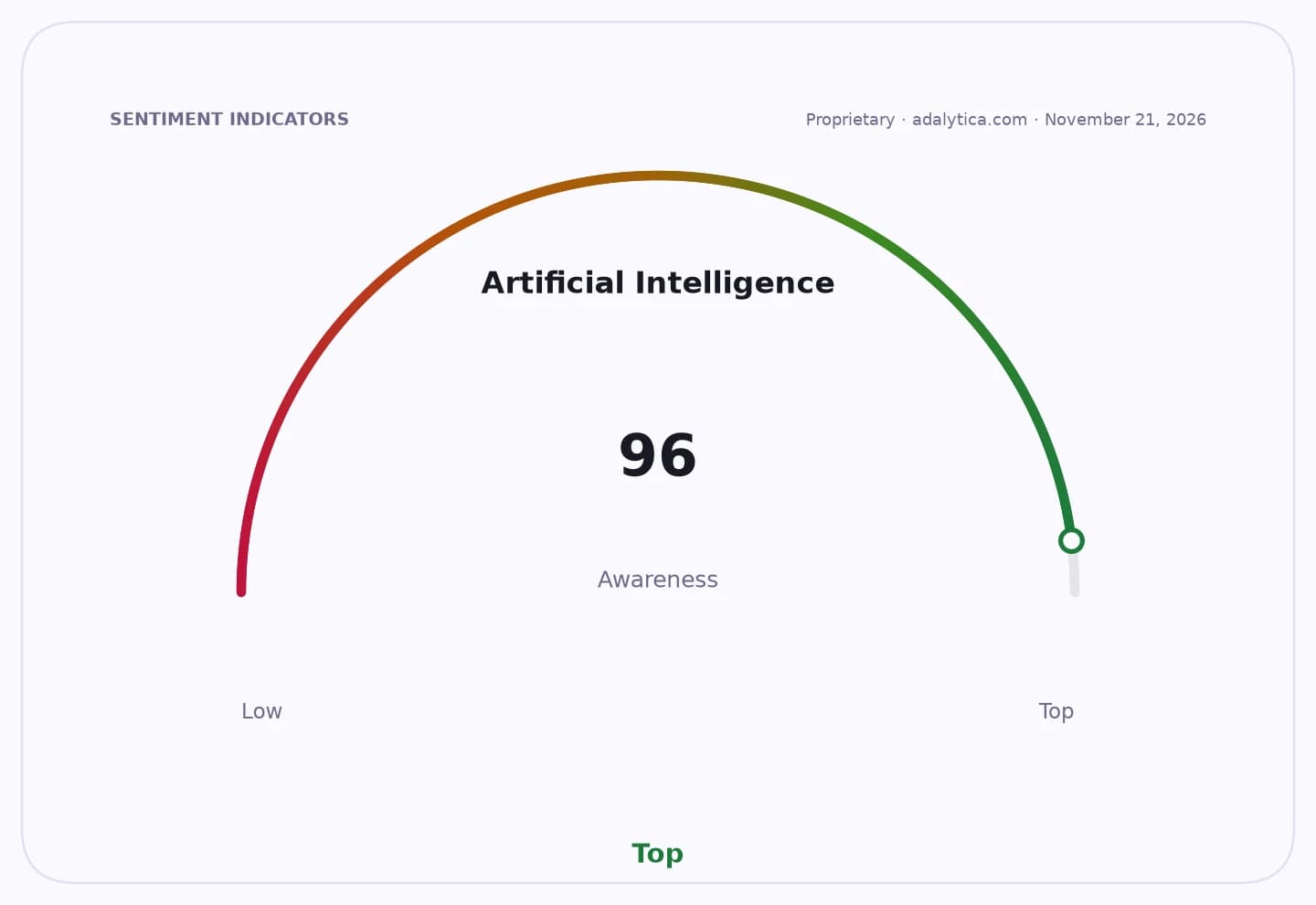
Artificial Intelligence
The update may also matter outside the U.S. Tesla has recently secured approval for FSD in Italy, a small but symbolically important regulatory step that suggests some markets are becoming more receptive to the company’s autonomous-driving systems. Wider release next month could give Tesla more data, more user exposure and another talking point as it seeks additional approvals abroad.
There are still clear risks. Musk has repeatedly used near-term language to describe autonomy progress, and investors have learned to separate product demos from revenue proof. Even a better FSD version does not eliminate regulatory hurdles, liability concerns or the challenge of convincing drivers to pay for software that must still earn trust on public roads. But if v15 does deliver a visible improvement in features such as pothole avoidance, sign recognition and parking behavior, it could help Tesla reassert momentum in one of the few growth stories left in the stock.
For investors, the key question is whether FSD v15 becomes a meaningful step toward monetizable autonomy or another upgrade that keeps the narrative alive without changing the economics. The answer will likely shape sentiment around Tesla into year-end and into 2027, when the company’s AI and robotaxi ambitions will need more than slogans to support them.
| Entity | Gains | Losses |
|---|---|---|
| Tesla | ▲Stronger autonomy narrative | ▼If rollout underwhelms |
| FSD subscribers | ▲Better driving features | ▼Waiting for full autonomy |
| Tesla bulls | ▲Validation of AI thesis | ▼Patience if update is modest |
| Short sellers | ▲Nothing if delivery disappoints | ▼If v15 restores momentum |