A giant 45-ton gold ore block discovered in a mountain in eastern China has done far more than wow visitors — it helped transform a depleted mine into a long-running tourism business that now generates roughly 4.39 billion yuan, or about 17 trillion dong, and supports thousands of local jobs.
Suichang Gold Mine Park Turns Ore Block Into Tourism
That is the real investment story here. The block itself contains only about 9.8 kilograms of gold and 165 kilograms of silver, so its value as metal is tiny relative to its value as an attraction. By putting the ore block at the entrance of Suichang Gold Mine National Park in Zhejiang, local authorities turned an industrial relic into a destination, proving that old-resource sites can become durable cash-generating assets when they are paired with tourism, preservation and modern extraction.
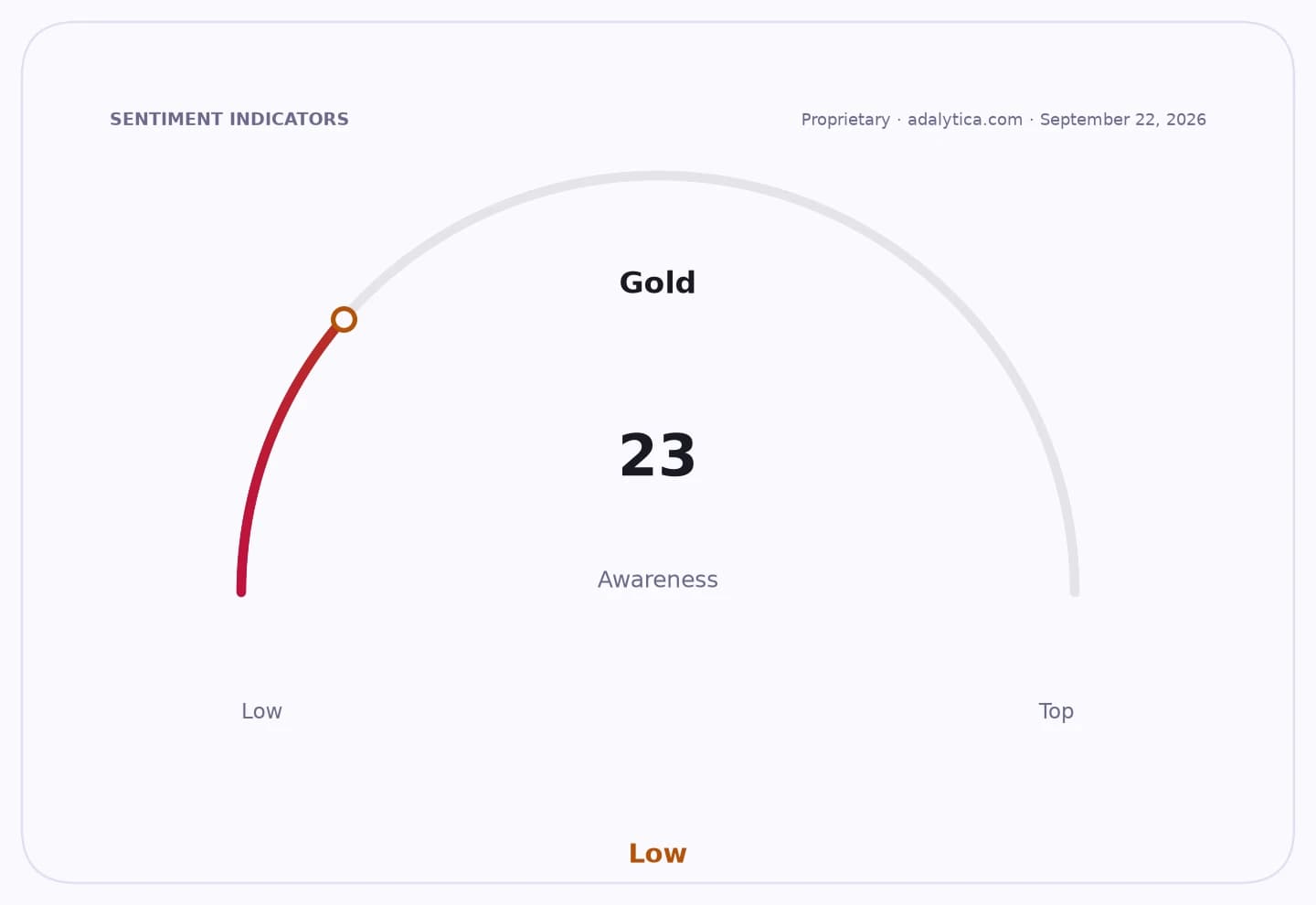
Sentiment IndicatorsⓘProprietary · adalytica.com · September 22, 2026
This is a snapshot — live sentiment, awareness and momentum for 130+ markets update continuously in the dashboard.Open AlphaPulse
For investors, the lesson is broader than one Chinese mine. Scarce natural resources do not always end in shutdown and write-offs. With the right infrastructure and branding, even a fading mine can be repurposed into an experience economy business with multiple revenue streams: admissions, museum tickets, hands-on “gold panning” activities, guided tours and continued low-grade mining. Suichang has attracted 246 million visits since 2008, and the park still produces about 500 kilograms of gold and 5,000 kilograms of silver a year.
That combination matters economically because it extends the life of an asset that might otherwise have been abandoned. Instead of extracting value once and moving on, the park keeps generating employment, local spending and tax revenue. More than 3,000 people in the area benefit directly or indirectly, while the site has already absorbed 1.8 billion yuan in ecological restoration and tourism infrastructure, with another 2 billion yuan planned for upgrades.
The biggest takeaway for long-term investors is that commodity themes are not just about metal prices. They are also about the businesses built around those prices: operators, equipment suppliers, local developers and tourism-linked service providers. When a mine can attract millions of visitors, the moat is no longer underground ore alone — it is the ability to monetize history, scarcity and spectacle.
Gold itself remains a hot market, with international prices elevated and gold-focused funds still reflecting strong investor interest. But this story shows why physical gold is only one part of the trade. The more durable opportunity, in some cases, sits with the companies and regions that can turn geology into a recurring economic engine.
For patient investors, that is the real appeal: assets that keep earning long after the original discovery stops being news. This is the kind of model worth watching, especially in resource sectors where the best returns may come from reinvention rather than extraction alone.
| Entity | Gains | Losses |
|---|---|---|
| Suichang mine park | ▲Tourism revenue, jobs, brand value | ▼Legacy of depletion |
| Local residents | ▲Employment and visitor spending | ▼None meaningful |
| Gold sellers and miners | ▲Higher visibility for gold assets | ▼Less focus on pure extraction |
| Visitors and local economy | ▲Low-cost entertainment, regional growth | ▼None meaningful |