Soybean futures turned higher as a sharp rally in soymeal lifted the oilseed complex, even as corn and wheat extended losses and kept pressure on the broader grain market.
Soybeans Rise as Soymeal Leads Grain Complex

The move highlights a split in agricultural commodities: protein demand and margin flows are supporting soybeans, while abundant grain supply and softer energy-linked buying are weighing on corn and wheat. For investors, that divergence matters because it points to a market driven less by broad inflation fears and more by relative value inside the crop basket, with soymeal acting as the main catalyst.
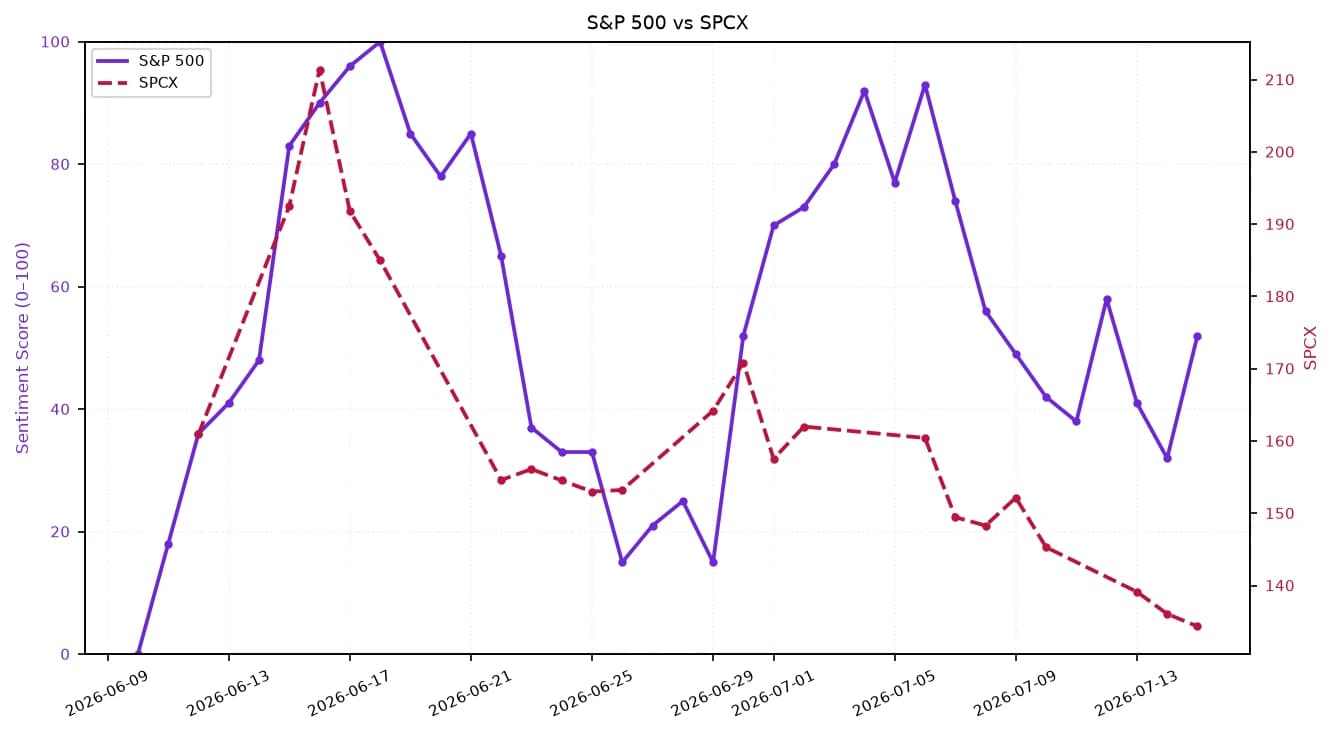
Sentiment IndicatorsⓘProprietary · adalytica.com · September 19, 2026
This is a snapshot — live sentiment, awareness and momentum for 130+ markets update continuously in the dashboard.Open AlphaPulse

Soybeans were last trading around $27.68 in the SOYB fund, modestly below Thursday’s close but still well above the 50-day moving average of $26.24 and the 200-day average of $24.39, a sign the uptrend remains intact despite the latest pause. The ETF’s RSI reading of 57.4 suggests momentum has cooled from overbought levels, but not enough to break the broader bullish structure. Corn, by contrast, slipped to $19.70 in CORN, while wheat eased to $25.86 in WEAT, with both markets retreating from recent highs as traders digested a weaker tone in feed grains.
The soybean story is being driven by soymeal, the key feed component of the crush complex, which has attracted buying on expectations of firmer demand and tighter nearby supplies relative to competing grains. That shift matters economically because soymeal prices feed directly into livestock costs and crush margins, making soybeans more than just a crop bet: they are a lever on the industrial side of the ag complex. When soymeal strengthens faster than beans, crushers can benefit, but it also tends to draw speculative flows into soybeans themselves.
Corn’s setback looks more like a corrective move after a strong run. CORN had surged as high as $20.03 in late August and remains above both its 50-day and 200-day moving averages, but the latest decline, alongside an RSI of 41.8, shows buying momentum fading. Adalytica’s Corn Fear & Greed Index still sits at 88, or “Extreme Greed,” while awareness remains in “Fear,” a combination that often leaves the market vulnerable to profit-taking if there is no new weather or export catalyst.
Wheat is the weakest leg of the complex. WEAT has pulled back from a 2026 peak near $26.96 and its RSI has dropped to 28.9, a level that often signals oversold conditions but does not guarantee a reversal. The slide reflects a market still focused on supply rather than demand, with traders reluctant to chase prices higher without evidence of tighter global stocks or stronger export sales.
Energy is adding to the split. West Texas Intermediate crude has recovered to about $107.82 a barrel in the latest forecast, but broader oil signals remain marked by extreme fear in Adalytica’s USO gauge. That matters because fertilizer, freight and crop input costs all feed back into grain economics, yet the current oil move is not enough to lift the entire ag basket. For now, the market is treating soybeans as a relative strength trade and corn and wheat as supply-heavy laggards.
The bigger macro backdrop is not inflationary so much as selective. Producer prices for all commodities have climbed to 287.928 in August, up from 285.181 in July, but the monthly change was modest and the series points to only a small further increase in September. That suggests commodity inflation is not accelerating across the board, leaving crop-specific fundamentals — especially crush demand and grain balance sheets — to drive direction.
For investors, the key question is whether soymeal can keep pulling soybeans higher without a broader bullish turn in grains. If it can, soybean-linked exposure may continue to outperform corn and wheat. If meal demand fades or harvest pressure builds, the recent resilience in soybeans could narrow quickly. The next catalyst will be whether end-user buying and export demand can justify soybeans’ premium over the rest of the grain complex.
| Entity | Gains | Losses |
|---|---|---|
| Soybean bulls | ▲Higher bean prices | ▼ |
| Soymeal crushers | ▲Stronger crush margins | ▼ |
| Corn traders | ▲ | ▼Weaker corn futures |
| Wheat traders | ▲ | ▼Softer wheat prices |