South Korea said it will not send troops or military assets to the Middle East, drawing a line against being pulled into any widening conflict around Iran even as Washington presses allies to do more to secure the Strait of Hormuz.
South Korea Won't Send Troops to the Middle East
The decision matters because South Korea is one of Asia’s most energy-dependent economies, with a large share of its crude shipments transiting the chokepoint. Any military commitment that increases the risk to South Korean forces — or to the country’s shipping lanes and workers in the region — would carry direct economic costs for an import-reliant economy already sensitive to oil-price spikes and supply disruptions.
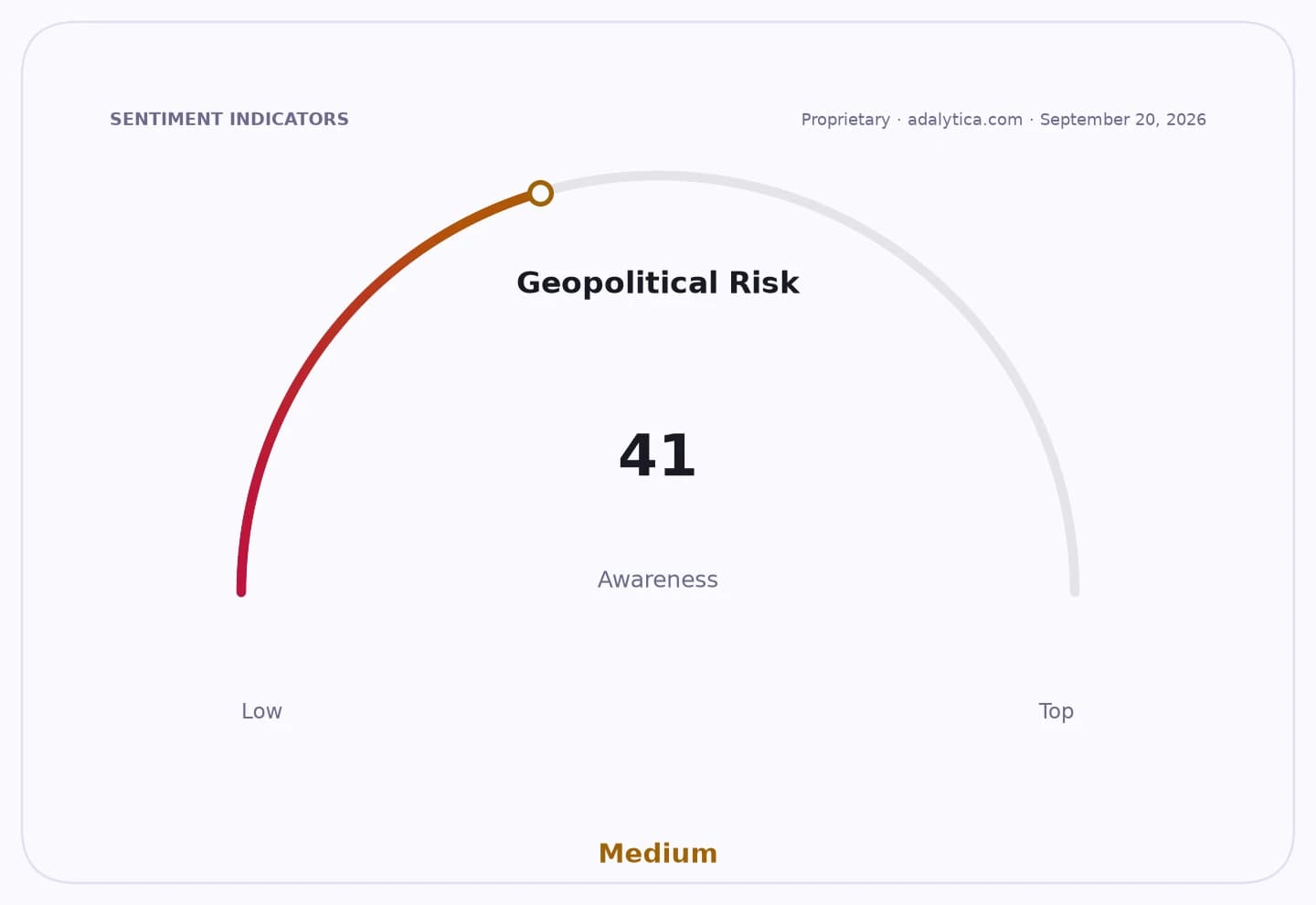
Sentiment IndicatorsⓘProprietary · adalytica.com · September 20, 2026
This is a snapshot — live sentiment, awareness and momentum for 130+ markets update continuously in the dashboard.Open AlphaPulse
President Lee Jae Myung said Seoul would not deploy any force that could drag it into war or place units under foreign command, but left open “minimum” measures to protect commercial vessels, oil routes and Korean nationals. His government is weighing a bigger role for the Cheonghae naval unit, which currently operates near the Hormuz Strait, signaling that Seoul wants a narrower maritime-protection posture rather than a combat role.
The stance also highlights the limits of US pressure on allies when domestic politics and economic exposure diverge from Washington’s priorities. US President Donald Trump said on Truth Social that countries benefiting from oil flows through the strait but not supporting the US should compensate Washington after the conflict ends. That kind of message raises the cost of free-riding for allies, but it also sharpens resistance in capitals that see little upside in military escalation.
In Seoul, the push for restraint has political backing. Lawmakers from the ruling Democratic Party said on Sept. 17 that troop deployment would not serve national interests or public safety, while defense minister nominee Kang Shin Chul said any decision on Hormuz must be judged by Korea’s security and citizens’ welfare. That suggests the administration has room to defend a limited, rules-based maritime presence without committing to a broader coalition mission.
For investors, the immediate significance is less about troop movements than about energy risk premium. Korea’s refusal to escalate reduces the probability of direct exposure for its forces, but it does not remove the underlying threat to shipping lanes and imported fuel costs. The bigger market question is whether the region’s tensions persist long enough to lift freight, insurance and crude prices, which would feed into Korean industrial margins, consumer inflation and the won.
The move also fits with Lee’s broader message that regional instability is slowing Korea’s energy transition. His meeting with International Energy Agency head Fatih Birol underscored Seoul’s effort to strengthen supply chains while avoiding deeper military entanglement. For markets, the balance to watch is whether South Korea can preserve trade security without becoming a larger participant in a conflict that would mostly be a cost, not a gain, for its economy.
| Entity | Gains | Losses |
|---|---|---|
| South Korea government | ▲Avoids military escalation | ▼Faces energy-security exposure |
| US pressure campaign | ▲Gains leverage over allies | ▼Faces allied resistance |
| Korean shipping and energy importers | ▲Reduced war-risk exposure | ▼Still vulnerable to oil shocks |
| Iran/Hormuz escalation hawks | ▲Less allied buildup | ▼Weaker coalition support |