Sklavenitis is using higher pay to lock in labour stability in Greece’s tight retail market, lifting its basic monthly salary to 1,100 euros and widening the gap over the legal minimum wage to 19.6%.
Sklavenitis raises pay to 1,100 euros in Greece
The country’s largest supermarket chain said the new pay policy took effect on Nov. 1 and covers nearly all of its 37,340 workers, with average pay rising 4.37% for 99% of staff. For employees closest to the base wage, the average increase is about 8%, underscoring how the company is concentrating support at the lower end of its workforce while preserving a broad wage structure.
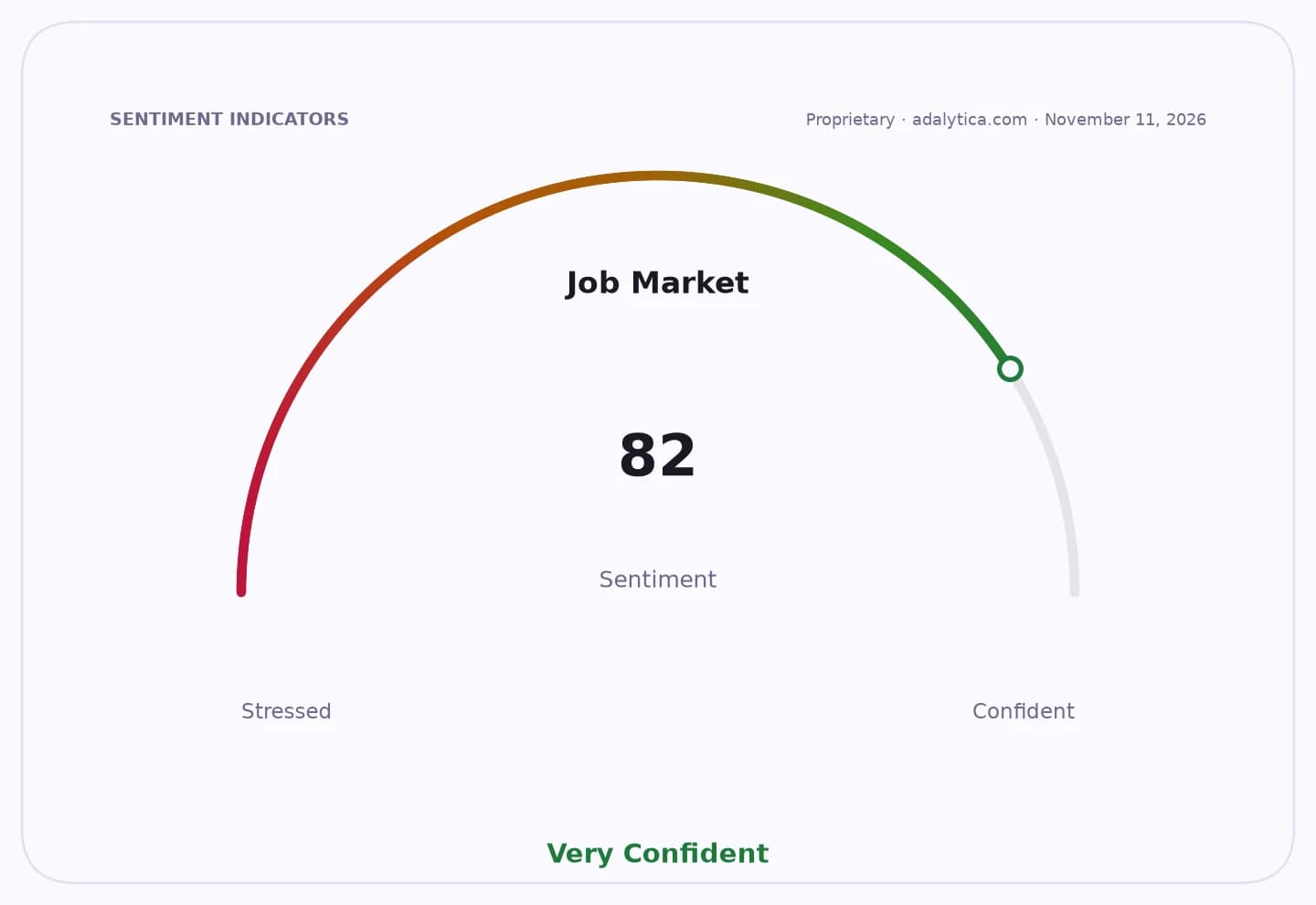
Sentiment Indicators
That matters economically because grocery retail is one of the most labour-intensive parts of the consumer economy, and pay decisions there feed directly into household incomes, operating costs and, ultimately, pricing power. Sklavenitis is not just matching inflationary pressures; it is setting a wage floor well above the statutory minimum at a time when employers across Europe are still balancing tighter margins against persistent wage expectations.
The company’s move also has signalling value. By lifting the base salary 100 euros from 1,000 euros, it is positioning itself as an employer of choice in a sector where turnover, absenteeism and staffing shortages can be costly. The package goes beyond base pay, adding family allowances of 60 euros to 140 euros a month depending on children, seniority bonuses of 100 euros to 250 euros for long-serving workers, and a 200-euro meal voucher for families with children studying away from home.
Retention appears to be the clearest commercial logic. Sklavenitis is keeping existing staff discounts, health insurance coverage paid in full by the company, reward vouchers and family benefits for larger households and employees with special-needs children. In a business built on thin margins and high-volume execution, those measures can be cheaper than the costs of churn, recruitment and training.
For investors and competitors, the key question is whether the pay increase can be absorbed without forcing a sharper pass-through to consumers. The company’s labour bill is projected to reach 851.8 million euros in 2026, highlighting how large personnel costs already are in the group’s economics. That scale gives Sklavenitis room to absorb more than smaller rivals, but it also raises the bar for operating efficiency, productivity gains and disciplined price management.
The announcement also fits a broader regional pattern of retail labour repricing. As governments tighten minimum-wage enforcement and households remain sensitive to living costs, large employers with strong balance sheets are being pushed to offer more than the legal floor to secure labour supply. For Sklavenitis, the upside is workforce loyalty and brand strength; the risk is margin pressure if consumer demand weakens or competitors are forced to follow.
| Entity | Gains | Losses |
|---|---|---|
| Sklavenitis workers | ▲Higher pay and benefits | ▼None directly |
| Sklavenitis | ▲Better retention, labour stability | ▼Higher payroll costs |
| Smaller supermarket rivals | ▲Some pressure to raise pay | ▼Cost disadvantage |
| Consumers | ▲Potentially steadier service | ▼Risk of price pass-through |