Shanghai’s office market is now the emptiest among major global business districts, with vacancies rising to 24% as overseas tenants retreat from China’s commercial capital.
Shanghai Office Vacancies Rise to 24%

The figure matters because it captures more than a property slump: it reflects weaker cross-border business demand, fading confidence among multinational firms and a prolonged drag on one of China’s key services hubs. For landlords, it means lower rental income, harder lease renewals and continued pressure on valuations. For the broader economy, it points to a softer private-sector investment cycle at a time when China is already trying to stabilise growth.
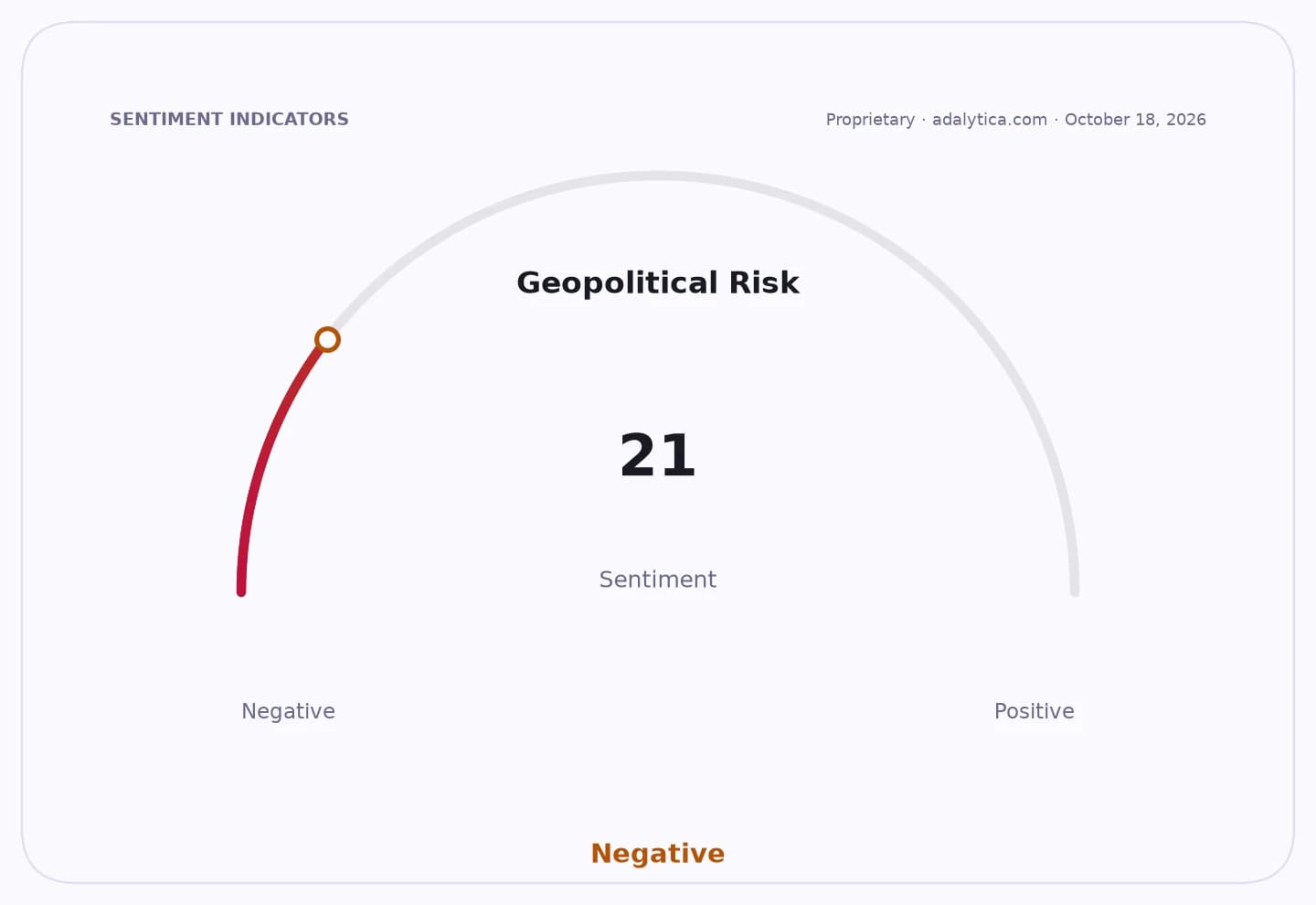
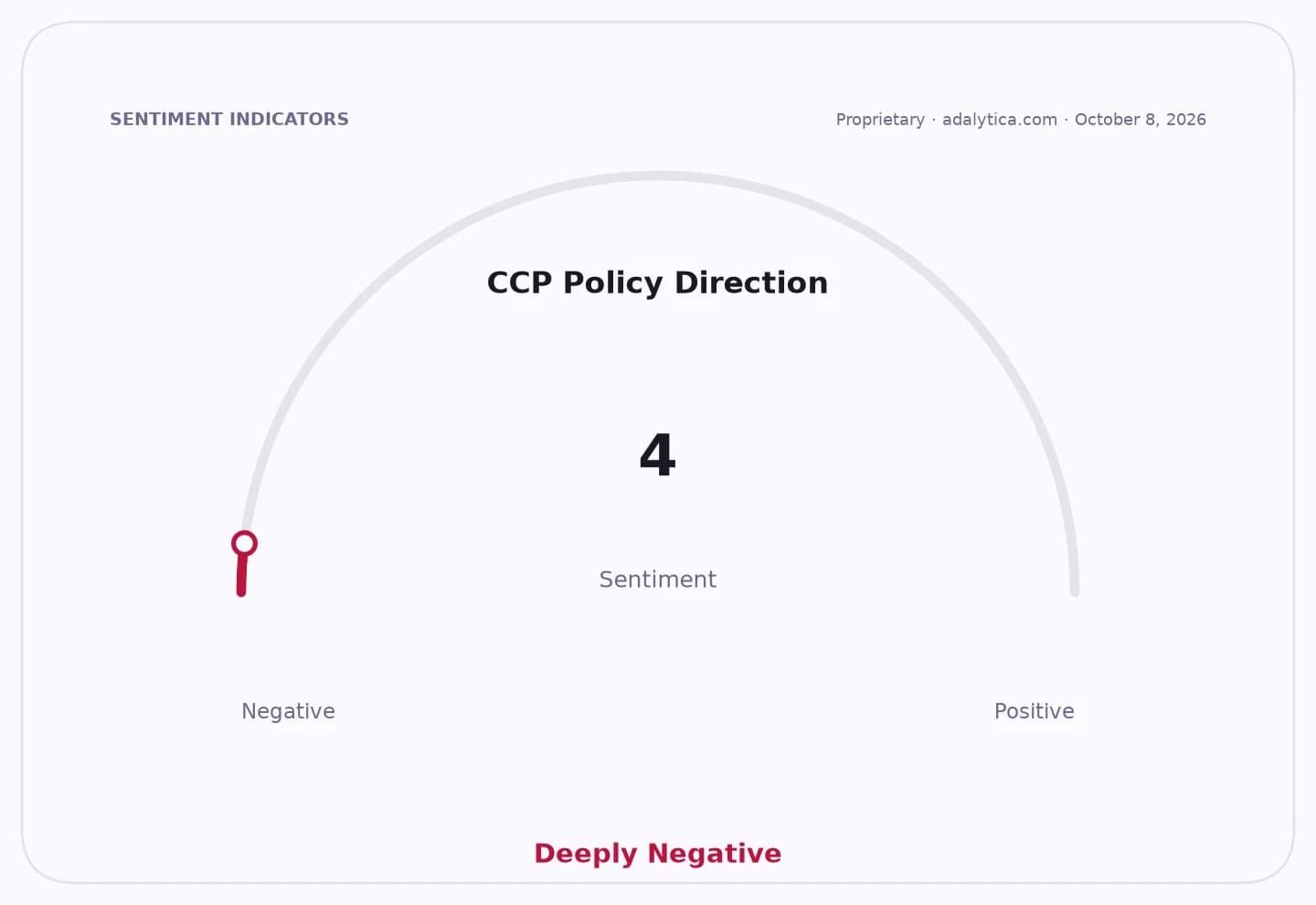
Sentiment Indicators
The withdrawal of international tenants is particularly significant because these occupiers typically anchor premium towers and long lease pipelines in core districts. When they reduce headcount, consolidate space or leave entirely, the impact spreads beyond one building: vacancy rates rise, fit-out spending slows and landlords face more aggressive concessions to keep remaining tenants.
That dynamic also has implications for capital markets. Office property values tend to react first when cash flows weaken, and sustained vacancies can limit refinancing options for developers and property owners already facing tighter funding conditions. In a market where occupancy is losing support from overseas demand, pricing power shifts toward tenants, not landlords.
The backdrop is a broader decoupling in commercial activity. Adalytica’s US–China Relations Sentiment gauge remains neutral at 39, but its awareness reading shows “extreme fear,” underscoring how geopolitics and corporate caution continue to weigh on cross-border decisions. Global Stability sentiment has also weakened, suggesting firms are still operating in a risk-averse environment.
For investors, the read-through is not limited to Shanghai. The vacancy overhang is a warning sign for China’s office landlords, property funds and related service providers that depend on multinational expansion. It also reinforces the case that any recovery in the country’s commercial real estate market will likely require not just domestic stabilisation, but a return of foreign capital and tenant demand.
| Entity | Gains | Losses |
|---|---|---|
| Shanghai tenants | ▲More leasing leverage | ▼Little incentive to commit long term |
| Office landlords | ▲Limited upside from concessions | ▼Lower rents, higher vacancies |
| Multinational occupiers exiting | ▲Cost savings, flexibility | ▼Loss of prime China footprint |
| China property market | ▲Potential pressure to reform supply | ▼Valuations, refinancing, sentiment |