Sekisui House and Osaka Public University are testing whether a view of a garden at night can help people recover from fatigue, a small experiment that points to a much bigger investment theme: Japan’s housing market is shifting from pure shelter toward health, comfort and amenity-driven pricing power.
Sekisui House Tests Night Garden Views
That matters because in a slow-growth, ageing economy, developers cannot rely on volume alone. They need features buyers will pay for, especially as consumers become more cautious and selective. A home that can credibly promise better recovery, lower stress and a stronger sense of well-being could command a premium in a market where differentiation is increasingly everything.
Sentiment Indicators
The study’s premise is simple but commercially relevant. If night-time garden views measurably improve fatigue recovery, then design, landscaping and the way homes interface with nature become more than aesthetic choices. They become product features. For large builders such as Sekisui House, that opens the door to a higher-value housing proposition and a possible edge in a market where household budgets are under pressure and demand is becoming more experiential.
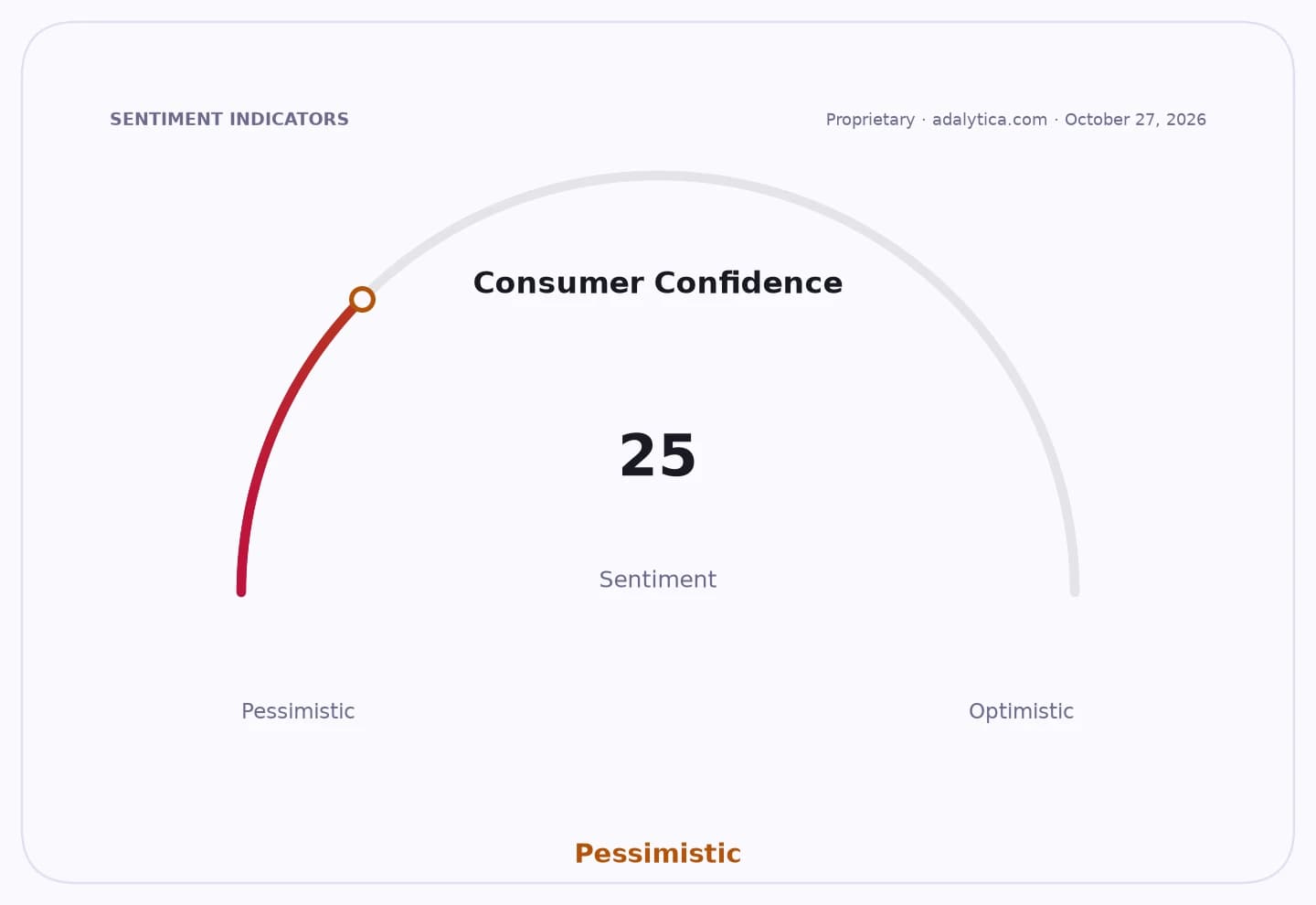
The broader backdrop is a consumer climate that is still cautious even as lifestyle expectations rise. Adalytica’s consumer confidence recession sentiment gauge sits at a neutral 50, while the broader S&P 500 trade signals remain in extreme fear, underscoring how fragile risk appetite is and how selective capital has become. In that environment, investors tend to reward companies that can show tangible differentiation, pricing resilience and a credible path to margin support.
For the real estate and construction complex, the implication is that wellness-linked design could become a quiet but meaningful source of demand. That is especially true in Japan, where demographic pressures and the need to attract older buyers make comfort, accessibility and restorative environments more commercially valuable than ever. If the findings hold up, expect competitors to lean harder into greenery, lighting, views and other quality-of-life upgrades that can justify higher selling prices or stronger occupancy.
For investors, the opportunity is not in the headline itself but in the second-order effect: the market is likely underestimating how much “health at home” can matter to future housing demand and brand value. Sekisui House is positioned to benefit if this line of research translates into product design and premium positioning, while builders that compete only on floor space and price may find themselves left behind.
The real takeaway is that Japan’s homebuilders are being pushed toward a wellness-inflected value proposition, and that could be an underappreciated margin lever over the next several years. If night garden views can help sell homes, they can also help re-rate the companies that know how to turn livability into earnings.
| Entity | Gains | Losses |
|---|---|---|
| Sekisui House | ▲Premium pricing power | ▼Commodity-style rivals |
| Buyers seeking wellness | ▲Better fatigue recovery | ▼Plain-vanilla housing |
| Japanese homebuilders with amenities | ▲Stronger differentiation | ▼Low-margin builders |
| Lifestyle-focused investors | ▲New growth angle | ▼Firms tied to volume only |