Segovia’s companies put more than 100 vacancies on the table on Wednesday in a sign that local employers are still hiring even as labor-market conditions remain uneven and jobseekers face intense competition for openings.
Segovia employers post 100 job vacancies
The Employment, Entrepreneurship and Innovation Fair, held at the CIDE and backed by the Segovia Chamber of Commerce and the Castilla y León regional employment service, brought together firms from industry, transport, logistics, hospitality, retail and services in an attempt to match workers with hard-to-fill roles. That mix matters because it points to a broader problem in Spain’s regions: companies are not only looking for more staff, they are also struggling to find the right profiles.
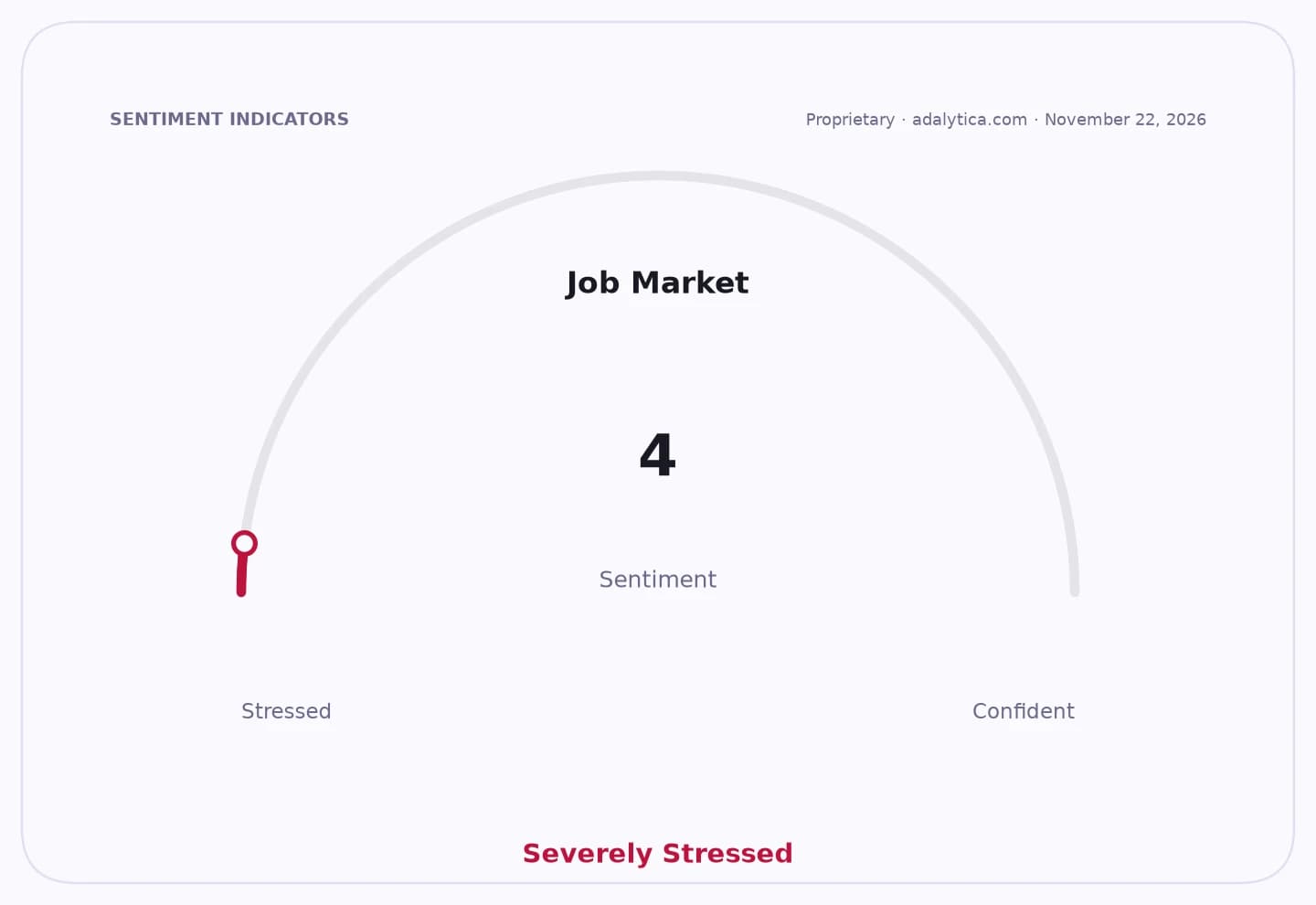
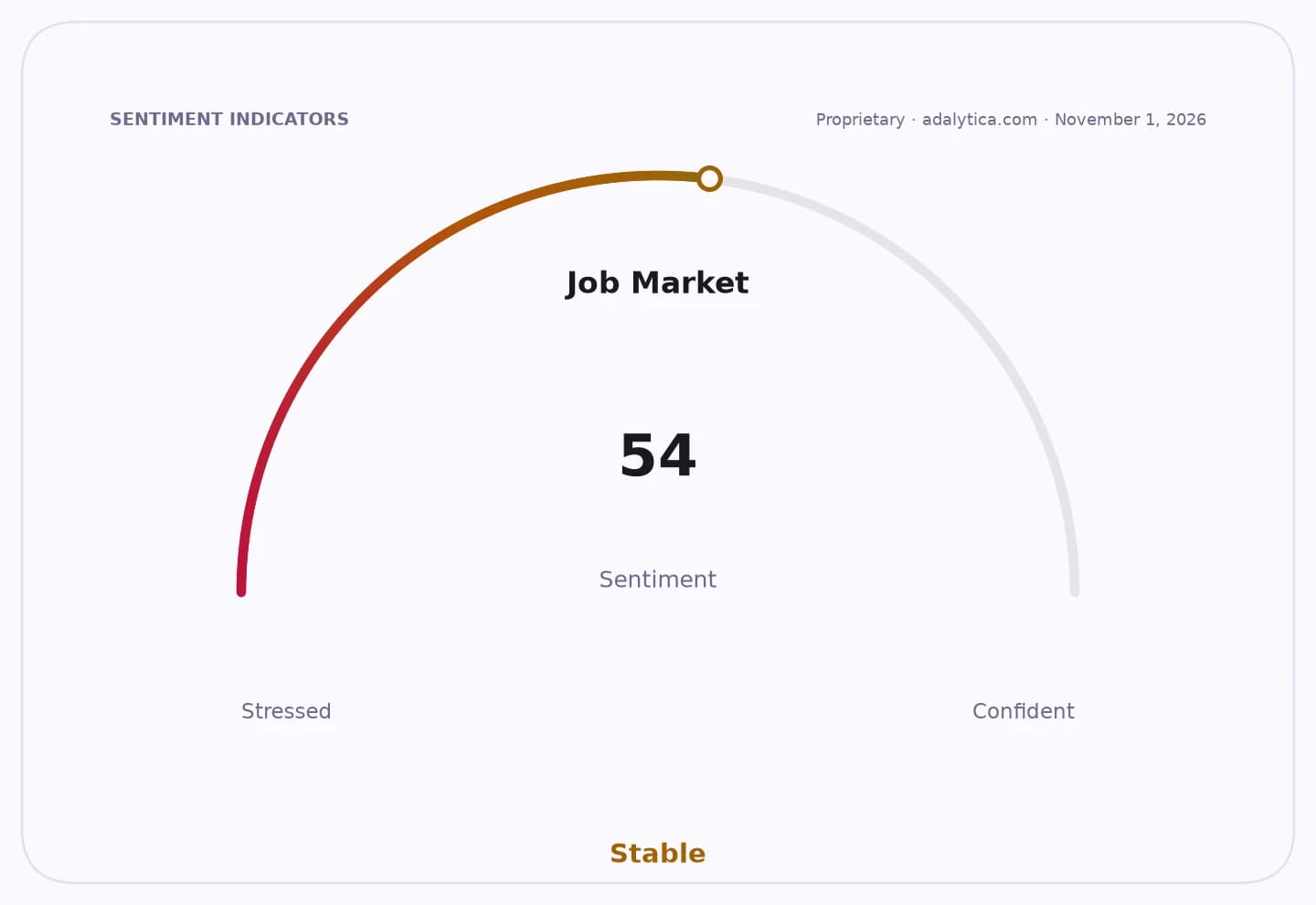
Sentiment Indicators
Among the most sought-after candidates were quality and project engineers, maintenance technicians, mechanics, electromechanics, truck and bus drivers, forklift operators and production workers. The fair also highlighted demand for hospitality staff, administrative workers and financial-analysis profiles, suggesting that the shortage is not confined to blue-collar roles. For local employers, the event is as much about filling vacancies as reducing hiring friction in a market where speed and direct contact can make the difference.
The list of participating companies — including Grudem, Innoporc, Copese, Hola Food, Embutidos Eresma, Naturpellet, Cárnicas Tabladillo, Verescence, Finca El Rancho and Lupa, alongside newcomers Axertia and Autocares Bayo — reflects Segovia’s industrial base and its reliance on food, manufacturing, transport and tourism-linked activity. That makes recruitment a leading indicator for local output: if firms are expanding headcount, they are likely responding to steady order books or seasonal demand rather than preparing for a slowdown.
The event also underscores the role of public institutions in smoothing labor-market mismatches. Organizers paired job offers with talks on hiring criteria, entrepreneurship, resilience and the use of artificial intelligence in job searches, while Ecyl presented its services to companies seeking talent. The emphasis on skills, adaptability and technology speaks to a labor market where vacancies can coexist with unemployment if candidates do not match employers’ requirements.
For investors and business owners, the immediate takeaway is that labor availability remains a strategic issue for Spanish companies outside the major metropolitan areas. Sectors such as food processing, logistics and hospitality depend on reliable hiring to protect margins and meet demand, while persistent shortages can lift wage pressures and constrain growth. The fair suggests Segovia’s employers are still in recruitment mode, but it also shows that access to labor is becoming a competitive factor in its own right.
| Entity | Gains | Losses |
|---|---|---|
| Segovia employers | ▲Wider talent pool | ▼Vacancy drag |
| Jobseekers | ▲Direct access to hiring firms | ▼Stronger competition |
| Local economy | ▲More hiring activity | ▼Labor shortages |
| Public employment services | ▲Greater relevance | ▼Pressure to deliver matches |