Santa Fe has locked in a rare cash settlement with Argentina’s national government that eases provincial financing pressure, trims near-term borrowing needs and adds a new template for how cash-strapped provinces can clear cross-debts with Buenos Aires.
Santa Fe gets cash settlement from Argentina
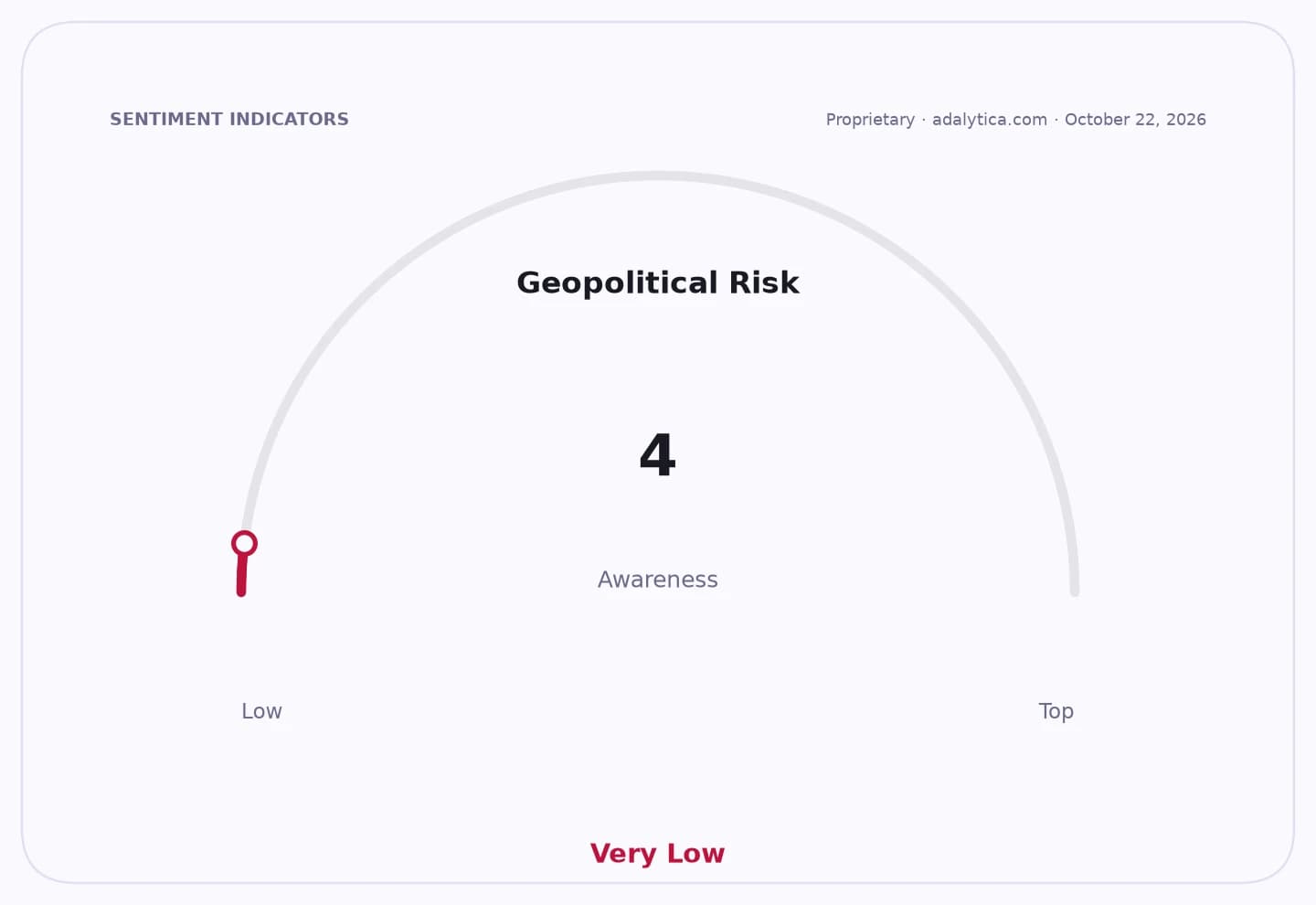
Geopolitical Risk
The province said it received 110 billion pesos in cash from Ansés, the social security agency, as part of a broader compensation agreement under the reciprocal obligations regime, a mechanism that lets the province and the federal government net off mutual claims. Santa Fe also used part of a 400 billion peso advance on revenue-sharing transfers to settle obligations, leaving it due to repay only 22.5% of that advance this year, or 90 billion pesos.
Sentiment Indicators
For investors, the deal matters because it improves Santa Fe’s liquidity at a time when Argentine sub-sovereigns remain under fiscal strain and borrowing costs are still high in real terms. The agreement effectively converts a tangle of receivables and payables into a clearer cash-flow schedule, with the province ending up with a net credit of 142.742 billion pesos after offsetting claims tied to the 2023-26 fiscal consensus and public housing works.
Officials described the transaction as the largest pension-deficit compensation in Santa Fe’s history and said it is the first time the province has been paid in advance against its 2026 pension shortfall. That is politically important as well as financially relevant: Governor Maximiliano Pullaro has made it a priority to keep the provincial pension system under local control rather than transfer it to Ansés, which would have shifted oversight and potentially altered the province’s fiscal autonomy.
The federal side also recognized older claims, including a 24.74 billion peso balance linked to a 1997 Paris Club-related subloan, underscoring how long-dated intergovernmental obligations continue to weigh on Argentina’s public finances. The settlement leaves Santa Fe with 167.258 billion pesos of the original advance still to be repaid, but officials said that balance can be paid in installments from next year at a monthly interest rate of 1.25%, well below inflation, or offset against future credits.
The broader significance is that Buenos Aires is using netting agreements to reduce arrears without an outright cash transfer from the treasury, a sign of how the national government is managing provincial claims while protecting its own liquidity. That should help Santa Fe in the short term and may encourage other provinces to seek similar settlements, but it also shows that Argentina’s federal finances remain constrained enough that balance-sheet engineering is becoming a policy tool.
For bondholders and equity investors with exposure to Argentine assets, the message is mixed. The province’s cash position and pension funding have improved, but the settlement does not remove the underlying fiscal stress across the federation. The next test will be whether Santa Fe and other provinces can use these agreements to stabilize budgets without postponing the adjustment further down the line.
| Entity | Gains | Losses |
|---|---|---|
| Santa Fe province | ▲Cash liquidity; pension funding relief | ▼Future repayment obligation |
| National government | ▲Clears liabilities via netting | ▼Immediate fiscal flexibility |
| Provincial bondholders | ▲Lower default pressure | ▼Limited if fiscal stress persists |
| Ansés / federal claims holders | ▲Recognition of debts | ▼Cash paid ahead of schedule |