Russia’s war in Ukraine is deepening the diplomatic and moral cost of the conflict, with fresh missile strikes killing civilians and cutting power to around 100,000 people even as global pressure builds for accountability over the deaths of Ukrainian children.
Russia Ukraine War Supports Gold And Dollar
The latest attacks underscore why the conflict remains economically relevant well beyond the battlefield: they prolong energy disruption, keep sovereign-risk premia elevated across eastern Europe, and reinforce demand for safe-haven assets as investors price in a war that shows little sign of ending. A conflict that continues to damage Ukraine’s infrastructure also raises the long-tail cost of reconstruction, humanitarian support and sanctions enforcement for Europe and the wider West.
The news flow points to a cycle of escalation rather than negotiation. Russian strikes have killed eight people and triggered widespread outages, while Ukraine’s retaliatory drone campaign on Moscow and reports of deaths inside Russia show both sides still have the capacity to inflict disruption. That matters for markets because sustained escalation tends to support the dollar and gold, while keeping pressure on energy-sensitive European assets and any risk appetite tied to a near-term ceasefire.
Gold has already reflected that defensive bid. Spot-related exposure through GLD has traded well above its 200-day moving average for much of the year, and the fund’s recent price action near $398 suggests investors are still treating geopolitical tension as a reason to hold protection rather than rotate out of it. At the same time, the dollar ETF UUP has firmed back above its 50-day average, consistent with a market that remains willing to pay up for liquidity when global stability deteriorates.
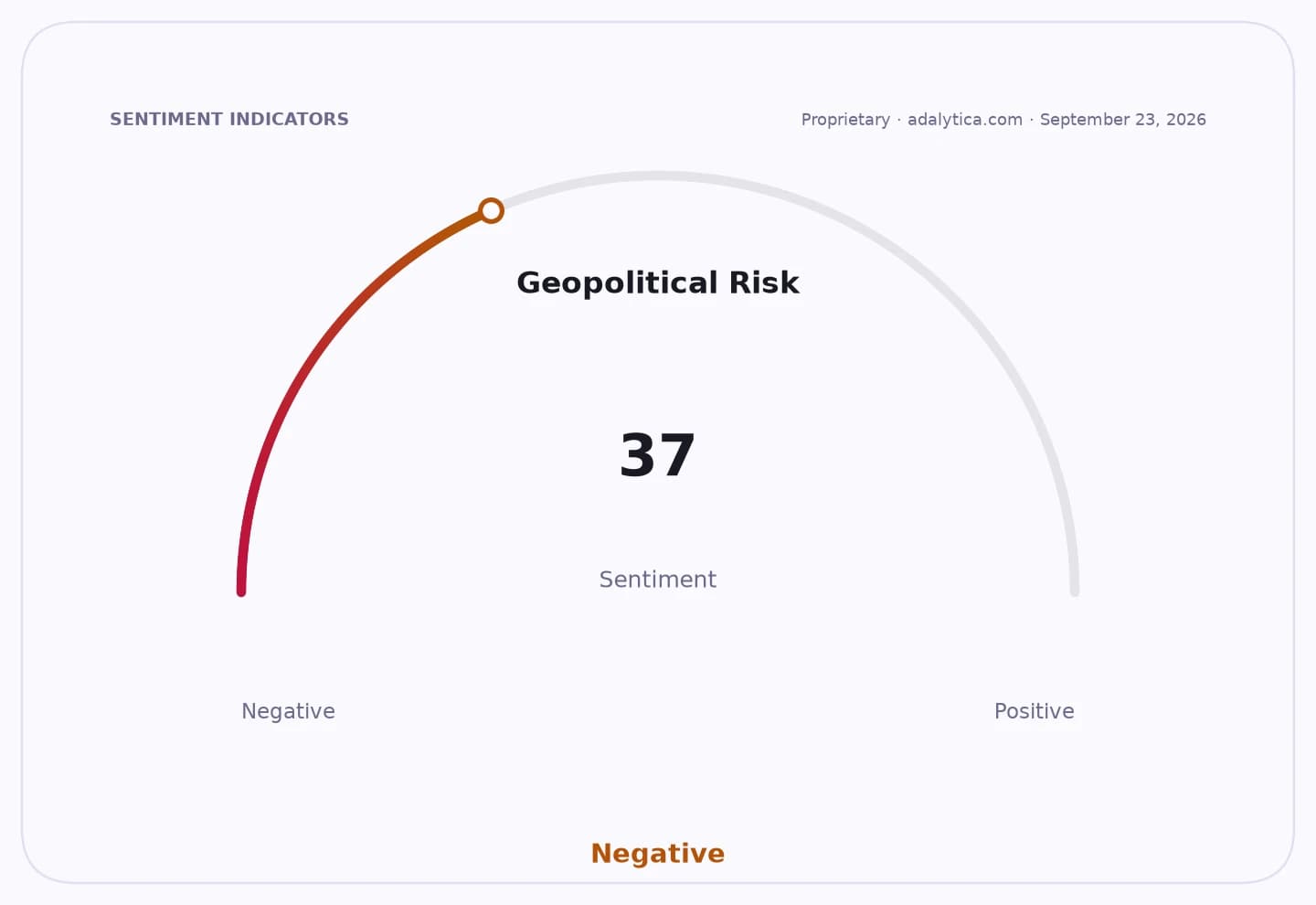
The Adalytica Global Stability Sentiment gauge has also deteriorated sharply, with sentiment falling to 37 and awareness in fear territory, a sign that geopolitical risk is moving back toward the forefront of market attention. That does not guarantee a broad risk-off move, but it does suggest investors are being asked to discount a longer conflict horizon, more sanctions, and more intermittent energy stress.
For investors, the immediate question is not whether the war creates headlines — it clearly does — but whether it forces another reset in expectations for European growth, defense spending and safe-haven demand. If the strikes continue and accountability pressure on Moscow intensifies, the beneficiaries are likely to remain gold, the dollar and defense-linked exposures. The losers are Ukraine’s infrastructure, the region’s growth outlook and any assets priced for a quick diplomatic thaw.
| Entity | Gains | Losses |
|---|---|---|
| Gold / GLD | ▲Safe-haven demand | ▼Risk-on rotation |
| U.S. dollar / UUP | ▲Liquidity bid | ▼Cyclical currencies |
| Europe / Ukraine economy | ▲Defense spending support | ▼Power, growth and infrastructure |
| Russia / Kremlin | ▲Tactical leverage | ▼Diplomatic standing, sanctions risk |