Russia is moving to put 24 of its most politically sensitive food items under detailed state monitoring, a step that could give officials a clearer picture of where price pressure is building — and eventually prepare the ground for tighter intervention if inflation in staples keeps biting consumers.
Russia to monitor 24 food prices nationwide
The government’s new system will track prices across the supply chain, from factories to retail shelves, and pull in tax, accounting and audit data from companies and individual entrepreneurs involved in food production, logistics and sales. The list covers the products that most directly shape households’ perception of inflation: meat, milk, eggs, fish, sugar, grains, potatoes, vegetables and cooking oil.
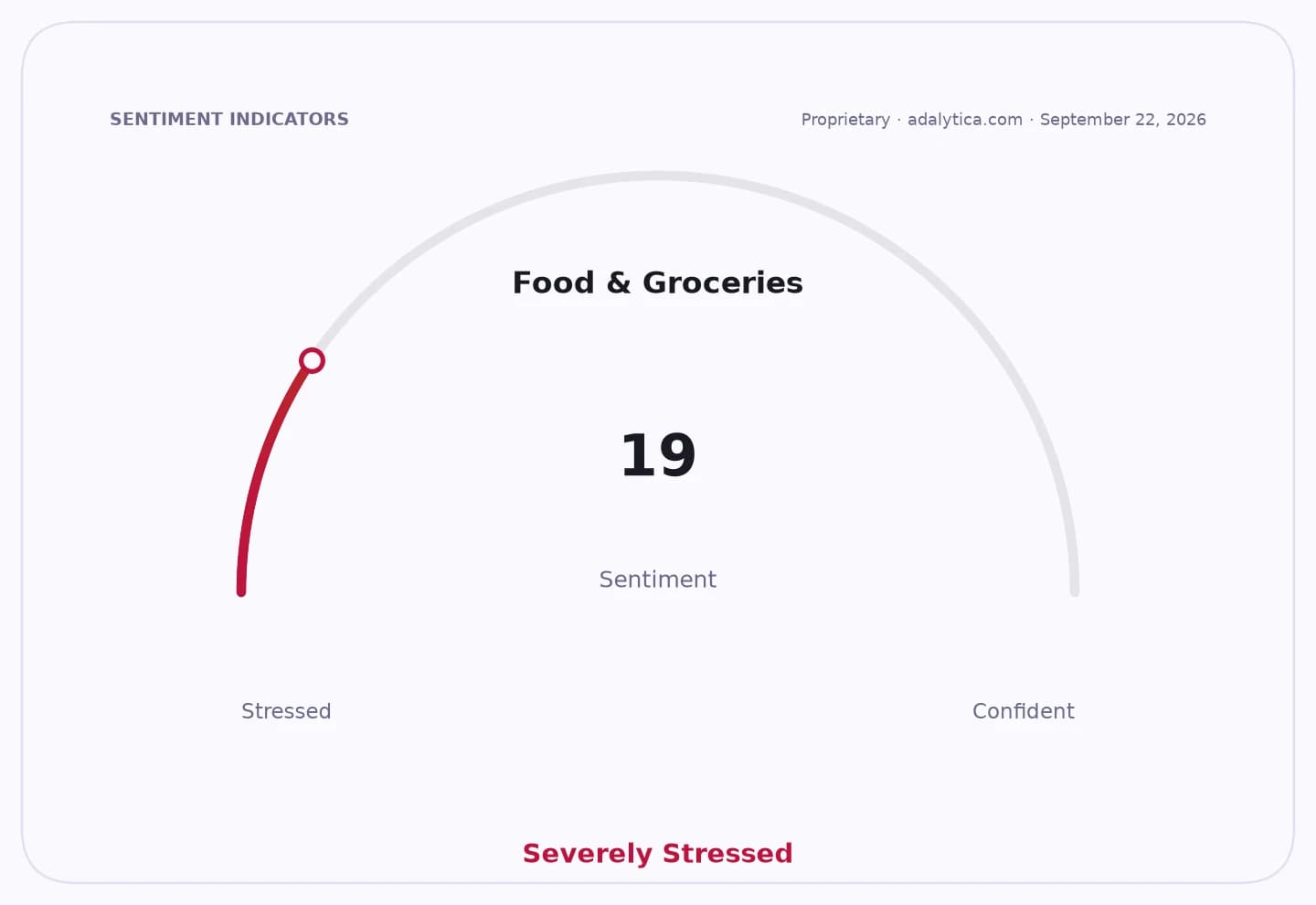
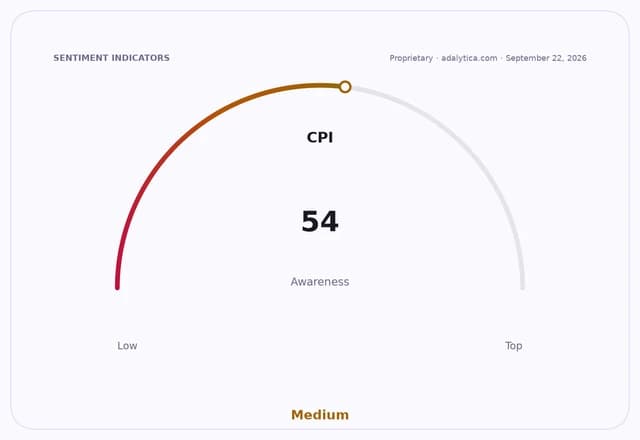
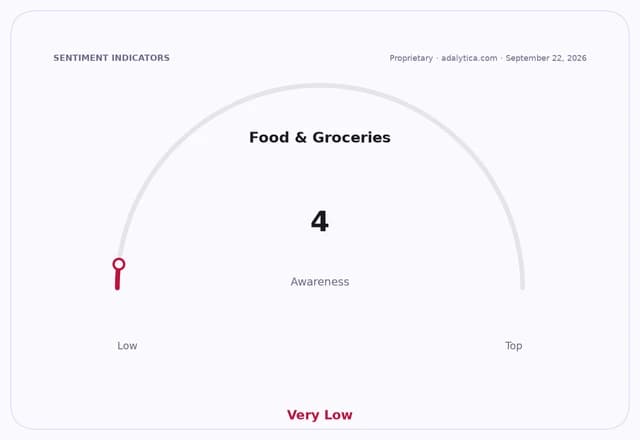
Sentiment IndicatorsⓘProprietary · adalytica.com · September 22, 2026
This is a snapshot — live sentiment, awareness and momentum for 130+ markets update continuously in the dashboard.Open AlphaPulse
That matters because food inflation is not just an economic statistic in Russia but a social and political one. The state already faces public skepticism over official inflation readings, with consumers seeing faster price gains in essentials than in the aggregate numbers published by Rosstat. By targeting the categories that feed directly into the consumer basket, the authorities are acknowledging that broad monetary tools alone have not restored confidence in the inflation story.
The monitoring starts on Jan. 1 next year, while the law enabling the data collection takes effect on Jan. 1, 2027. The agencies involved include the Economy Ministry, Agriculture Ministry, Industry and Trade Ministry, Rosstat and the Federal Antimonopoly Service. Their task is officially diagnostic: identify where in the chain margins are widening, whether because of seasonal factors, logistics, raw materials or what officials would deem speculative markups.
That diagnosis could have practical value. Russia’s recent inflation problem has been unusually uneven, with fresh produce and other basics often rising faster than the average price index. The government says the new framework will let it see not only sales and revenue but also costs and profit at different stages of distribution, making it harder for retailers, wholesalers or processors to hide behind opaque pricing.
But for investors and companies, the more important question is what comes after the monitoring. Officials insist this is not a price freeze, yet the move creates an institutional basis for more direct control if the data show persistent or politically awkward increases. Analysts quoted in Russian media say the measure may be a prelude to some form of state pricing regime, even if only for selected items or specific regions.
For food producers, retailers and distributors, that raises the risk of margin pressure. The products in question are typically low-margin staples, and retailers argue they already keep markups thin because of intense competition. If the state pushes down prices in one category, companies may try to recover the lost margin elsewhere, shifting rather than eliminating inflationary pressure.
The policy also highlights a deeper structural problem: Russia’s inflation is not being driven by one simple bottleneck. Food prices can reflect weather, harvest cycles, transport costs, import substitution and regional supply imbalances, while the central bank’s key rate can only damp demand. In that sense, the monitoring plan is less a cure than an attempt to map the anatomy of price pressure in a market where consumers increasingly distrust the official explanation.
For now, the announcement is more important as a signal than as a direct market intervention. It suggests the Kremlin sees food affordability as a rising risk and is preparing a more interventionist toolkit if the current mix of market pricing and monetary policy fails to satisfy households. For investors exposed to Russian consumer goods, retail and food distribution, that means the key watchpoint is not the monitoring itself, but whether it evolves into enforceable caps, margin scrutiny or regional price rankings that could reshape pricing power.
| Entity | Gains | Losses |
|---|---|---|
| Russian government | ▲Better price visibility | ▼Political blame for inflation |
| Consumers | ▲Potential protection on staples | ▼Limited near-term relief |
| Food retailers/processors | ▲None on pricing power | ▼Margin scrutiny and intervention risk |
| Inflation-fighting officials | ▲More data for enforcement | ▼Less credibility if prices keep rising |