Russian debtors are finding it harder to walk away from liabilities in bankruptcy, a shift that matters because it raises the cost of default for households, entrepreneurs and lenders just as high borrowing costs keep pressure on balance sheets.
Russia bankruptcy courts tighten debt write-offs
The change cuts to the heart of Russia’s credit cycle. If courts are increasingly denying debt write-offs, then bankruptcy is becoming less of a clean reset and more of a prolonged financial penalty. That should slow the rush into insolvency, but it can also leave more borrowers trapped in arrears, forcing lenders to work harder to recover claims and prolonging stress across the banking system.
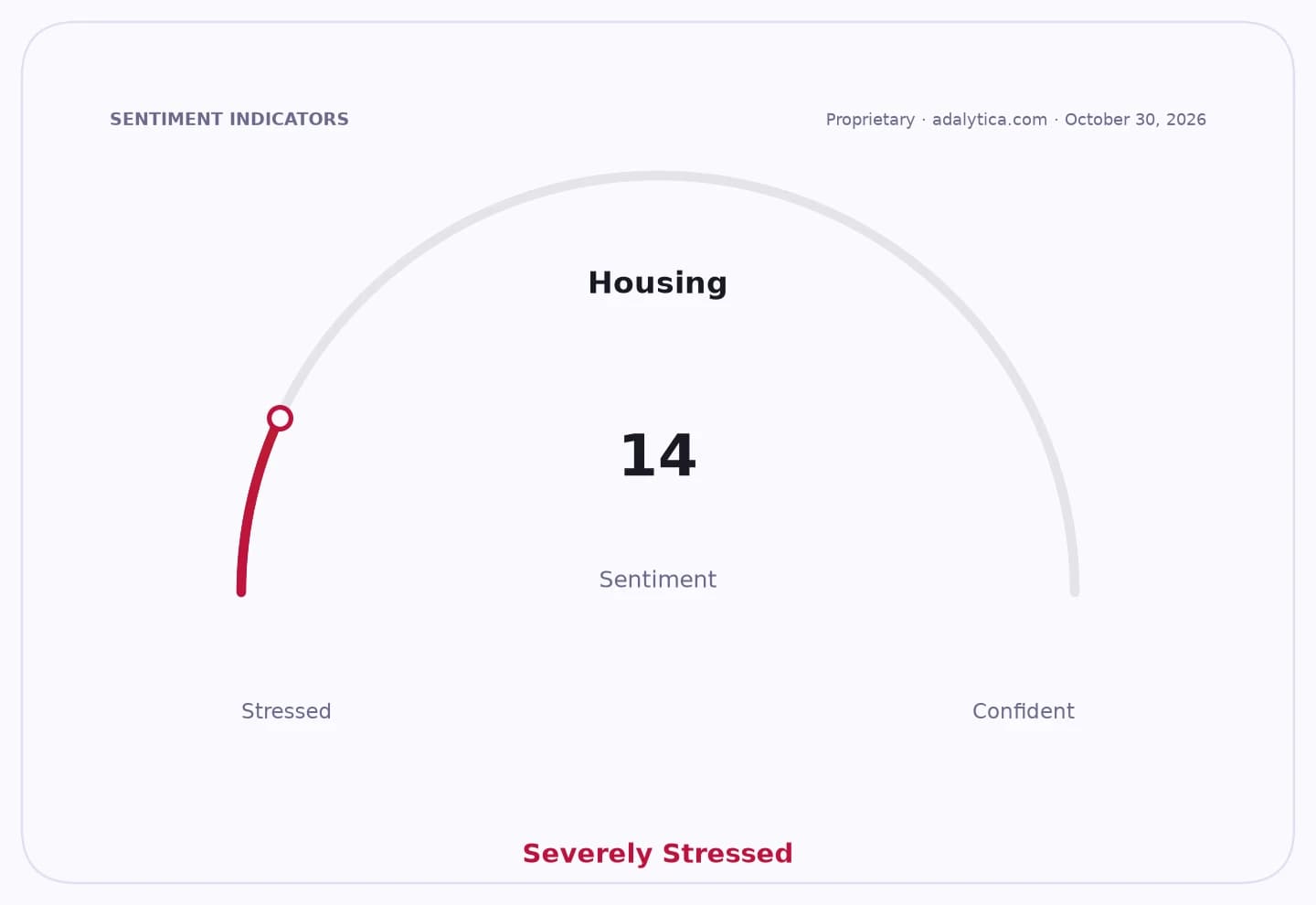
Sentiment Indicators
For investors, the implication is straightforward: credit conditions in Russia are tightening in a way that is likely to favor secured creditors and larger lenders while worsening the outlook for weaker borrowers and shadow-finance exposures. The market should expect higher recovery rates in some cases, but also more nonperforming assets, more restructurings and a slower cleanup of distressed balance sheets. In an economy where borrowing costs remain elevated, that is not a trivial change.
The broader macro backdrop is important. Rising interest rates are already straining the private-credit and shadow-banking ecosystem, where debtors depend on refinancing and rollover access. If courts become less willing to grant write-offs, the system absorbs more of the pain through enforcement instead of discharge. That may protect lenders in the near term, but it also increases the risk that financial distress spills into consumption, investment and employment.
That is why this is bigger than a legal technicality. It is a signal that Russia’s credit environment is becoming less forgiving at the exact moment borrowers need relief most. For capital allocators, the message is to stay selective: lenders with stronger collateral, better underwriting and more political insulation are better positioned than unsecured creditors exposed to the weakest parts of the Russian credit stack.
The trade now is not on bankruptcy as an escape hatch. It is on who can survive a tougher recovery regime.
| Entity | Gains | Losses |
|---|---|---|
| Secured lenders | ▲Better recovery odds | ▼Slower debt resolution |
| Unsecured borrowers | ▲— | ▼Less debt relief |
| Russian banks | ▲More leverage in workouts | ▼Higher NPL pressure |
| Shadow credit borrowers | ▲Fewer escape routes | ▼More refinancing stress |