The rupee is under renewed pressure, and that matters because currency weakness is now feeding directly into inflation, capital flows and earnings expectations for India’s markets.
Rupee Weakness Pressures India Inflation and Earnings

The currency showed a mixed weekly trend through Sept. 18, slipping marginally against the dollar to 95.79 from 95.72 even as it firmed against the pound, euro and yen. That split performance underscores the real story: the rupee is being squeezed less by local demand than by a stronger dollar backdrop, rising U.S. Treasury yields and persistent foreign investor selling in Indian assets.

For investors, the implication is bigger than a week-to-week move in FX. A softer rupee lifts the local-currency cost of imported crude, electronics and other dollar-priced inputs, which can keep pressure on India’s inflation outlook and on companies with heavy import bills. It also tends to tighten financial conditions, a headwind for rate-sensitive sectors and for households already watching loan EMIs closely.
The broader market context is not helping. Foreign investors have continued pulling money out of Indian equities, with September outflows adding to the pressure on the currency. At the same time, volatility in crude oil and firm U.S. rates are keeping the dollar bid, while India’s monetary and market authorities are left managing the balance between growth support and currency stability.
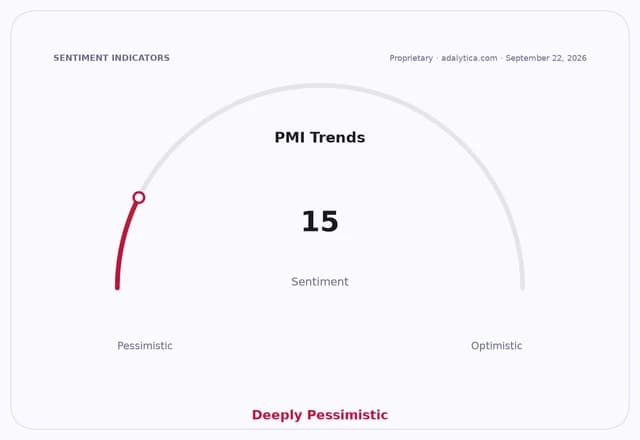
PMI Trends vs INR=Xadalytica.com
Explore this data interactively — full history, time series and cross-market comparisons.Open AlphaPulse
Technical indicators on the dollar-rupee pair also point to a currency that has not yet escaped its higher range. The pair is trading above its 50-day average and above its 200-day average, while momentum has improved after a brief dip, suggesting the rupee’s weakness may persist if foreign selling and U.S. yields stay elevated. By contrast, the dollar index ETF UUP has been firm, hovering near recent highs and reinforcing the broader greenback strength weighing on emerging markets.
The investment takeaway is straightforward: this is not just a currency story, it is a positioning story. A weaker rupee favors exporters, oil producers and companies with overseas revenue, while importers, refiners and rate-sensitive domestic cyclicals face a more difficult backdrop. If the dollar stays strong and capital outflows continue, the market is underestimating how long this FX pressure can last — and where the next earnings downgrades could come from.
| Entity | Gains | Losses |
|---|---|---|
| Exporters | ▲Higher rupee revenues | ▼— |
| Importers | ▲— | ▼Higher input costs |
| Foreign equity sellers | ▲Dollar strength on exit | ▼Rupee exposure |
| Indian consumers | ▲— | ▼Costlier imports and EMIs |