Romania is set to borrow almost 24 billion lei more next year, with debt servicing alone projected to cost 8.4 billion lei, underscoring how higher financing needs are tightening the government’s fiscal room just as borrowing costs remain elevated across Europe.
Romania to borrow more as debt service rises

The increase in state debt points to a budget that is becoming more expensive to finance, a problem that matters for both growth and market stability. Interest payments of 8.4 billion lei will absorb more public revenue that could otherwise go to investment, wages or tax relief, leaving Bucharest with less flexibility if growth slows or financing conditions worsen.
Sentiment Indicators
For investors, the headline is less about the absolute rise in debt than about what it says on funding pressure and sovereign risk. More issuance can weigh on local bond prices and keep yields firm if markets demand compensation for a larger supply of government paper, especially when fiscal credibility is under scrutiny.
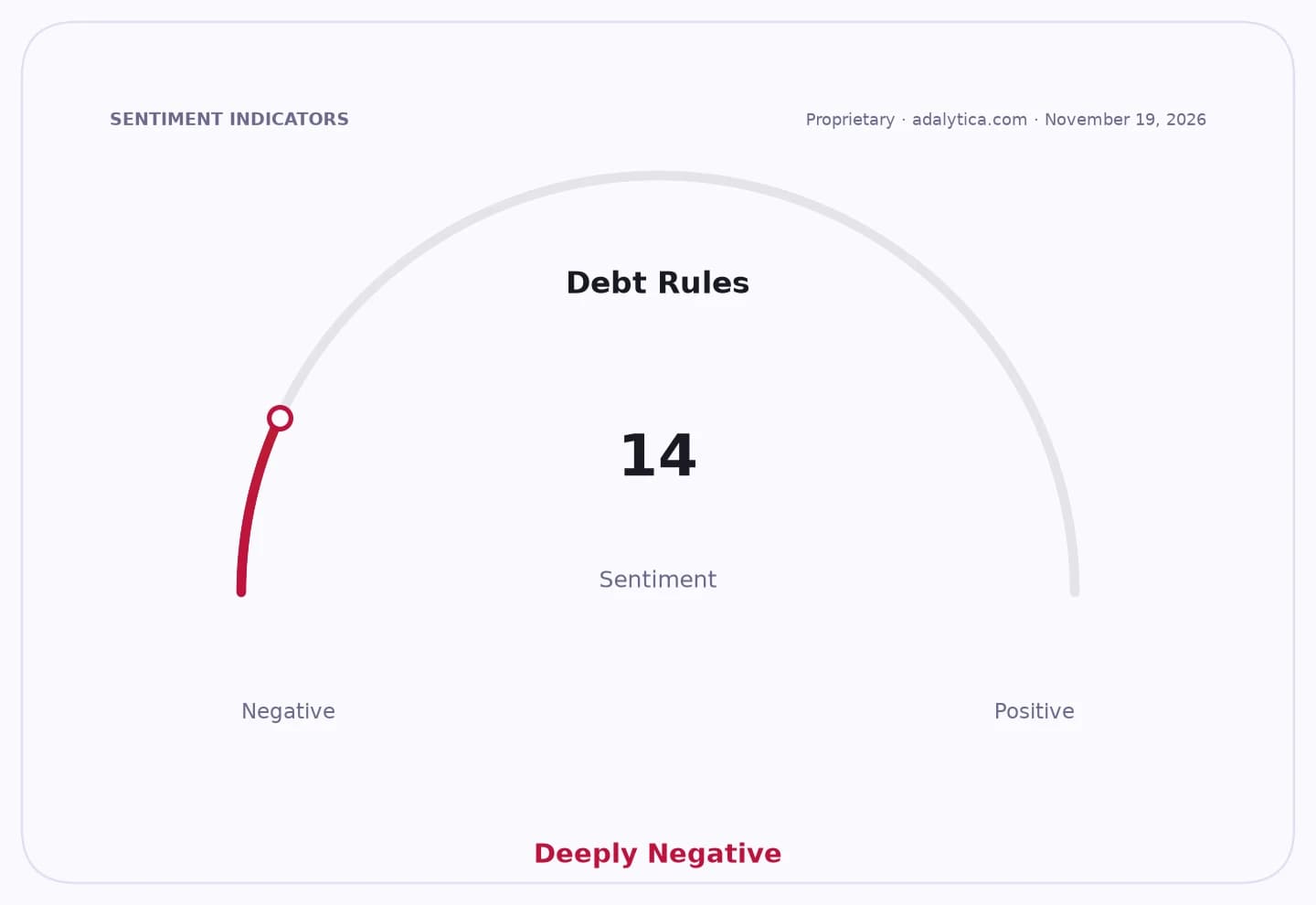
The broader backdrop is one of fragile sentiment around sovereign debt. Adalytica’s EU fiscal debt rules sentiment gauge stands at 82, while its global stability measure is in “Extreme Fear,” highlighting a market environment where investors remain sensitive to deficits, refinancing needs and policy discipline.
Romania’s financing challenge also comes as global rates stay well above the ultra-low levels of the past decade. The US 10-year Treasury yield was last at 5.04% and the federal funds rate at 3.88%, while high-yield credit spreads were at 3.52 percentage points, a reminder that the cost of capital remains restrictive even if inflation has cooled from earlier peaks.
That leaves policymakers with a narrower path: keep borrowing to fund the state, or tighten spending enough to contain the debt burden. For investors in Romanian assets, the next catalyst is likely to be how the government funds the higher deficit and whether it can limit the rise in interest costs without slowing the economy further.
| Entity | Gains | Losses |
|---|---|---|
| Romanian government | ▲Funds deficit spending | ▼Higher interest bill |
| Bond investors | ▲More supply, higher yields | ▼Price pressure if issuance rises |
| Taxpayers | ▲Potential public spending support | ▼Less fiscal room for services |
| Euro-area fiscal hawks | ▲Evidence for tighter discipline | ▼Softer budget restraint |