Real estate stocks are under pressure as the Federal Reserve resumes rate increases and 30-year mortgage rates climb toward 7%, tightening financing conditions for homebuyers, developers and property owners.
Real Estate Stocks Fall as Mortgage Rates Near 7%

The move matters because higher borrowing costs hit the sector from both sides: they raise debt-service costs for real estate companies and make homes less affordable for buyers, slowing transactions and weakening demand across residential property.
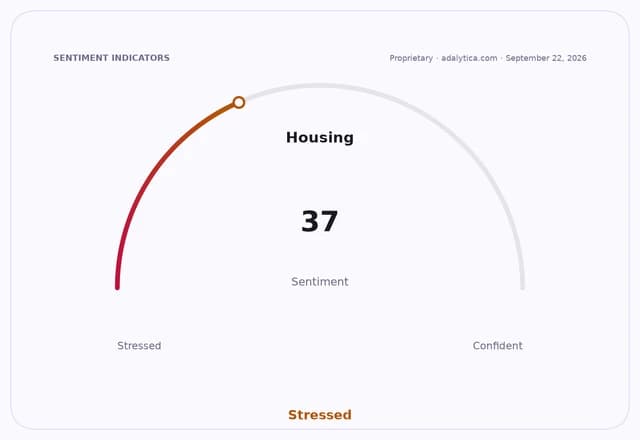
Sentiment IndicatorsⓘProprietary · adalytica.com · September 22, 2026
This is a snapshot — live sentiment, awareness and momentum for 130+ markets update continuously in the dashboard.Open AlphaPulse

The S&P 500 Real Estate Sector Index fell 2.3% in the week of the Fed’s first rate hike in three years, with residential real estate investment trusts taking the heaviest hit, down 4.8%. Industrial REITs held up better, slipping just 0.7%, underscoring how investors are rotating toward property types tied more closely to logistics and business demand than to mortgage-sensitive housing.
The rate backdrop is turning increasingly hostile for housing. The average 30-year mortgage rate rose to 6.95% on Sept. 17, up from 6.71% on Sept. 3 and 5.30% in July 2022, according to the data provided. That jump is weighing on buyer affordability and discouraging sellers from listing homes, a combination that can freeze turnover and pressure pricing.
Housing — 30-day sentimentadalytica.com
Explore this data interactively — full history, time series and cross-market comparisons.Open AlphaPulse
The equity reaction has been uneven across the sector. Alexandria Real Estate Equities gained 4.2%, while Fermi fell 9.5% and Opendoor Technologies dropped 8.2%, showing investors favor companies with more resilient cash flows and punish names tied to housing activity and financing conditions.
The broader message for markets is that the Fed’s renewed tightening cycle is feeding directly into housing costs just as inflation remains elevated. Real estate ETFs have already reflected that strain: IYR closed at 98.85 and VNQ at 93.79 on Sept. 22, both below recent peaks and with RSI readings in the low-30s, a sign of heavy selling pressure by conventional technical measures.
Investors will be watching for whether mortgage rates keep climbing and whether the Fed signals more hikes, which could deepen the drag on home sales, REIT valuations and housing-related equities into the next round of policy and inflation data.
| Entity | Gains | Losses |
|---|---|---|
| Treasury bond buyers | ▲Higher yields, safer carry | ▼Lower prices if rates rise further |
| Industrial REITs | ▲Relative defensive demand | ▼Limited upside if housing weakens broadly |
| Residential REITs | ▲N/A | ▼Higher financing costs, softer demand |
| Homebuyers and sellers | ▲N/A | ▼Affordability pressure, slower turnover |