Poland’s widening probe into fake job offers is exposing a major legal and financial risk for foreign workers: a visa or border document tied to a non-existent employer may leave them not only out of pocket, but also vulnerable to losing their right to stay in the country.
Poland probe into fake job offers and visa fraud
The case matters because Poland has become one of the main labor destinations for Ukrainians and other migrants, and the abuse of work-registration paperwork can distort both migration flows and the formal labor market. Prosecutors in Łódź say 11,485 false work declarations were registered through 130 shell companies with no real business activity, creating the appearance of employment where none existed. Those declarations can be used to cross the border and obtain work visas, which makes them a powerful tool for fraud and, in some cases, immigration abuse.
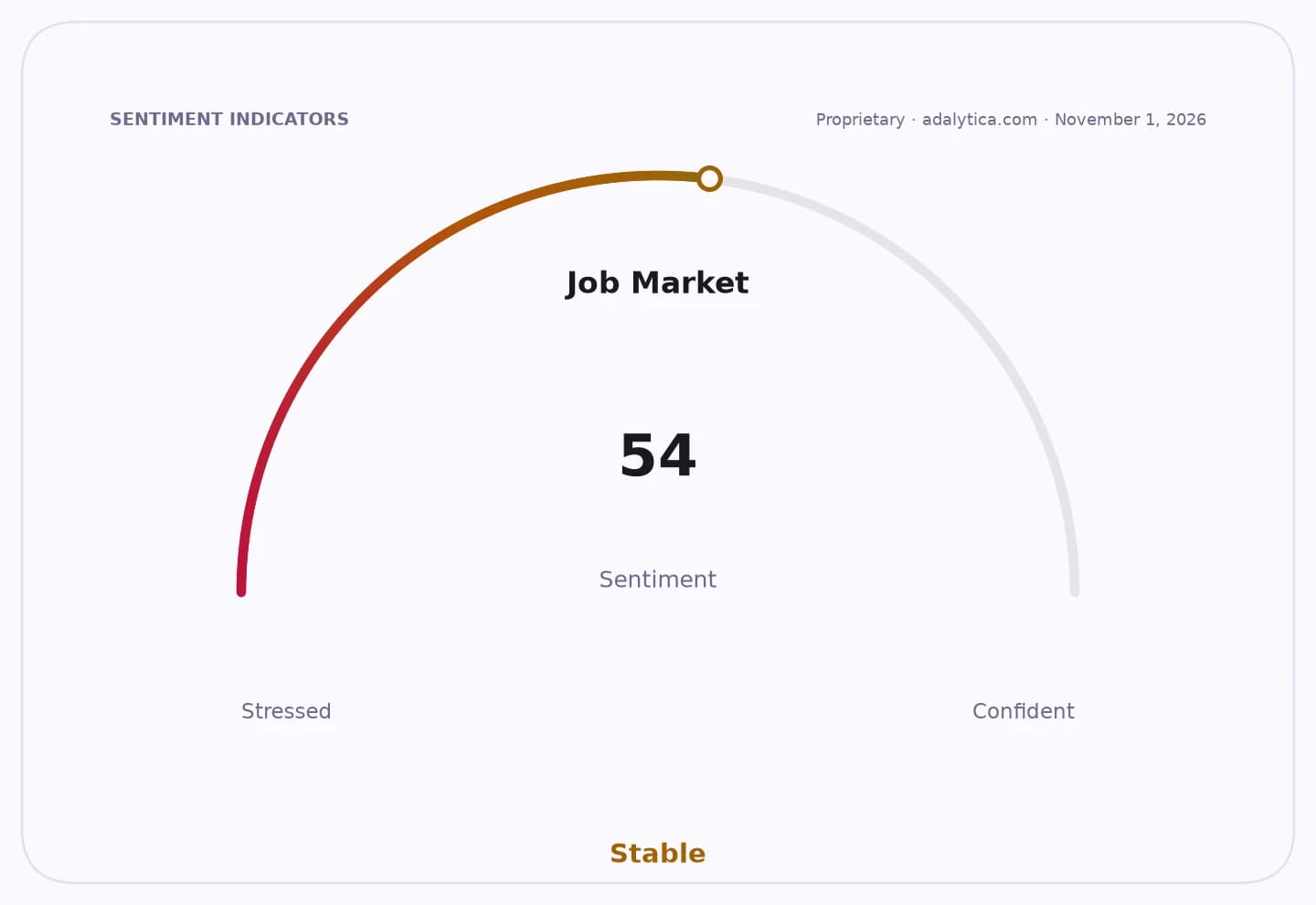
Sentiment Indicators
For workers, the practical consequences can be severe. Gremi Personal, a recruitment company cited in the report, says many applicants only discover the employer is fake after arriving in Poland, when travel costs have already been incurred and their legal status is uncertain. A declaration issued for a non-existent company does not prove real employment, making it harder to secure or renew a temporary residence permit. Without official employment, wages and ZUS social-security contributions also become difficult to document, which can later affect access to benefits, proof of income and labor rights claims.
The criminal exposure is also asymmetric. People who were misled into using false documents are generally treated differently from those who knowingly bought them, but the distinction does not remove the immigration risk. Under Poland’s penal code, using a forged document as genuine can carry a prison term of three months to five years. Foreigners can also be denied entry or ordered to leave, with possible re-entry bans across Poland and the Schengen area, depending on the circumstances.
That makes due diligence before departure economically important as well as legal. For workers, the safest route is to verify both the agency and the employer in Poland’s KRAZ, CEIDG and KRS registries, then demand a draft contract, the exact workplace address and clarity on who pays wages. A refusal to name the employer, or an invitation to obtain a declaration without the company’s direct involvement, is a red flag.
For the market, the crackdown cuts both ways. Legitimate staffing agencies and large employers with transparent hiring practices may benefit as the authorities tighten scrutiny of opaque intermediaries. Smaller brokers relying on informal arrangements, by contrast, face higher compliance costs and potential reputational damage. The broader economic backdrop is that Poland still depends on migrant labor, especially from Ukraine, so regulators will need to balance enforcement against the risk of shrinking a labor supply that remains important to employers.
The immediate takeaway for investors and employers is that labor migration in Poland is becoming more formalized and more policed. That should support compliant recruitment platforms and companies with clean documentation, while raising legal and operational risk for intermediaries that profit from paperwork rather than real jobs.
| Entity | Gains | Losses |
|---|---|---|
| Legitimate recruitment agencies | ▲Trust and demand | ▼ |
| Foreign job seekers | ▲Better screening | ▼Scam losses and status risk |
| Shell intermediaries | ▲ | ▼Enforcement pressure |
| Polish employers using compliant labor | ▲Cleaner hiring pipeline | ▼Higher compliance burden |