The Philippines has escalated its response to allegations that Vice President Sara Duterte received money from Chinese state-linked firms, turning an impeachment fight into a national security issue at a time of sharpening tensions with Beijing in the South China Sea.
Philippines widens Sara Duterte China funding probe
President Ferdinand Marcos Jr. has ordered the National Security Council and intelligence units to assess whether the reported 319 million pesos ($5 million) that prosecutors say flowed to a company controlled by Duterte and her husband amounts to foreign influence operations. For investors, the story matters because it widens the political and security risk premium around the Philippines, which sits on the front line of the US-China rivalry and depends on regional stability for trade, investment and capital inflows.
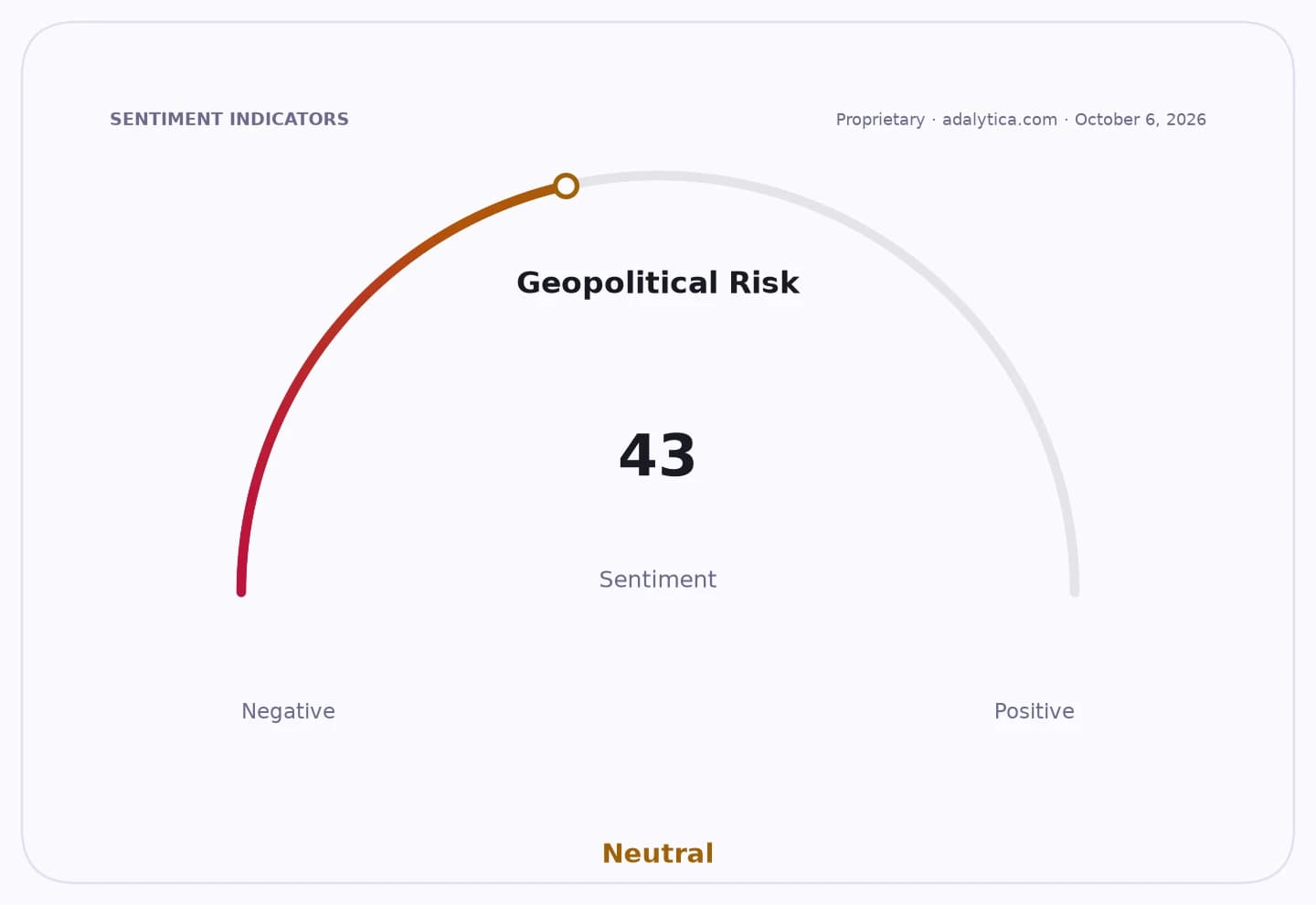
Sentiment Indicators
A Philippine military official said the alleged payments would fit a familiar Chinese playbook of co-opting political and economic elites in target countries. Retired Rear Adm. Roy Vincent Trinidad, spokesman for the military in the West Philippine Sea, said Beijing’s influence strategy seeks access to influential figures and can achieve its aims “without firing a single shot.”
Prosecutors in Duterte’s impeachment trial have pointed to financial forensics evidence showing the payments were described as banana-chip transactions, even though customs records allegedly document shipments worth only 217 million pesos. Officials also cited the company’s tiny footprint, including just two employees, as evidence that the scale of the flows did not match its operations.
That has made the case more than a domestic corruption scandal. Marcos said that if the allegations are verified, they would rank among the country’s top threats because they touch sovereignty and state security, while national security adviser Eduardo Oban said any large financial flows with possible security implications warrant a deeper review.
The probe lands as Manila intensifies counterintelligence efforts and tries to root out suspected Chinese operatives. The military said it recently helped raid an online gaming hub near its headquarters and arrested 76 people, mostly Chinese nationals, underscoring how the government is treating espionage concerns as part of the same security file.
For investors, the immediate market impact is likely to be indirect rather than abrupt, but the medium-term implications are clear: a more confrontational line toward Beijing could keep pressure on Philippine-China ties, complicate policy coordination and keep defense and security spending elevated. It also raises the risk that political instability inside the Marcos-Duterte alliance spills into governance and reform agendas.
China’s embassy in Manila has not responded to the allegations, but previously urged Filipinos to stop political manipulation and avoid dragging domestic politics into bilateral relations. Duterte has denied wrongdoing and called the case politically motivated.
The next catalyst is whether the national security probe finds evidence that the alleged payments were tied to broader Chinese influence efforts, a result that could deepen the diplomatic rupture and extend the fallout well beyond Duterte’s impeachment.
| Entity | Gains | Losses |
|---|---|---|
| Marcos administration | ▲Security leverage | ▼Political volatility |
| Philippine military/intelligence | ▲Expanded mandate | ▼Higher pressure |
| Sara Duterte family | ▲None | ▼Legal and reputational risk |
| China/Beijing | ▲None | ▼Influence setback |