Pakistan’s foreign debt has climbed to $135.1 billion, deepening the country’s financing strain even as Beijing remains its largest lender with $22.4 billion outstanding.
Pakistan foreign debt climbs to $135.1 billion
The size of the debt stock matters because it leaves Islamabad with less room to absorb shocks from imports, energy costs and tighter global funding conditions. The World Bank’s International Debt Report 2026 shows external borrowing has nearly doubled in 10 years, rising 96.7% from $68.6 billion in 2015. Public and publicly guaranteed debt now accounts for $107.1 billion of the total, underscoring how much of the burden ultimately sits with the sovereign.
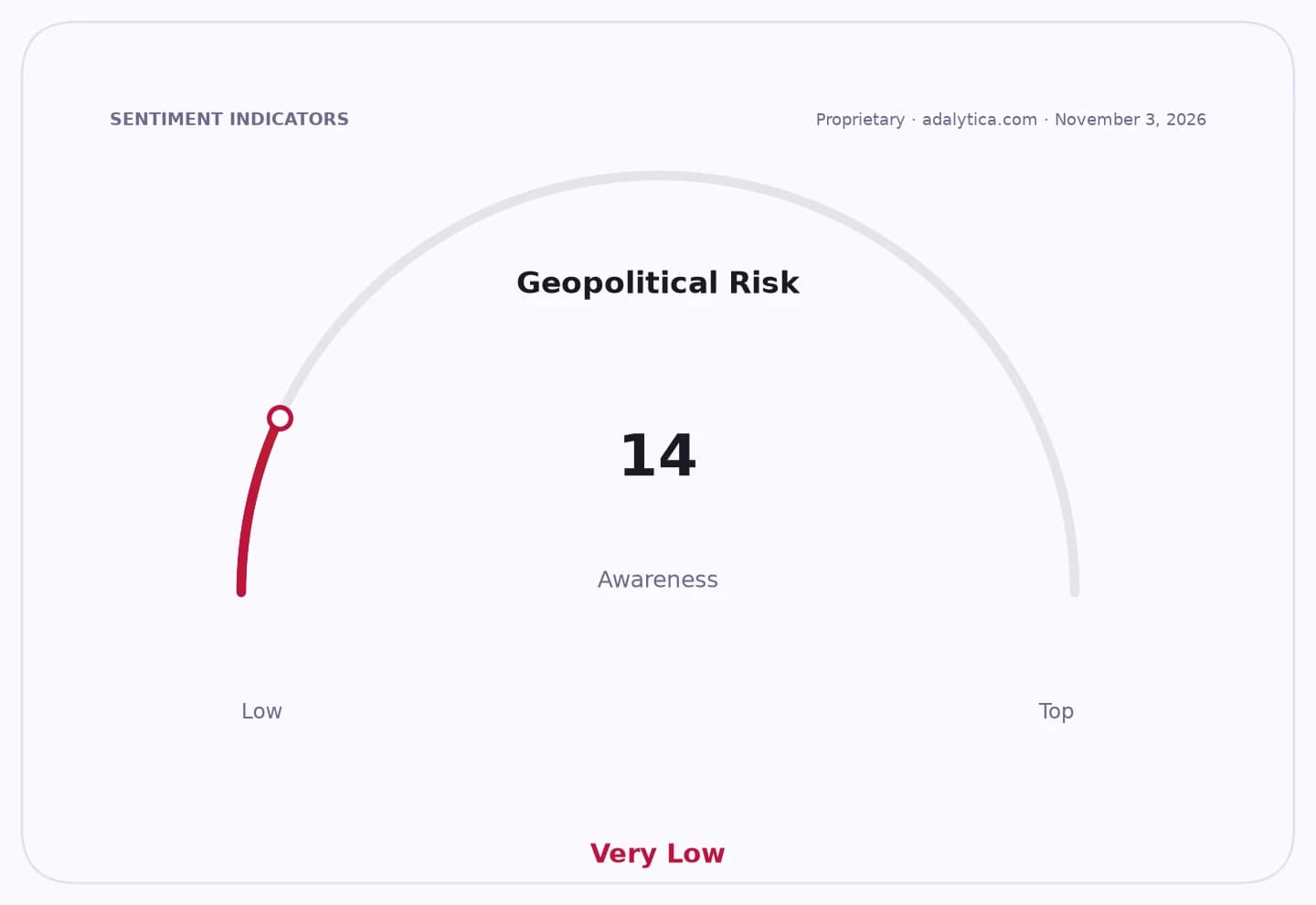
Sentiment Indicators
China’s role is central to the story. Its $22.4 billion in outstanding claims makes it Pakistan’s biggest bilateral creditor, ahead of the World Bank at $19.2 billion and the Asian Development Bank at $16.83 billion. Beijing also extended repayment on $2 billion of Pakistani debt in 2025, offering short-term relief, but that merely delays the pressure rather than removes it. The concentration of lending also means Pakistan’s debt diplomacy is tied closely to its geopolitical relationship with China, while multilateral lenders remain crucial for balance-of-payments support and project financing.
The composition of the debt is as important as the headline number. Pakistan owes $56.83 billion to multilateral lenders, $42.43 billion to other countries and $7.8 billion to private creditors within the public and guaranteed debt bucket. Private borrowing is far more expensive, with new loans carrying an average interest rate of 8.6% in 2025 versus 3.6% from official lenders, and much shorter maturities. That makes refinancing risk more acute if market access deteriorates or reserves weaken.
For investors, the implication is that Pakistan’s external financing needs remain high even if some near-term rollover risk has eased. The debt-to-national-income ratio improved to 33.9% from 35.8% in 2024, but that reflects growth in output as much as debt management, not a shrinking nominal burden. The government’s plan to trim non-priority spending and the recent $500 million Asian Development Bank financing point to a familiar strategy: preserve liquidity, protect reserves and buy time. The question is whether Pakistan can convert that breathing room into export-led growth and a narrower fiscal deficit, or whether heavier borrowing simply pushes the adjustment further out.
| Entity | Gains | Losses |
|---|---|---|
| Pakistan government | ▲Near-term rollover relief | ▼Higher debt service burden |
| China | ▲Stronger creditor leverage | ▼More exposure to repayment risk |
| Multilateral lenders | ▲Larger policy influence | ▼Greater exposure to Pakistan stress |
| Private creditors | ▲High coupon income | ▼Shorter maturities, higher default risk |