Oracle’s warning that heavier AI usage does not automatically translate into higher business value is sharpening a risk that value investors have been underpricing: the earnings hit from AI spending may arrive faster than the payoff.
Oracle AI spending warning hits value stocks

That matters because the market’s AI trade has increasingly been built on a simple assumption — that companies adopting AI will ultimately generate enough productivity gains to justify rising capex, cloud bills and software spending. Oracle’s caution cuts against that narrative and helps explain why a broad equity benchmark such as the S&P 500 has turned fragile even after a long run higher. The index is still above its 200-day moving average, but it finished the latest session below its 50-day average and its recent technical momentum has deteriorated, with RSI slipping to 34.3 and MACD turning negative. For investors, that combination suggests the market is becoming less tolerant of expensive AI promises and more sensitive to margins, cash flow and execution risk.
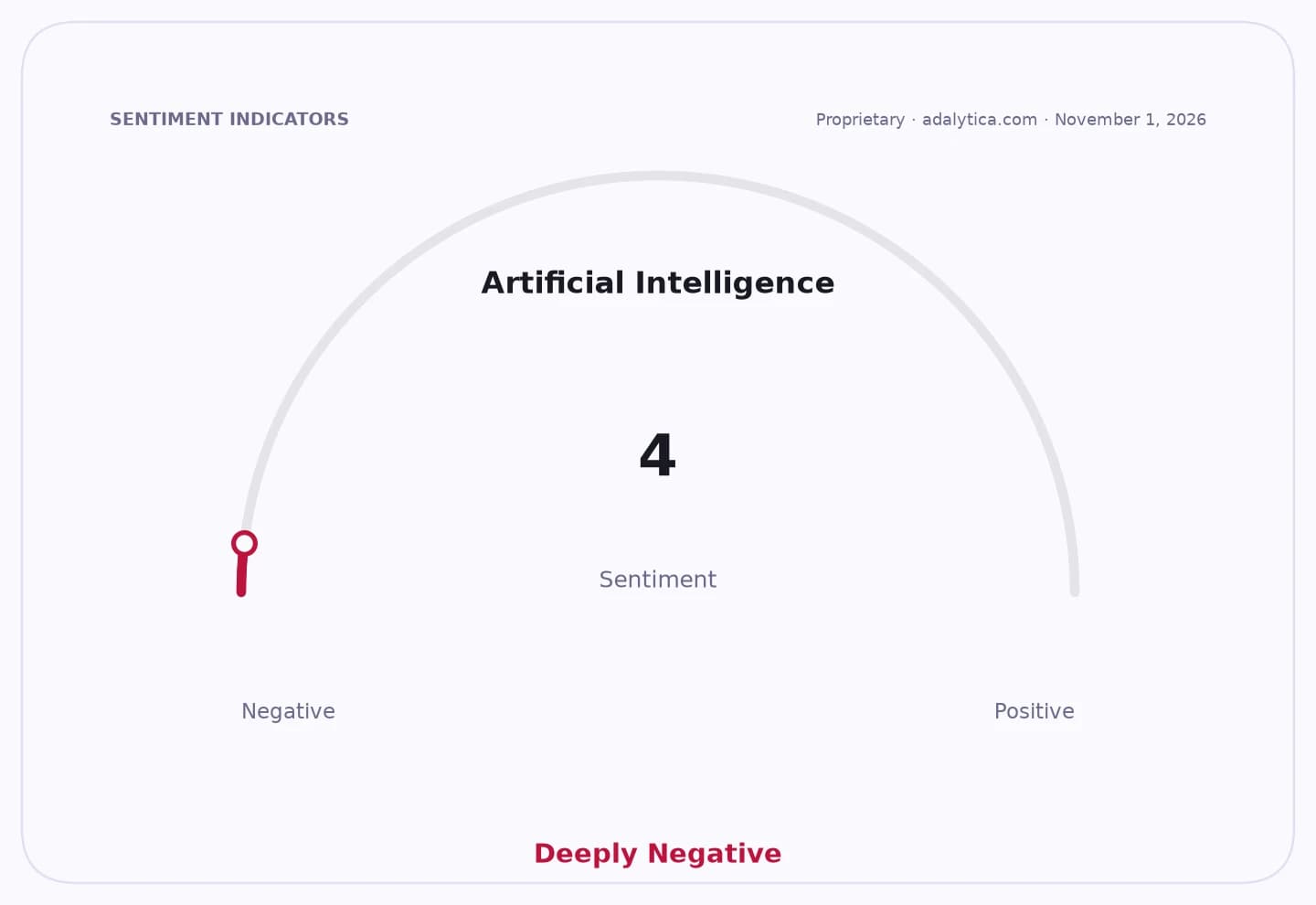
Sentiment Indicators
The immediate issue for “value” funds is that they may not be as insulated from AI risk as their label implies. Large value portfolios often hold mature software, industrial, telecom and financial names that are trying to monetize AI features, automate operations or cut labor costs. Those efforts can boost revenue later, but they also require upfront spending on chips, data infrastructure, integration and talent. If AI adoption does not quickly raise returns on capital, the result is a classic value trap: cheaper-looking stocks that are actually carrying hidden reinvestment needs.
That tension is already visible in market behavior. The S&P 500’s recent slide from an October high near 772 to 755.72 by the latest close came with heavier volume on down days, a sign that sellers are pressing positions rather than just rotating lightly. Adalytica’s S&P 500 trade signals also show “Extreme Fear” in sentiment even as awareness remains “Extreme Greed,” a split that often appears when investors know a theme is dominant but are becoming uneasy about the price paid for it.
Artificial Intelligence — 30-day sentimentadalytica.com
Explore this data interactively — full history, time series and cross-market comparisons.
For active managers, Oracle’s message is uncomfortable but useful. The bull case remains that AI is still early, and companies that build practical uses around customer service, coding, analytics and workflow automation can widen margins over time. The bear case is that too many firms are treating AI as a growth story while the economics still look more like a cost center. In that scenario, the winners are likely to be the suppliers of infrastructure and compute, while the losers are the companies that spend heavily on AI without proving a measurable return.
The investment question now is not whether AI is transformative, but which balance sheets can absorb the bill long enough to prove it. Watch for more guidance on AI-related capital spending, margin pressure and return-on-investment metrics when companies report results. If management teams cannot quantify payback, the market may keep rewarding the picks-and-shovels names and punishing the rest.
| Entity | Gains | Losses |
|---|---|---|
| AI infrastructure suppliers | ▲Higher demand for compute | ▼ |
| Value-fund managers | ▲Selective bargains if spending pays off | ▼Hidden margin pressure |
| Corporate AI adopters | ▲Productivity upside if ROI materializes | ▼Higher costs if payback lags |
| Broad equity market | ▲ | ▼Sentiment if AI optimism fades |