Ansar Allah said it targeted sites in Riyadh and an Aramco facility with missiles and drones, a strike claim that quickly reinforced fears of fresh supply risk in the world’s most important oil market.
Oil rises after Ansar Allah attack claim on Saudi sites
The immediate market impact is higher crude and firmer energy shares. WTI is trading around $107.82 a barrel in the latest forecast, up from $101.27 on Sept. 11 and $102.42 two sessions earlier, while Brent-linked stress has eased only slightly in credit markets, where high-yield spreads have narrowed to 2.68 percentage points but remain sensitive to any disruption in Gulf supply.
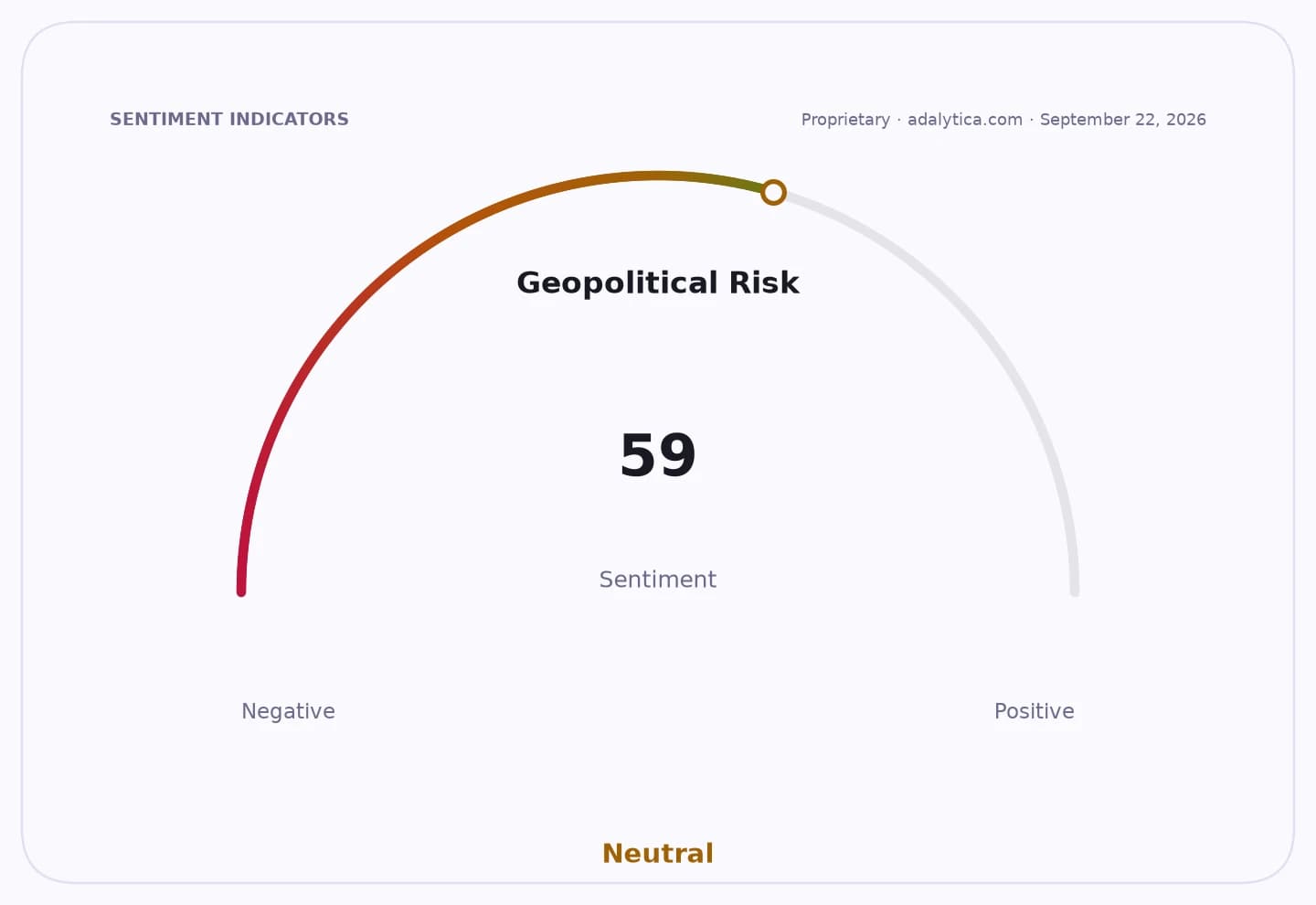
Sentiment IndicatorsⓘProprietary · adalytica.com · September 22, 2026
This is a snapshot — live sentiment, awareness and momentum for 130+ markets update continuously in the dashboard.Open AlphaPulse
For investors, the key question is whether the attack claim is an isolated escalation or the start of a broader campaign against Saudi energy infrastructure. That matters because even limited damage or a temporary export interruption can tighten balances quickly when inventories are already thin and traders are pricing in geopolitical risk rather than just supply-demand fundamentals.
The reaction in US oil producers has been mixed but constructive overall. Exxon Mobil shares are still up sharply from earlier in the summer, closing at $159.15 on Sept. 22 after a recent high of $169.32, while Chevron ended at $203.75, both well above their 200-day moving averages. Occidental Petroleum, a more leveraged play on crude, has been more volatile, closing at $57.21 after touching $63.52 last week.
Oil’s latest move also fits a broader pattern of heightened geopolitical sensitivity across energy markets. Adalytica’s oil trade signals show neutral overall sentiment, but awareness is elevated, suggesting investors are watching for confirmation of physical disruption rather than betting on a quick fade in prices.
Saudi Arabia has spent years hardening its defenses after repeated drone and missile attacks on oil infrastructure, but the market remains vulnerable to any strike that reaches export routes, processing plants or tanker loading points. If the situation escalates, refiners, airlines and chemical makers face the biggest cost pressure, while producers and oilfield service firms stand to benefit from another leg higher in crude.
| Entity | Gains | Losses |
|---|---|---|
| Oil producers | ▲Higher realized prices | ▼None if outages are contained |
| Saudi energy infrastructure | ▲Security spending support | ▼Physical disruption risk |
| Refiners and airlines | ▲— | ▼Higher feedstock and fuel costs |
| Exxon Mobil, Chevron, Occidental | ▲Stronger crude-linked earnings leverage | ▼Near-term volatility if price spike reverses |