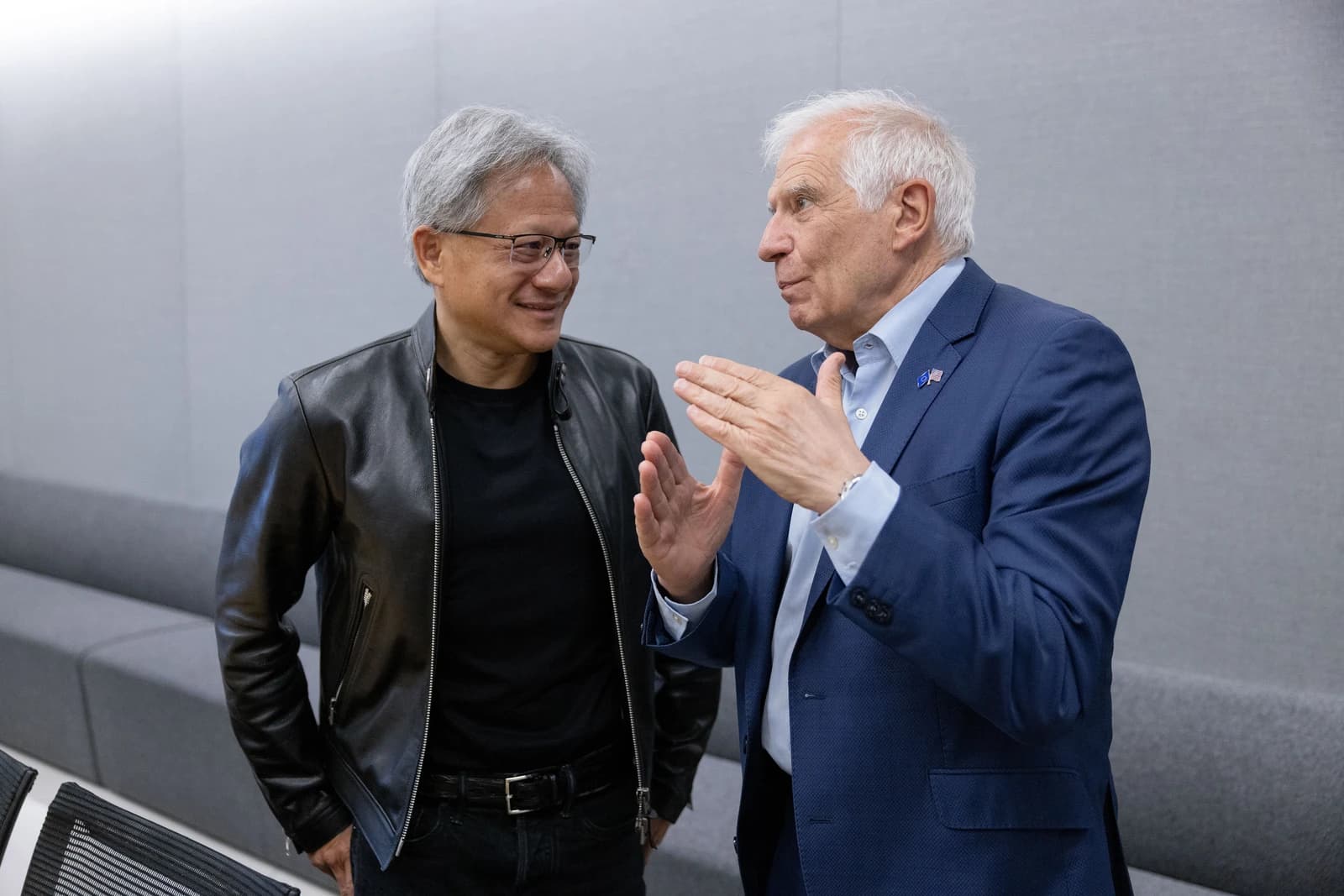
Trump says the White House is “detailed” investigating allegations that Chinese intelligence targeted Nvidia Chief Executive Jensen Huang, putting one of the most important figures in the global AI supply chain squarely back in the middle of Washington’s fight with Beijing.
Nvidia Jensen Huang faces Trump China probe

The issue matters because Nvidia sits at the center of the semiconductor rivalry that has turned chips into a strategic asset for both economies. Any escalation around Huang, who has lobbied for broader access to China and advised Trump on AI policy, could further complicate U.S. export controls, China sales prospects and the broader flow of advanced computing gear into the world’s second-largest economy.
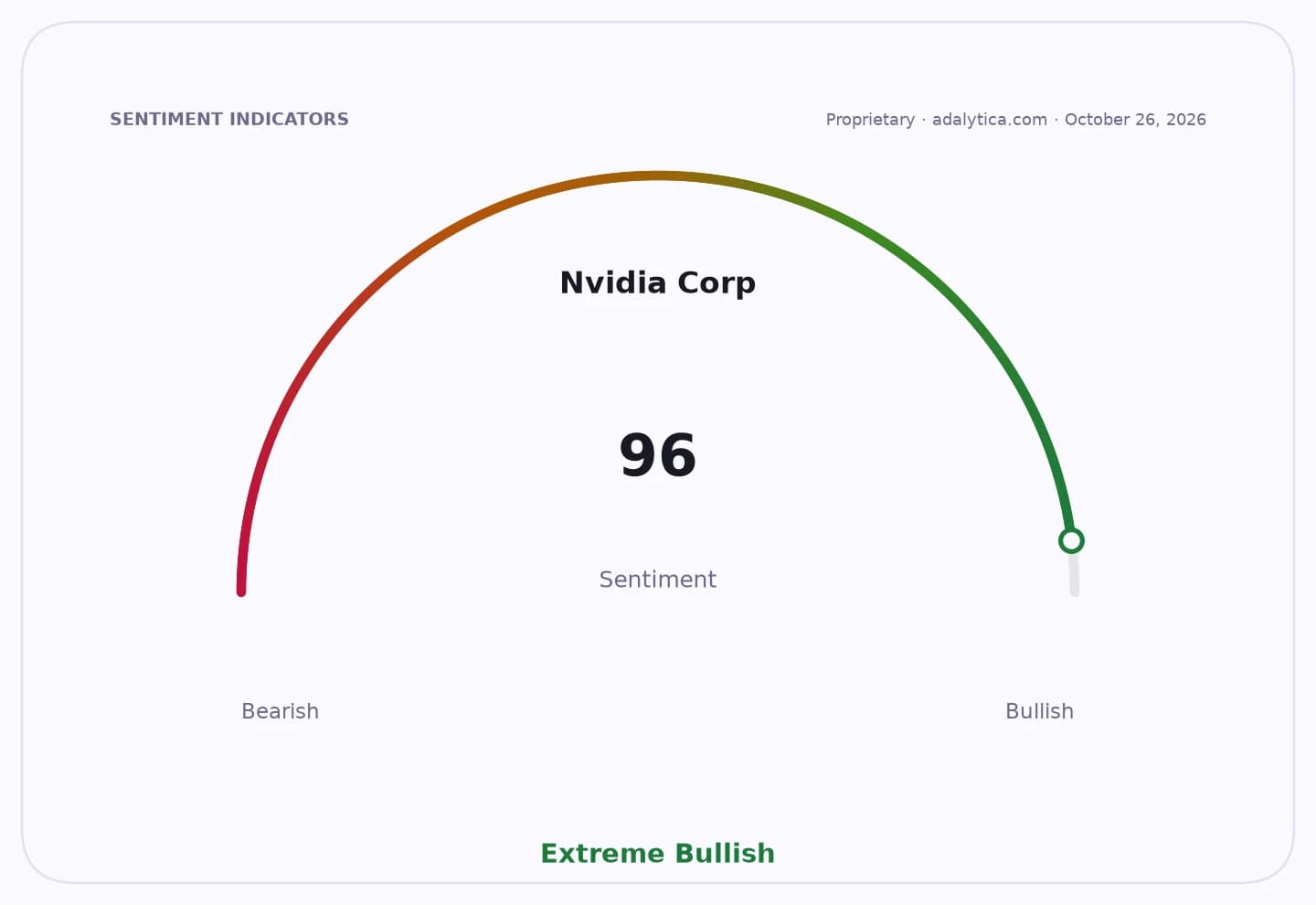
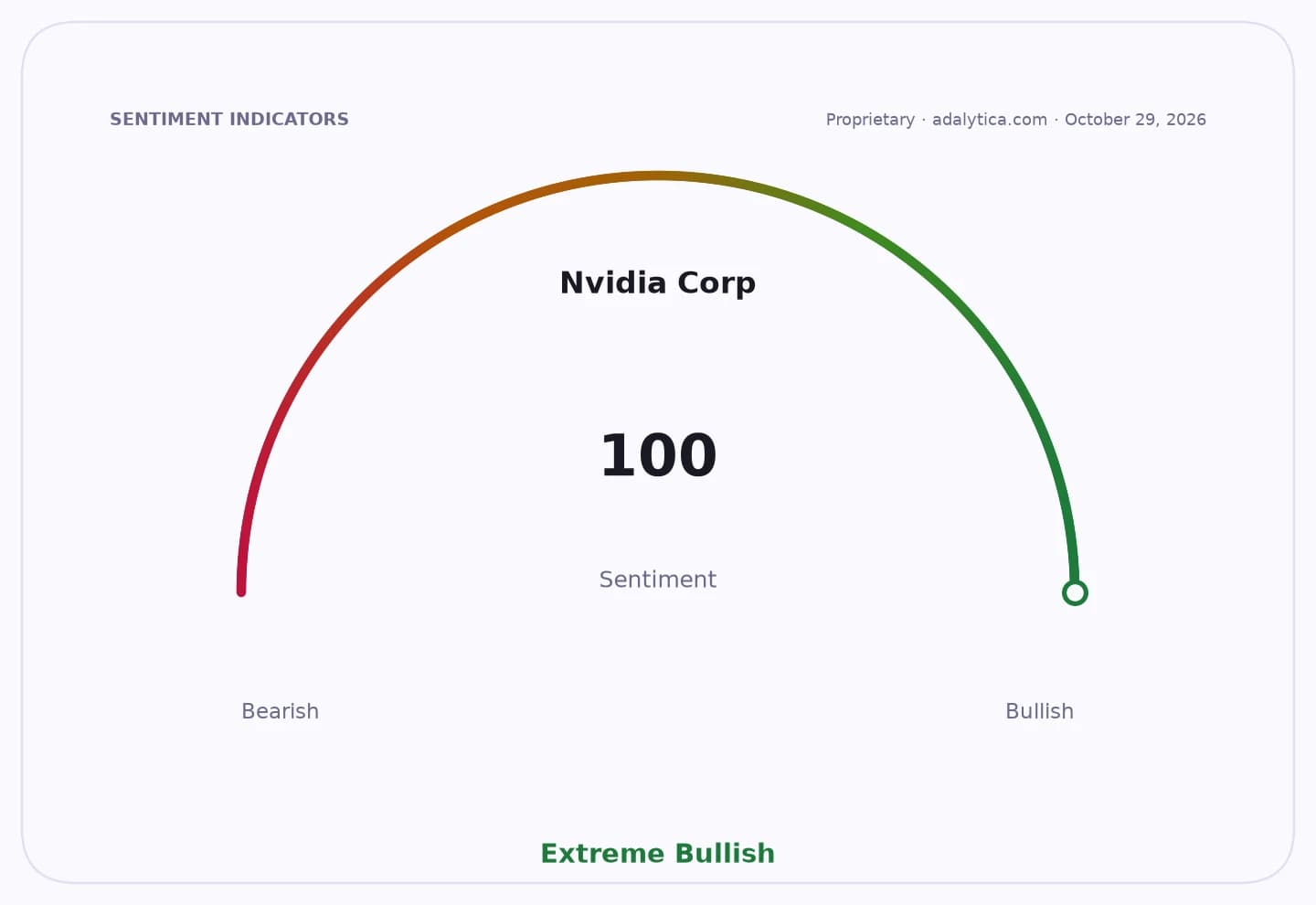
Sentiment Indicators
Trump said he “respects” Huang and would like to keep him as an adviser, but also said the administration would look into the matter carefully. His comments followed a New York Times report that U.S. intelligence concluded a China-linked company executive in Singapore was passing information to Beijing and had contact with Huang.
Beijing rejected the allegations as unfounded speculation. The exchange adds another layer to already strained U.S.-China ties, where technology access, intelligence and economic security are increasingly overlapping.
Nvidia Corp — 30-day sentimentadalytica.com
Explore this data interactively — full history, time series and cross-market comparisons.
Nvidia Corp
For investors, the headline risk is not an immediate earnings hit so much as the possibility of fresh political scrutiny around Nvidia’s China exposure. Nvidia shares fell to $204.64 on Friday, down from $213.66 a day earlier and well below the 50-day moving average of $221.68, while RSI readings at 31 point to technically oversold conditions. The stock is still above its 200-day moving average of $204.09, underscoring how sensitive sentiment is to geopolitical headlines even after a powerful year-long run.
The broader sector is also reacting to the geopolitical overhang. Taiwan Semiconductor Manufacturing Co., a critical Nvidia supplier, dropped to $406.13, while Microsoft, another major AI spender, slipped to $521.91. Adalytica’s NVIDIA Earnings Sentiment gauge showed “Extreme Fear” at 11, a sharp drop from 29 on Oct. 31, while its AI sentiment score remained pinned at 4, also “Extreme Fear.”
The episode highlights how the AI trade is no longer just about demand for accelerators and data-center buildouts. It is now also about state power, export restrictions and the personal security of the executives steering the industry’s most strategic companies.
Investors will be watching for any further White House comment, Chinese response and signs that the dispute broadens into new restrictions on chip sales or AI collaboration.
| Entity | Gains | Losses |
|---|---|---|
| Trump White House | ▲political leverage | ▼tech-policy distraction |
| Nvidia / Jensen Huang | ▲public support | ▼China scrutiny |
| China government | ▲none | ▼espionage allegations |
| Nvidia shareholders | ▲little immediate clarity | ▼geopolitical overhang |