Russia is using the third anniversary of the Nord Stream sabotage to recast the attack as a permanent break in energy ties with Europe, underscoring how the pipeline blast continues to shape geopolitics, legal disputes and the region’s fuel market structure.
Nord Stream sabotage reshapes Europe gas trade
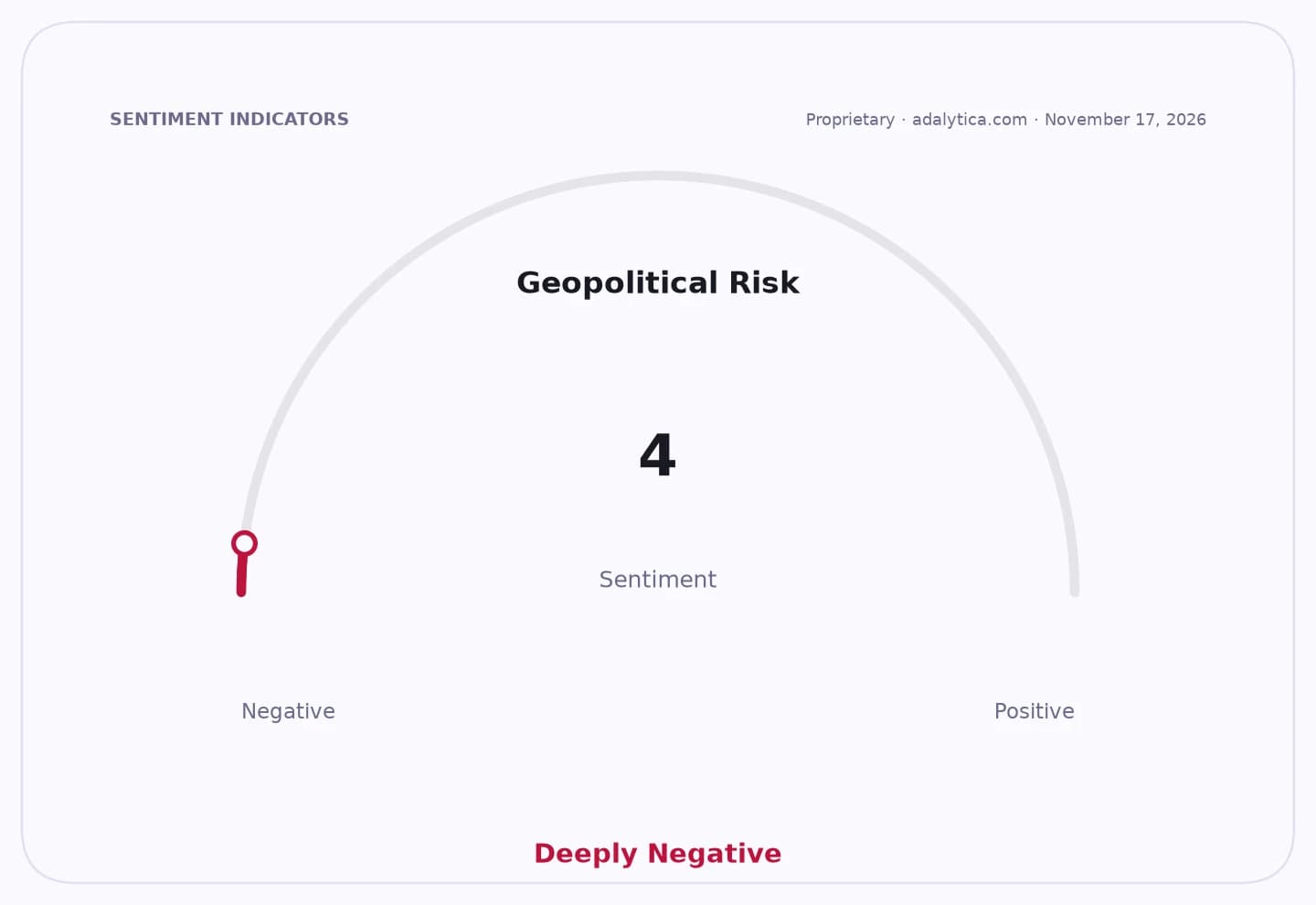
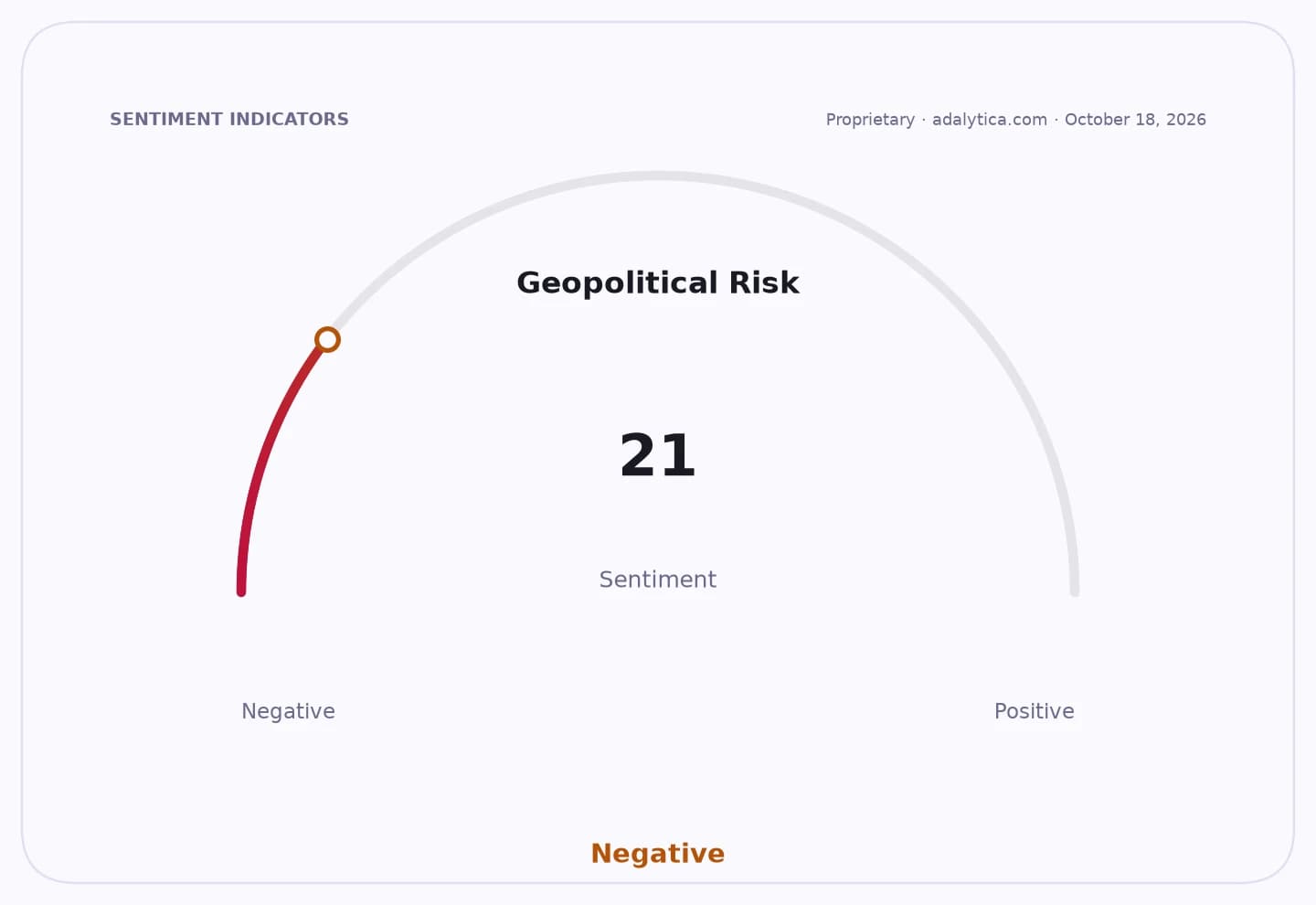
Geopolitical Risk
A senior Russian foreign ministry official said the bombing of Nord Stream destroyed trust between Russia and the European Union, arguing that the pipelines had once symbolized mutually beneficial cooperation and reliable gas supply. Moscow has long framed the 2022 undersea explosions as state-backed sabotage and has repeatedly demanded access to investigative materials, while Western governments have treated the case as an unresolved security and legal issue.
Sentiment Indicators
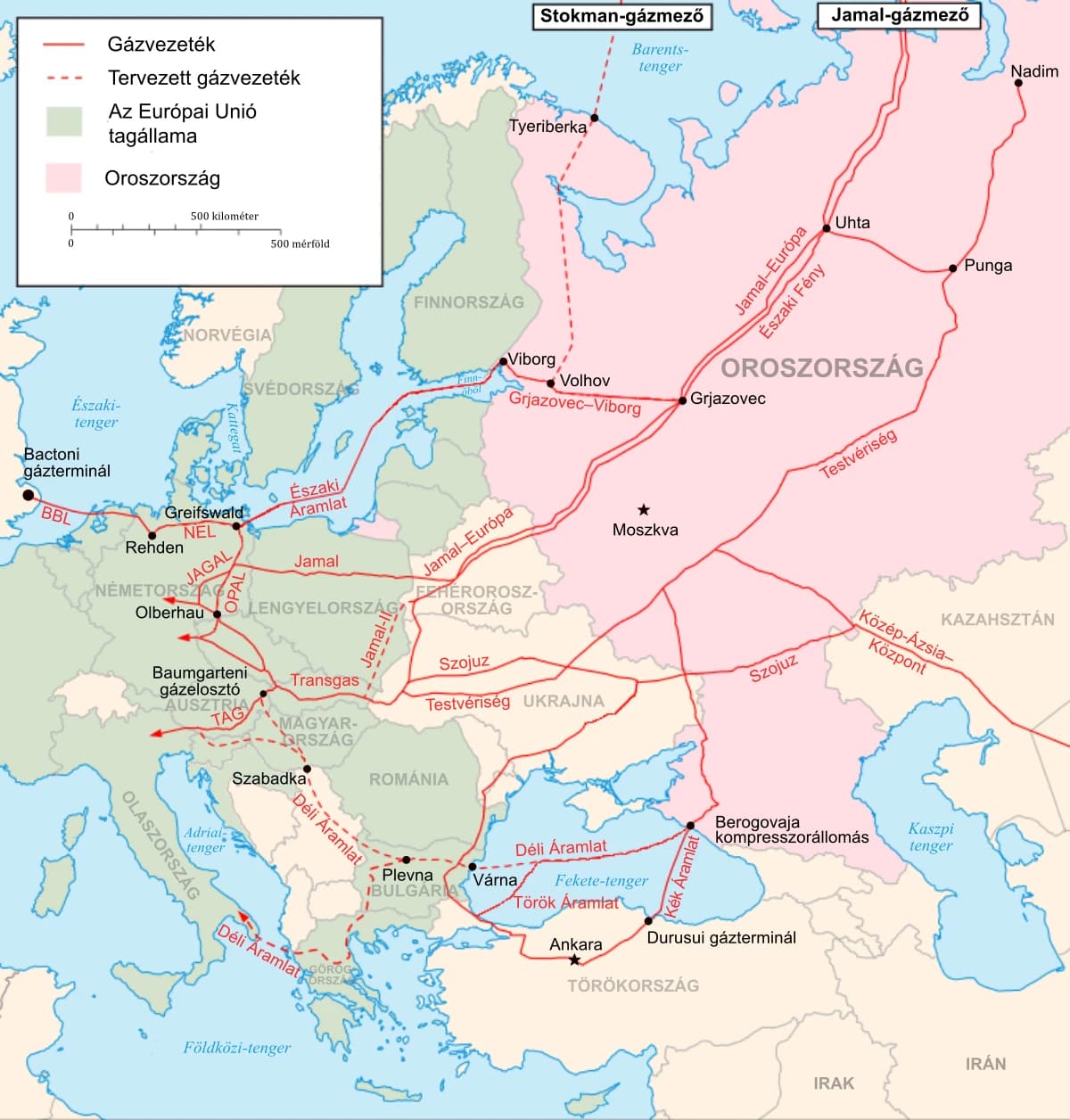
The timing matters because Nord Stream was not just a piece of infrastructure but the backbone of Europe’s prewar dependence on Russian pipeline gas. Before the war in Ukraine and the sabotage, Russian gas was a central input for European industry and household heating, helping anchor prices and, in Moscow’s telling, supporting broader European prosperity. The destruction of three of the four Nord Stream lines severed that model and accelerated Europe’s pivot away from Russia toward other suppliers, especially liquefied natural gas.
That shift has carried economic costs. Europe has traded pipeline reliability and lower transport costs for greater exposure to global LNG prices, shipping bottlenecks and, at times, higher volatility in power and industrial input costs. For Russia, the loss of Nord Stream stripped away a major export channel and hardened the political case for a long-term decoupling from Europe’s energy market. For European policymakers, it reinforced the need to diversify supply even at the expense of near-term efficiency.
Geopolitical Risk — 30-day sentimentadalytica.com
Explore this data interactively — full history, time series and cross-market comparisons.
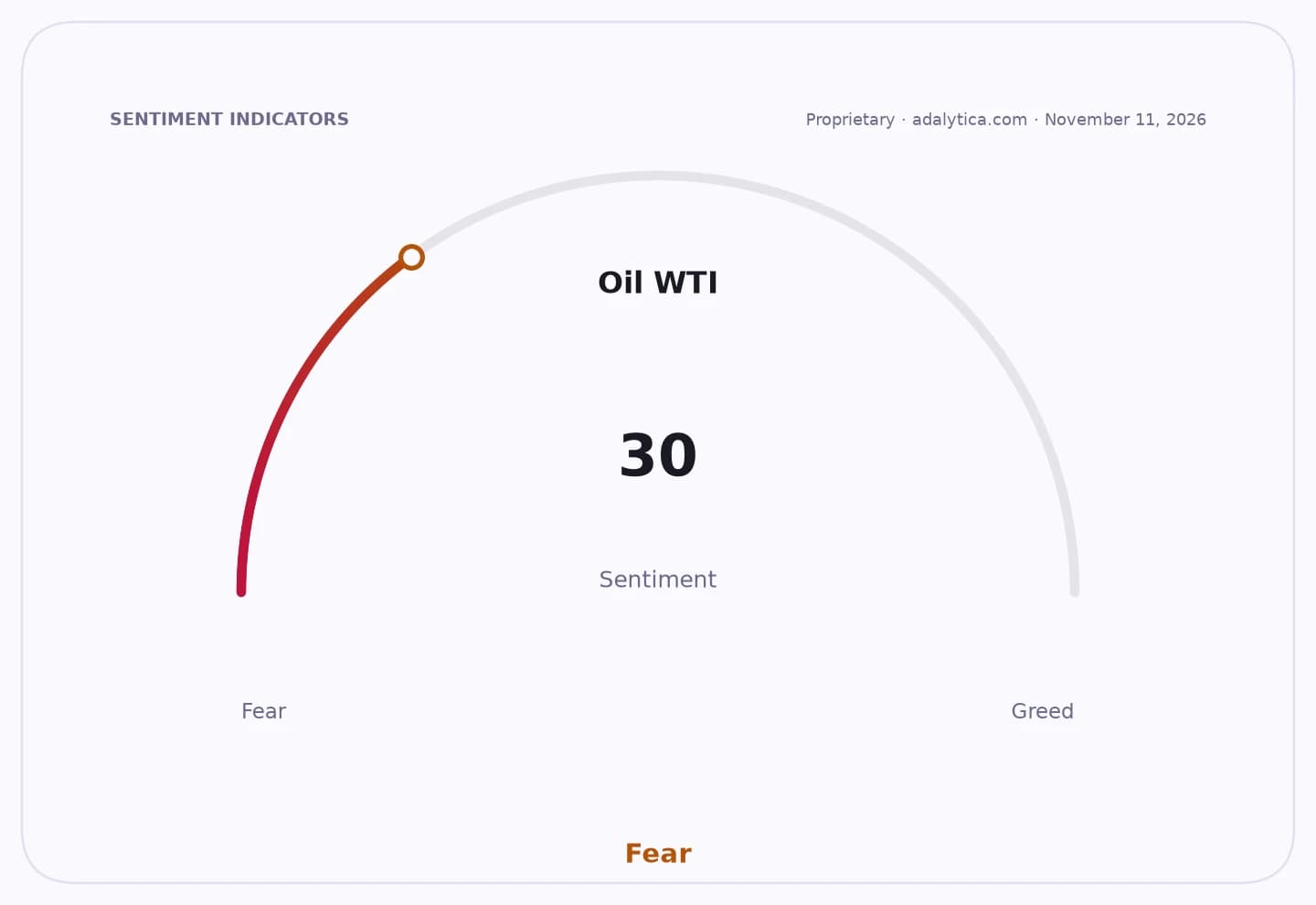
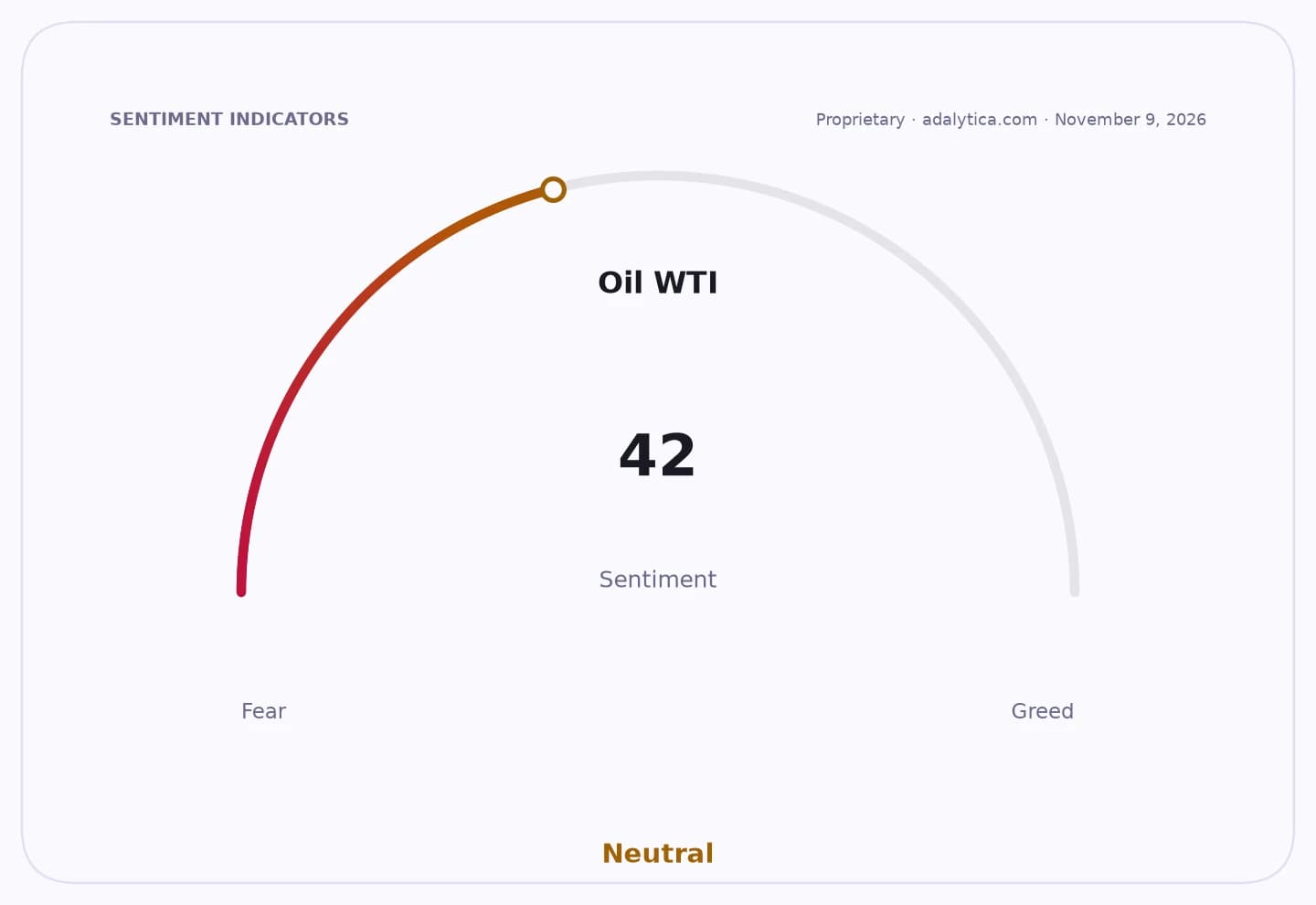
The issue is also still live in markets. Natural gas futures remain sensitive to geopolitical risk, and any suggestion of renewed strain over Russian energy flows can lift risk premiums across European utilities, industrials and energy traders. On the oil side, the broader geopolitical backdrop has helped keep crude elevated relative to long-run norms, with Brent futures around the mid-$90s a barrel and WTI near $90, while global stability gauges remain fragile. The Adalytica Global Stability Sentiment gauge was in neutral territory at 43, but awareness was flagged at an “extreme fear” level, reflecting how quickly geopolitical headlines can reprice energy and risk assets.
The legal and political fallout is unlikely to fade soon. A German court has delayed proceedings in the Nord Stream case, keeping the investigation and questions over responsibility unresolved. Poland’s prime minister has argued Germany should not pursue some of the suspects, while Russian officials continue to accuse Western intelligence services of involvement and insist the pipelines were critical to Europe’s economic balance. Moscow’s message is clear: the sabotage did not just damage a gas line, it destroyed the political trust required for any future normalization.
For investors, the key implication is that Nord Stream remains a symbol of structural energy fragmentation rather than a closed chapter. Even if any eventual reopening is discussed in Moscow as inevitable, the market now prices a Europe that will rely less on Russian gas, more on global LNG and a more geopolitically charged energy system.
| Entity | Gains | Losses |
|---|---|---|
| Europe’s LNG suppliers | ▲Higher demand for cargoes | ▼ |
| Russian gas exporters | ▲ | ▼Lost pipeline access |
| European consumers/industry | ▲Supply diversification | ▼Higher fuel volatility |
| Energy traders | ▲Volatility and pricing power | ▼Stable margins from cheap pipeline gas |