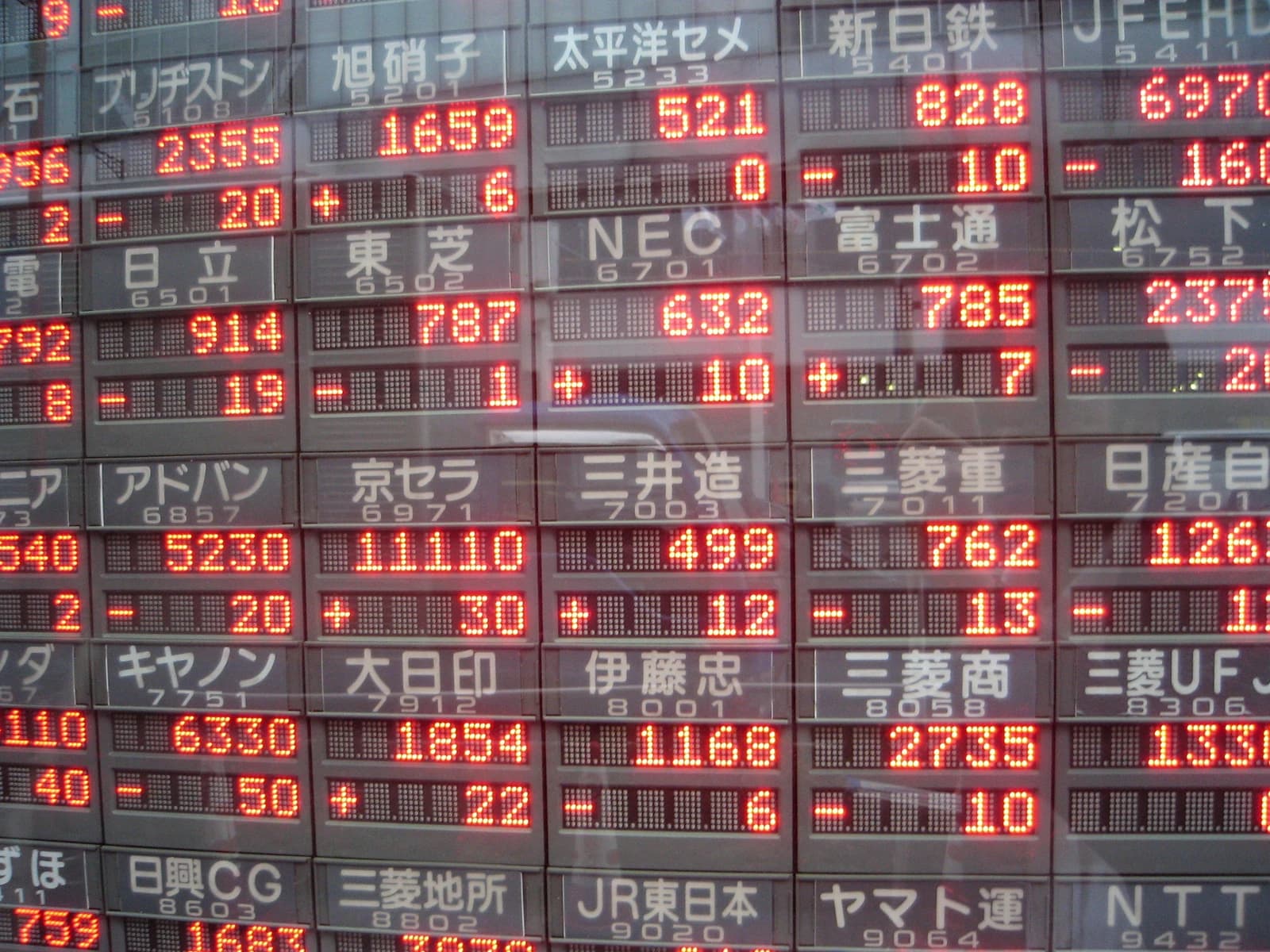
The Nikkei Stock Average slid as much as 500 yen as a selloff in U.S. AI-linked stocks rippled through Tokyo, underscoring how heavily Japan’s benchmark now leans on the same crowded growth trade driving Wall Street.
Nikkei Falls on U.S. AI Stock Selloff
The drop matters because AI and semiconductor shares have become a key engine for the Nikkei’s gains, so weakness in U.S. leaders such as Nvidia quickly feeds into sentiment in Tokyo. When the market starts to question whether AI valuations have run too far, Japanese equities with exposure to chips, cloud infrastructure and related capital spending tend to bear the brunt.
Sentiment Indicators

That linkage was visible in the latest trading pattern. Nvidia’s shares closed at $204.64 on Oct. 30, down from $235.20 on May 14, with the stock still below its 50-day moving average and its relative strength index at 31, a level that points to persistent technical weakness. Microsoft also lost momentum, ending at $521.91 on Oct. 30 after trading above $530 a day earlier, while Amazon fell to $240.35. Those moves followed a broader wobble in U.S. AI names, reinforcing the view that the sector’s leadership is vulnerable after a long run-up.
For Japan, the transmission mechanism is straightforward: chip equipment makers, AI hardware suppliers and exporters with U.S. revenue exposure are treated as proxies for global AI demand. A weaker U.S. tech tape tends to pressure those shares first, then drags on the Nikkei through index-weighted selling and reduced risk appetite. The impact is amplified when the yen is not offering much offset, leaving equity investors to absorb the full shock of a rotation away from high-multiple growth stocks.
S&P 500
The decline also fits with a more defensive tone across global markets. Adalytica’s S&P 500 Trade Signals showed sentiment at 26, in “Fear,” even as awareness sat at 99, a combination that suggests investors are highly alert to market moves but reluctant to add risk. In currency markets, Adalytica’s U.S. dollar signal also softened, with sentiment at 17, reinforcing the sense that positioning is shifting rather than broadening.
For investors, the key question is whether this is a brief valuation reset or the start of a deeper unwind in AI leadership. Bulls will argue that capital spending on AI remains intact and that dips in U.S. megacap technology offer buying opportunities. Bears will point to stretched multiples, uneven earnings follow-through and the growing tendency for crowded trades to move in unison. For Tokyo, the near-term outlook now depends less on domestic data than on whether U.S. AI shares can stabilize and restore confidence in the global growth trade.
| Entity | Gains | Losses |
|---|---|---|
| U.S. AI stock shorts | ▲Lower prices | ▼Long-only holders |
| Japanese tech exporters | ▲Stabilizing U.S. demand | ▼Nikkei index level |
| Value and defensive shares | ▲Relative inflows | ▼High-multiple growth names |
| Global chip suppliers | ▲Long-term AI capex theme | ▼Near-term momentum trade |