More than 1,000 health professionals have been added in New Brunswick after the province used higher spending and a new physician services agreement to accelerate recruitment, a shift that could ease staffing bottlenecks in a strained public system while adding to long-run fiscal pressure.
New Brunswick Adds 1,000 Health Workers

Premier Susan Holt’s government is framing the gains as proof that pay is central to fixing shortages. That matters economically because health care is one of the province’s largest and least flexible budget items: when recruitment improves, service capacity rises, but so does the structural wage bill if those hires are retained through richer contracts. In a province where access to doctors and other front-line workers has been a binding constraint on growth and public satisfaction, the policy is as much about stabilizing the labour market as it is about cutting waiting lists.
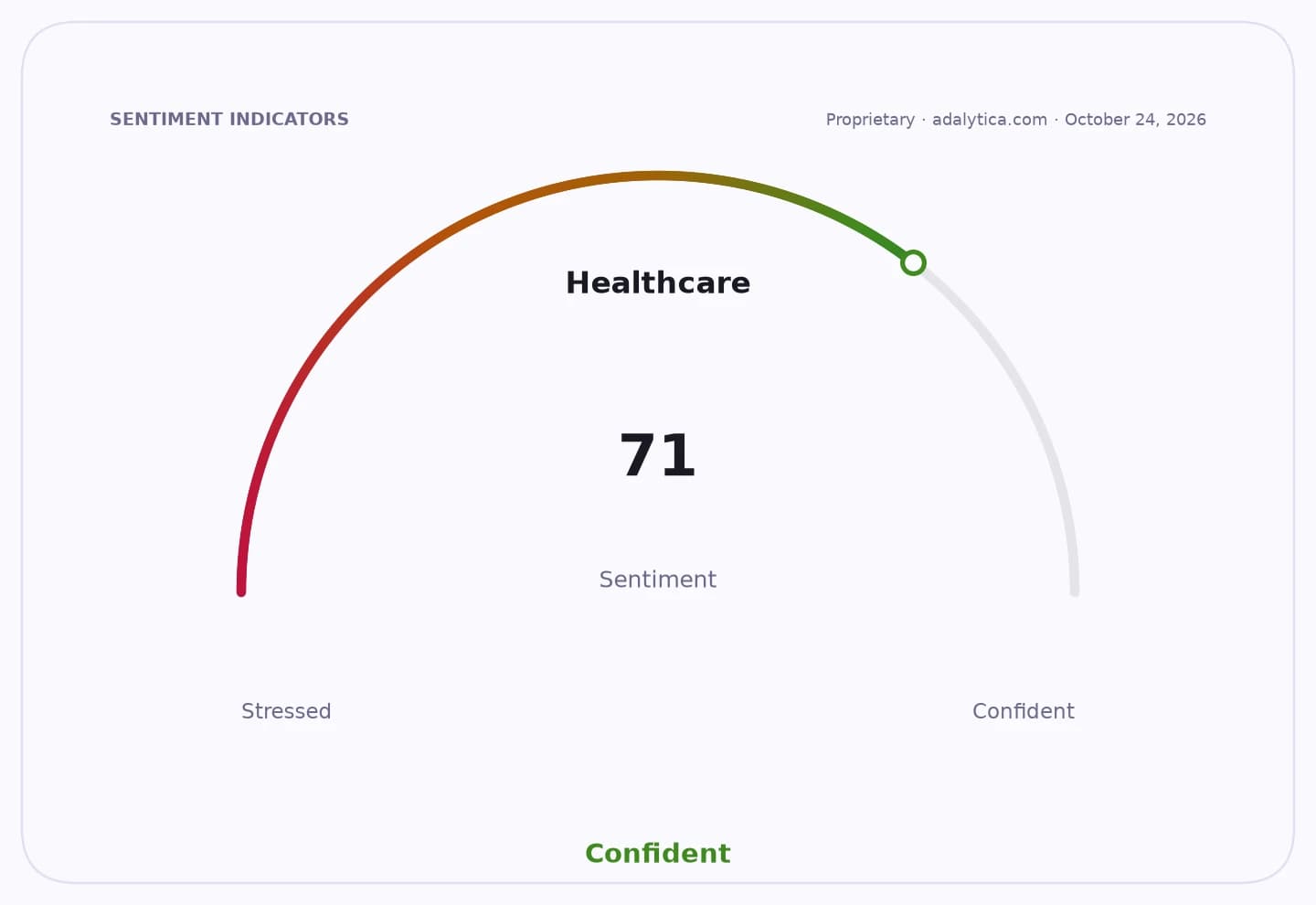
Sentiment Indicators
The new physician services agreement appears to be the key lever. Because doctors’ pay heavily influences recruitment and retention, any improvement in compensation can quickly translate into more clinicians entering the system or choosing to stay. That has broader spillovers: faster recruitment can reduce reliance on costly locums, lower overtime and vacancy costs, and improve throughput in emergency rooms, primary care and surgical backlogs. It also supports household confidence by reducing the friction of getting care, which can affect labour participation when workers are no longer forced to miss shifts for delayed treatment.
The trade-off is familiar. Public-sector wage bargains can produce measurable staffing gains, but they can also raise expectations across the rest of the health system, from nurses to technical staff, especially in a tight labour market. The province is effectively competing for scarce workers against other provinces and private providers, and the precedent of a better physician deal may force further concessions elsewhere if recruitment remains uneven.
For investors, the story is a reminder that health-care staffing is not just a public-policy issue but a cost and demand issue. Better staffing can improve service volumes and reduce operational inefficiencies, yet it can also tighten margins for health employers and suppliers exposed to public reimbursement. In Canada more broadly, the episode underscores how provincial fiscal capacity, not just population need, is shaping access to care and the pace of system repair.
The key question now is whether New Brunswick can convert the recruitment surge into durable retention without locking in a permanently higher cost base. If it can, the province may gain a more stable health workforce and better service delivery. If not, the spending push risks becoming another short-term fix that postpones, rather than solves, the labour shortage.
| Entity | Gains | Losses |
|---|---|---|
| New Brunswick government | ▲Better staffing optics | ▼Higher fiscal burden |
| Health workers | ▲Higher pay, more recruitment | ▼Greater public scrutiny |
| Patients | ▲Improved access, shorter waits | ▼Delay if hiring stalls |
| Provincial budget | ▲Efficiency gains from fewer vacancies | ▼Ongoing wage inflation |