METLEN’s new five-year LNG supply deal with Shell matters because it gives the Greek group firmer access to Atlantic-linked gas at a time when Europe is still rebuilding supply security and racing to defend winter resilience.
METLEN and Shell sign five-year LNG supply deal

Under the agreement, Shell Global LNG will supply six cargoes a year, or about 0.6 billion cubic meters annually, starting in 2027, with most volumes coming from Shell’s U.S. LNG portfolio. The gas is intended for Greece and wider European markets through the Vertical Gas Corridor, reinforcing Greece’s push to become a regional energy hub rather than just a transit point.
Sentiment Indicators
For investors, this is more than a routine procurement contract. It shows how long-term LNG offtake deals remain the backbone of Europe’s post-Russia energy architecture, even as spot prices fluctuate and demand growth remains uneven. Companies with trading reach, shipping access and downstream market penetration are gaining leverage from the fragmentation of Europe’s gas system, and that favors integrated players such as Shell and regionally embedded buyers like METLEN.
The deal also deepens a strategic relationship that could widen over time. Shell brings scale, U.S. supply optionality and trading expertise; METLEN brings customer access in Southeast Europe and a platform for serving markets that still need flexible molecules, not just pipe gas. That combination is valuable because the region’s energy mix remains exposed to geopolitics, storage levels and winter weather, while alternative supply routes are still being built out.
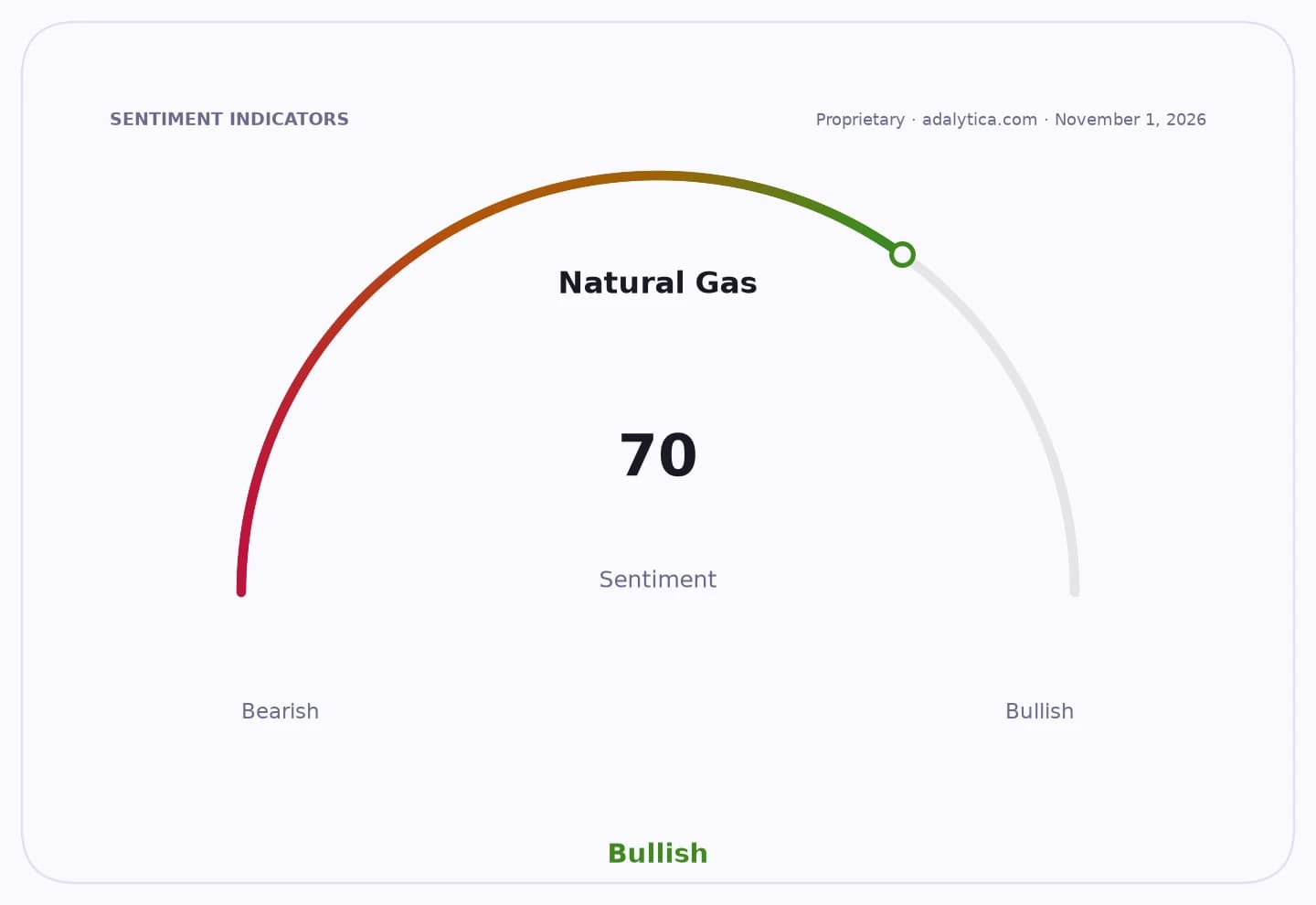
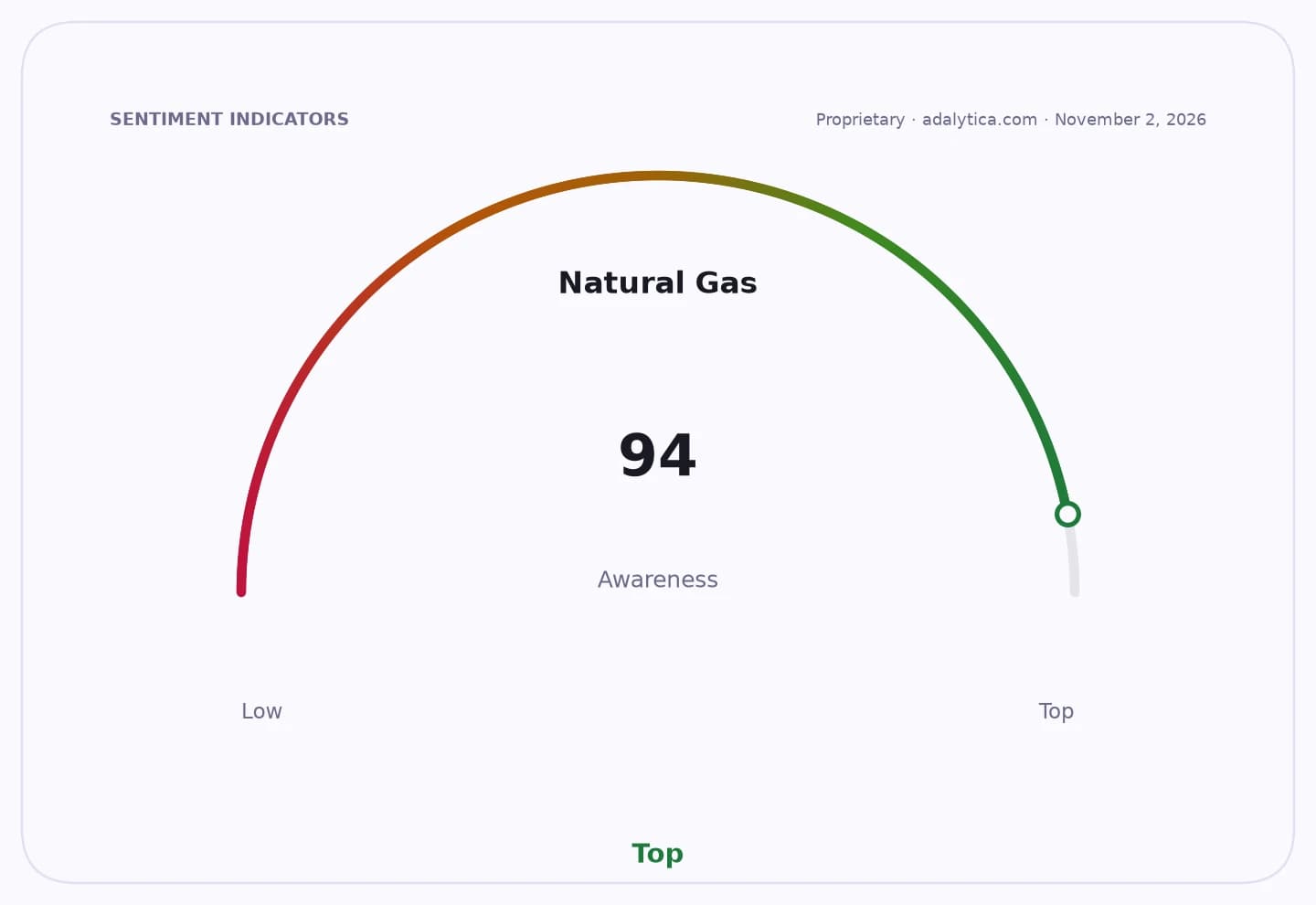
The broader trade is clear: Europe’s gas market is not reverting to the old model of dependence, but it is also not becoming simple or cheap. Instead, it is rewarding firms that can secure contracted supply, move cargoes efficiently and arbitrage regional demand. With Adalytica’s natural gas trade signals showing sentiment near neutral but awareness at extreme greed, the market is clearly watching LNG closely even if positioning is not yet euphoric.
Shell shareholders should read this as another reminder that LNG remains a durable cash-flow engine, while METLEN investors get evidence that the company is tightening its role in European energy flows. The real upside lies in the second-order effects: more contracted volumes, more trading flexibility and more relevance for Greece as a gas gateway into Southeast Europe.
For investors looking for the next leg of the LNG trade, the key takeaway is simple: the market underestimates how much value sits in supply security, infrastructure access and regional distribution. That is where the most durable returns will be made.
| Entity | Gains | Losses |
|---|---|---|
| METLEN | ▲More supply security | ▼Less spot-market exposure |
| Shell | ▲Locked-in LNG demand | ▼Less volume left for spot sales |
| Greece / Southeast Europe | ▲Stronger gas hub role | ▼Continued reliance on imports |
| Spot LNG buyers | ▲Fewer available cargoes | ▼Tighter supply optionality |