The US dollar’s grip on global markets pushed lead lower overnight, with LME lead sliding to $1,874 a metric ton before settling at $1,878.5, as a firmer greenback and cautious downstream buying kept the market under pressure.
Lead Falls as Dollar Strength Pressures LME Prices
The move matters because lead is a dollar-priced industrial metal with a narrow margin for error when macro sentiment turns. A stronger dollar makes commodities more expensive for non-US buyers and tends to tighten demand at the margin, while also reinforcing a risk-off tone across metals. For lead in particular, that currency effect is colliding with fundamentals that are not yet strong enough to absorb it.
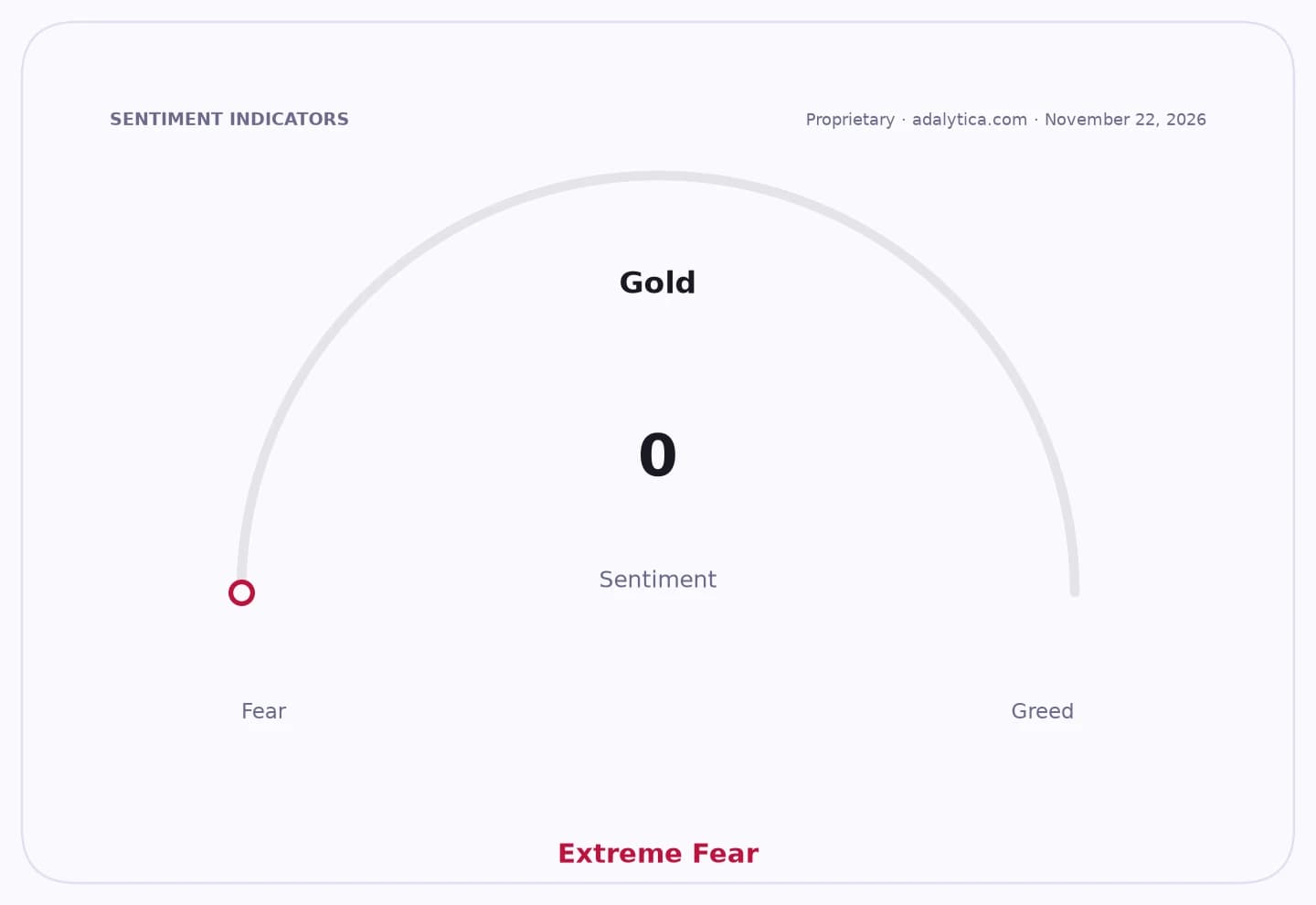
Sentiment Indicators
LME lead fell 0.79% on the session after opening at $1,893 and briefly touching $1,894 in Asian trade before turning lower as the dollar index held near highs in European hours. The Shanghai Futures Exchange’s January 2027 lead contract also eased, settling at 15,855 yuan a ton, down 0.19%, after trading between 15,740 and 15,880 yuan.
The broader backdrop is one of mixed physical signals. LME inventories are declining, which normally supports prices, and high-grade lead in Southeast Asia remains tight, raising expectations for higher spot premiums. In China, maintenance and environmental checks have tightened regional supply, keeping domestic spot premiums elevated. But the demand side is weaker: downstream producers have cut output because of seasonal and policy factors, purchases are cautious and transactions remain sluggish.
That leaves the market in a classic squeeze between tightening available metal and subdued end-user consumption. Bulls can point to falling inventories and firm spot premiums as evidence that the physical market is tightening. Bears can argue that without stronger battery demand and restocking, supply tightness alone is unlikely to sustain a rally when the dollar is firm and financing costs remain elevated.
The message for investors is that lead is still trading more as a macro-sensitive industrial metal than as a clean supply shortfall story. If the dollar stays strong, price upside will likely remain capped even as nearby physical premiums stay firm. A softer dollar or a clearer pickup in downstream buying would be needed to break the current range and turn the inventory drawdown into a sustained price advance.
| Entity | Gains | Losses |
|---|---|---|
| US dollar | ▲Support from safe-haven demand | ▼Non-US commodity buyers |
| Lead producers | ▲Firm spot premiums | ▼New buyers facing high prices |
| Downstream users | ▲Lower inventory risk ahead | ▼Higher input costs |
| Bears | ▲Range-bound prices | ▼Inventory-tightness narrative |