JPMorgan Chase is moving to expand mortgage lending just as borrowing costs are edging down from recent highs, a sign the biggest US bank sees an opening in a housing market that has been frozen by affordability pressures.
JPMorgan Chase expands mortgage lending as rates ease

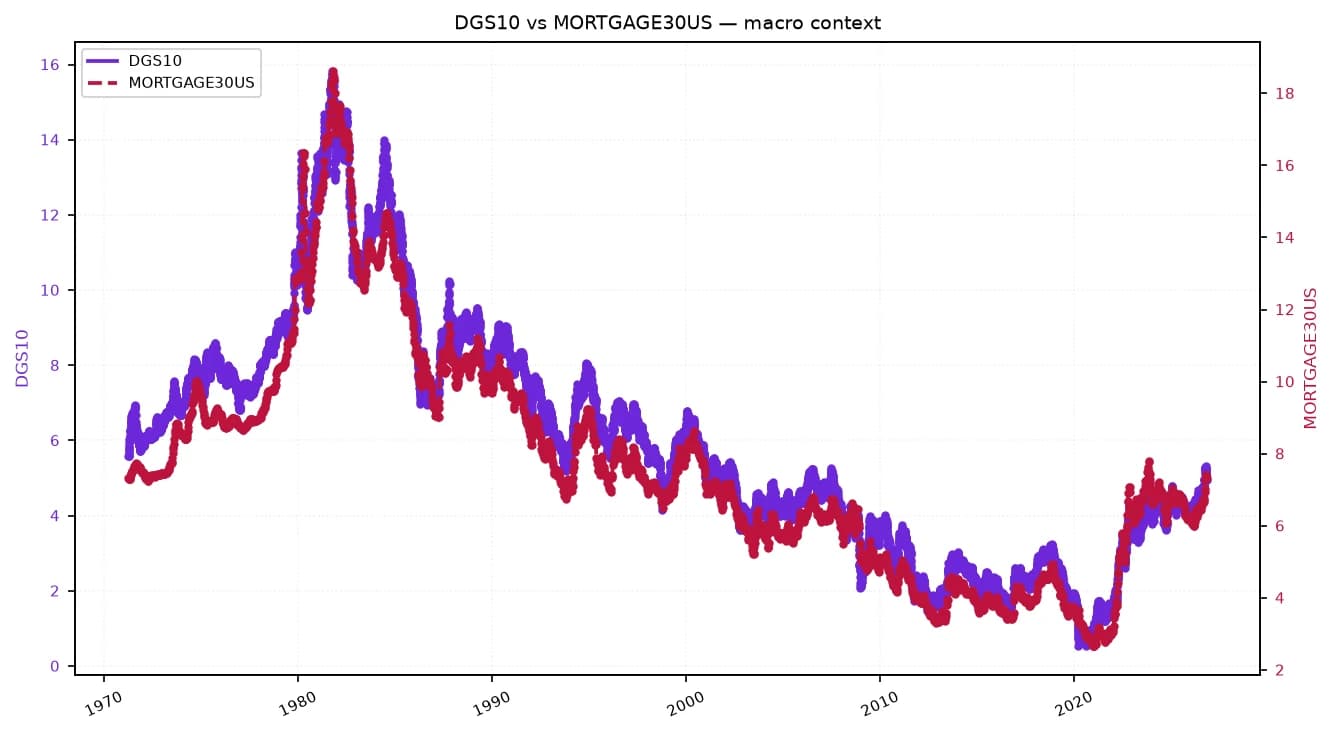
The shift matters because even small declines in mortgage rates can unlock demand in a market where monthly payments remain stretched and would-be buyers have been sidelined. The average 30-year fixed mortgage rate was 7.11% last week and is forecast to dip to about 7.03%, still elevated by historical standards but enough to improve the math for refinancers and first-time buyers. The 10-year Treasury yield, a key benchmark for mortgage pricing, was recently around 5.15% and forecast to edge to 5.234%, helping explain why lenders are watching for any turn in the rate cycle.
Sentiment Indicators
Housing
For JPMorgan, the move is also strategic. Mortgage production has been a pressure point across the industry as higher rates curtailed refinancing and slowed purchase volumes. In its latest quarterly filing, JPMorgan said mortgage fees and related income in home lending fell, driven largely by lower production revenue tied to warehouse loans held for sale. A push to originate more mortgages would help the bank regain fee income and deepen client relationships in an area where it has historically lagged some peers.
The timing suggests JPMorgan believes the market is starting to thaw, even if only gradually. US housing starts remain well below levels seen earlier in the cycle, with the latest reading at 1.221 million after a slide from 1.609 million in May. That reflects years of weak affordability, limited inventory and higher financing costs. A modest pickup in new lending would not fix those structural constraints, but it could capture pent-up demand if rates continue easing and buyer confidence improves.
Investors are likely to view the move through two lenses. On one hand, more mortgage originations could support noninterest income and show that large banks are positioned to benefit if rate-sensitive housing activity rebounds. On the other, the business remains cyclical and margin-sensitive, and a modest decline in rates may not be enough to generate a sustained refinancing wave. JPMorgan’s shares, meanwhile, have held above their 200-day moving average, with recent trading suggesting the stock is still priced for solid earnings resilience rather than a dramatic mortgage rebound.
The broader implication is that the largest US banks are again competing for share in a housing market that has been largely dormant. If mortgage rates keep easing and home sales stabilize, JPMorgan’s ramp-up could mark the first stage of a wider industry scramble for refinance and purchase volume. If rates stall near current levels, however, the payoff may be limited to incremental share gains rather than a full-cycle recovery.
| Entity | Gains | Losses |
|---|---|---|
| JPMorgan Chase | ▲Higher mortgage volume | ▼More rate-sensitive costs |
| Homebuyers/refinancers | ▲Better borrowing options | ▼Still-high monthly payments |
| Smaller mortgage lenders | ▲— | ▼Share to larger banks |
| Existing mortgage holders waiting to refinance | ▲Lower rates if they fall further | ▼Limited relief if rates stall |