Public sector pay in Ireland has broadly kept ahead of inflation over the past decade, but the picture changes over the shorter window that is now driving fraught negotiations between ministers and unions.
Ireland public sector pay talks run to 2028
That split matters because the next pay deal will shape household spending power for thousands of workers, while also testing how far the government is willing to extend wage growth at a time when inflation is still above target and energy costs are rising again. The talks are likely to be backdated to June, when the last agreement expired, and could run to the end of 2028.
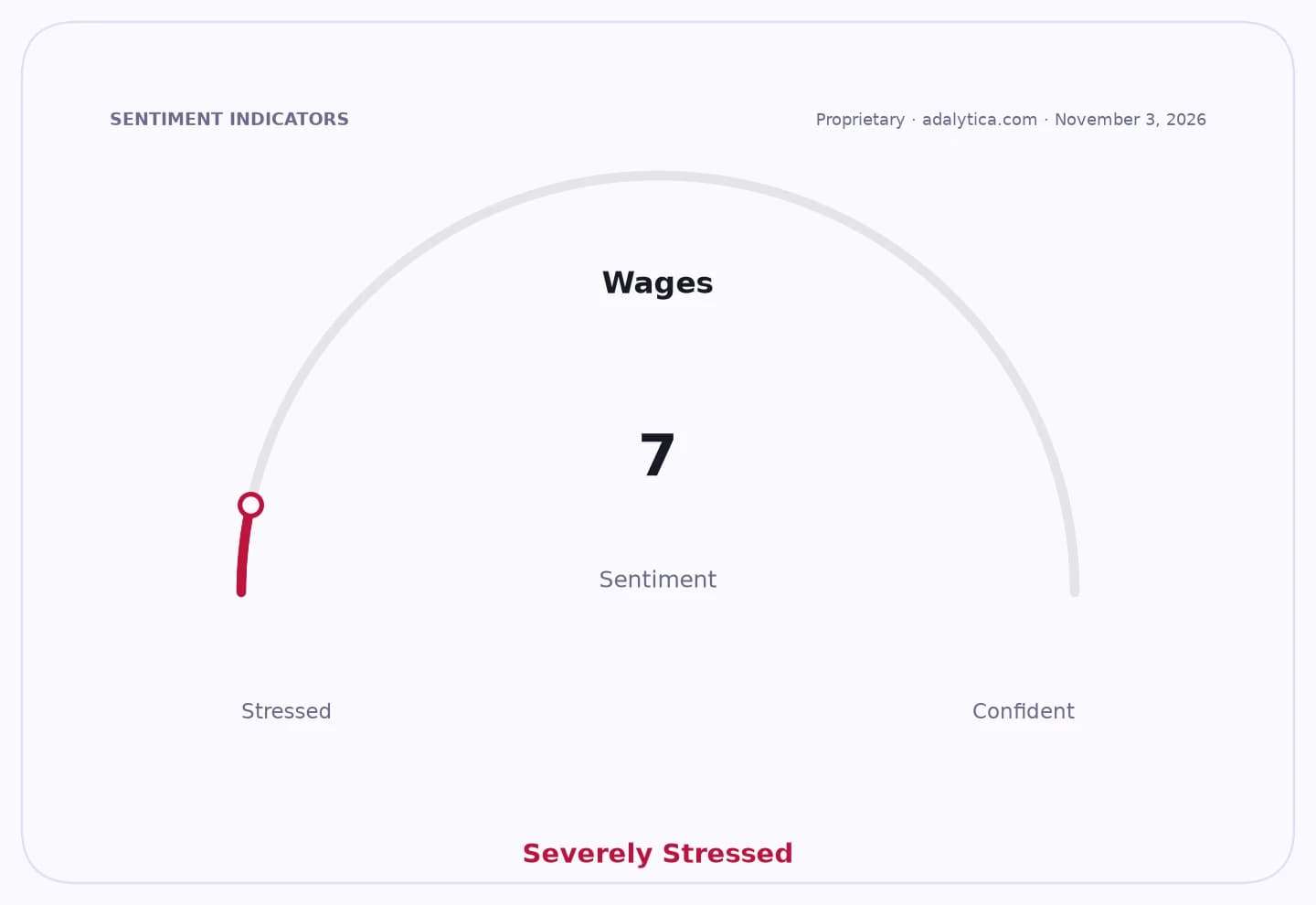
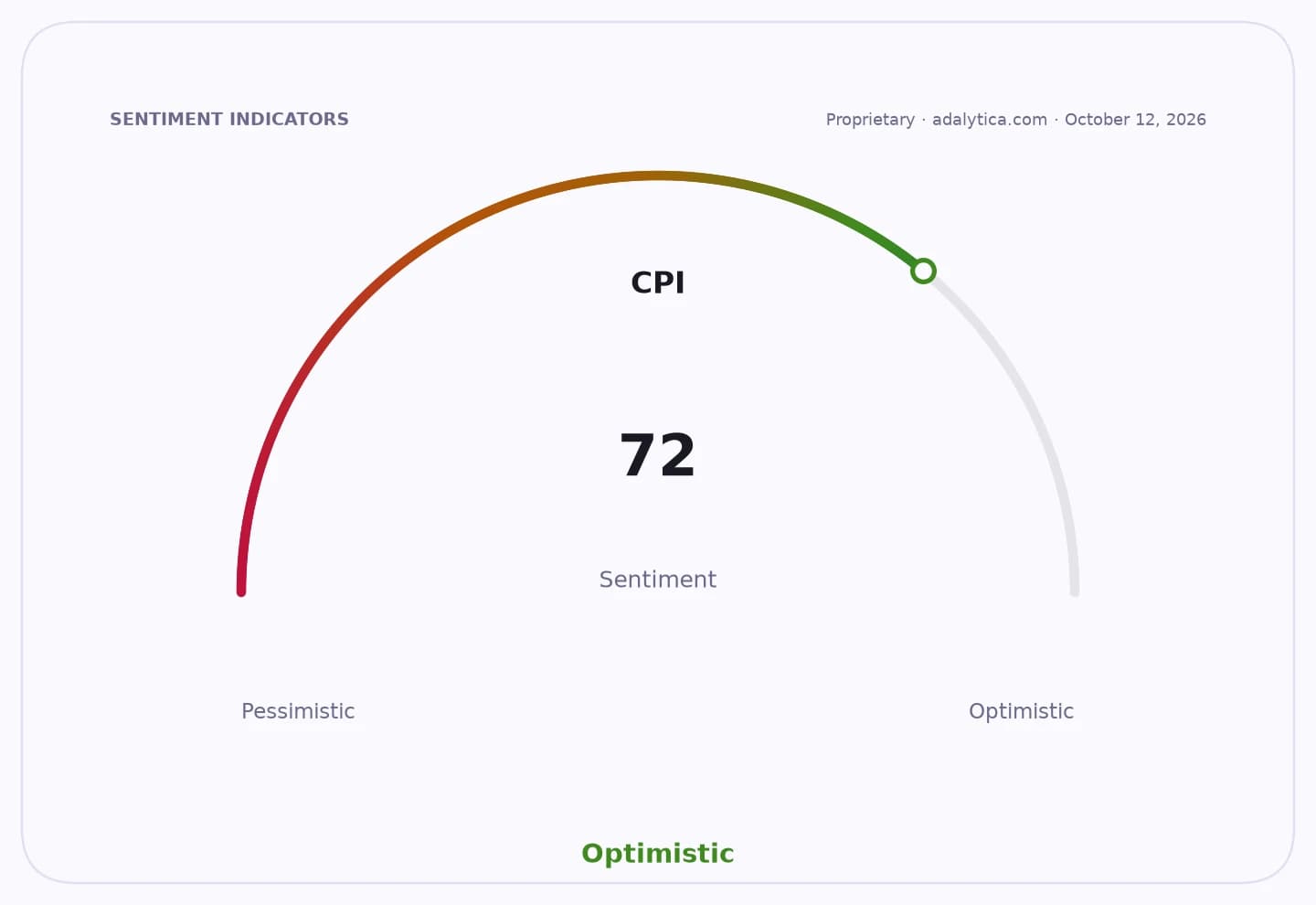
Sentiment Indicators
Using Central Statistics Office data, civil service wages rose 43% between the second quarter of 2016 and the same period in 2026, while Defence Forces earnings climbed 50%, Garda pay increased 40%, education workers gained 39% and healthcare workers 43%. Over that same stretch, inflation rose 27.4%.
But unions are not arguing over a decade. They say the key period is 2021 to 2026, when prices rose 27.2% and wages increased more slowly in most categories: 23% in the civil service, 28% in the Defence Forces, 36% for gardaí, 21% in education and 25% in healthcare. That leaves most public servants behind on a cumulative basis, even after allowances, overtime and annual increments are included.
The government is using a narrower frame. It says the last agreement, covering January 2024 to June 2026, delivered cumulative pay gains of 9.6% and that inflation over the same period was 8%. CSO figures cited in the data show gross earnings rose 9% in the civil service, 14% in the Defence Forces, 17% for gardaí, 12% in education and 7% in health.
That debate is more than a statistical argument. Public sector pay is a major input into Ireland’s fiscal outlook, and any settlement that runs to 2028 would lock in higher baseline spending even if inflation cools as forecast. The Central Bank expects inflation at 3.4% this year, easing to 3.1% in 2027 and 2% in 2028, but the government and unions both know those projections are vulnerable to shocks in energy and food prices.
The latest figures also show why pay comparisons are politically charged. Garda earnings averaged €95,353 in the second quarter, but that reflects overtime and longer working hours, while civil service pay averaged €62,950 and healthcare workers €65,151. Average paid hours ranged from 24.7 in education to 43.2 for gardaí.
For investors, the immediate relevance is limited to Ireland’s domestic economy, but the broader message is familiar: if inflation proves stickier than forecast, wage talks become harder to settle and public spending rises faster than planned. With Brent crude still above $100 a barrel for much of recent weeks and food costs expected to rise after higher fertiliser prices, the pressure on both sides is likely to intensify before a final deal is struck.
| Entity | Gains | Losses |
|---|---|---|
| Public sector workers | ▲Higher pay base | ▼Real wages if deal lags inflation |
| Irish government | ▲Labour peace if deal holds | ▼Fiscal spending discipline |
| Unions | ▲Stronger bargaining position | ▼If inflation eases faster than expected |
| Taxpayers | ▲Stability from agreement | ▼Higher public sector bill |