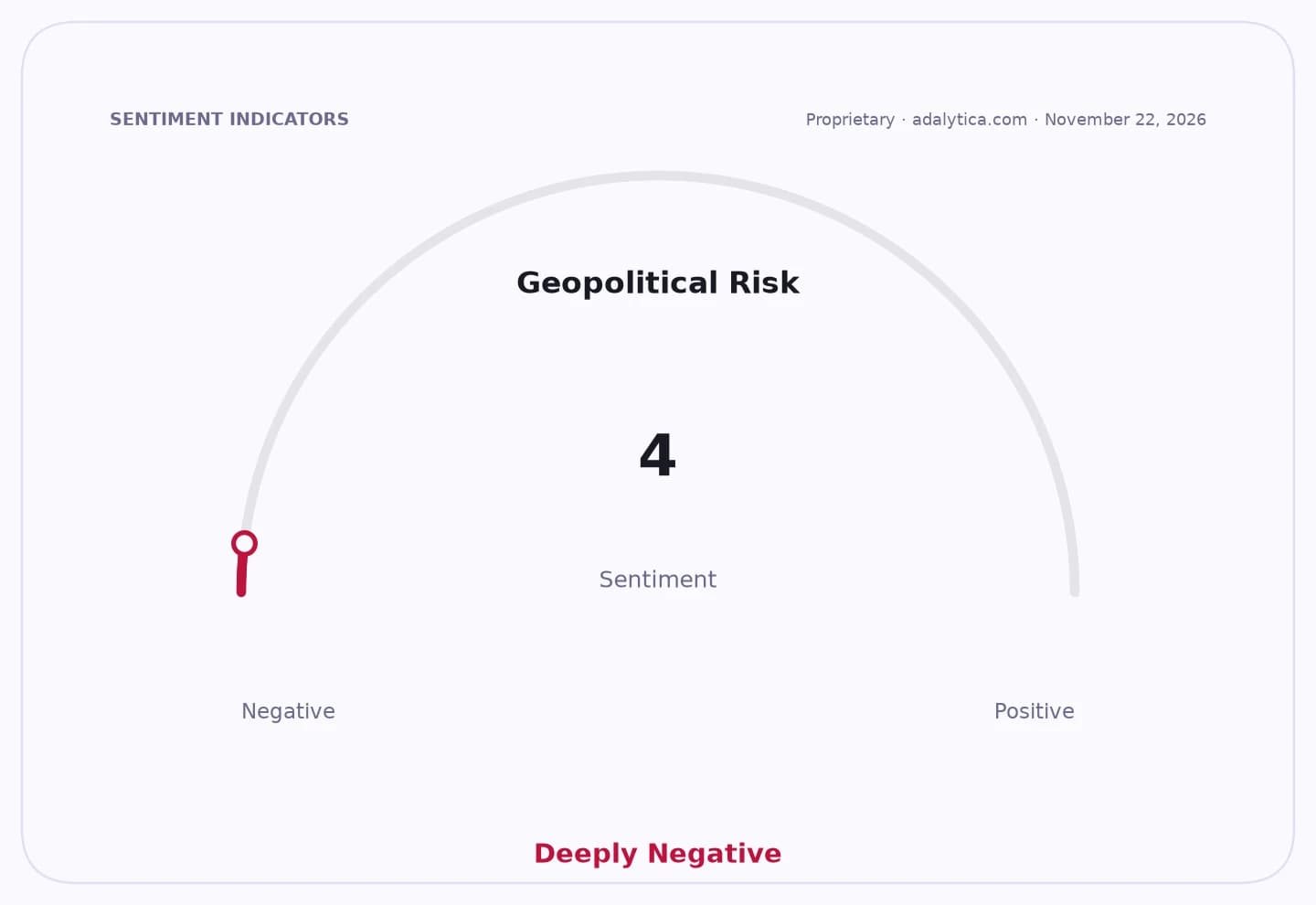
Iran’s willingness to keep talking to Washington is as much about domestic politics as diplomacy, with Tehran using the prospect of negotiations to signal strength at home while trying to preserve leverage abroad.
Iran Talks Keep Oil Risk Premium in Focus
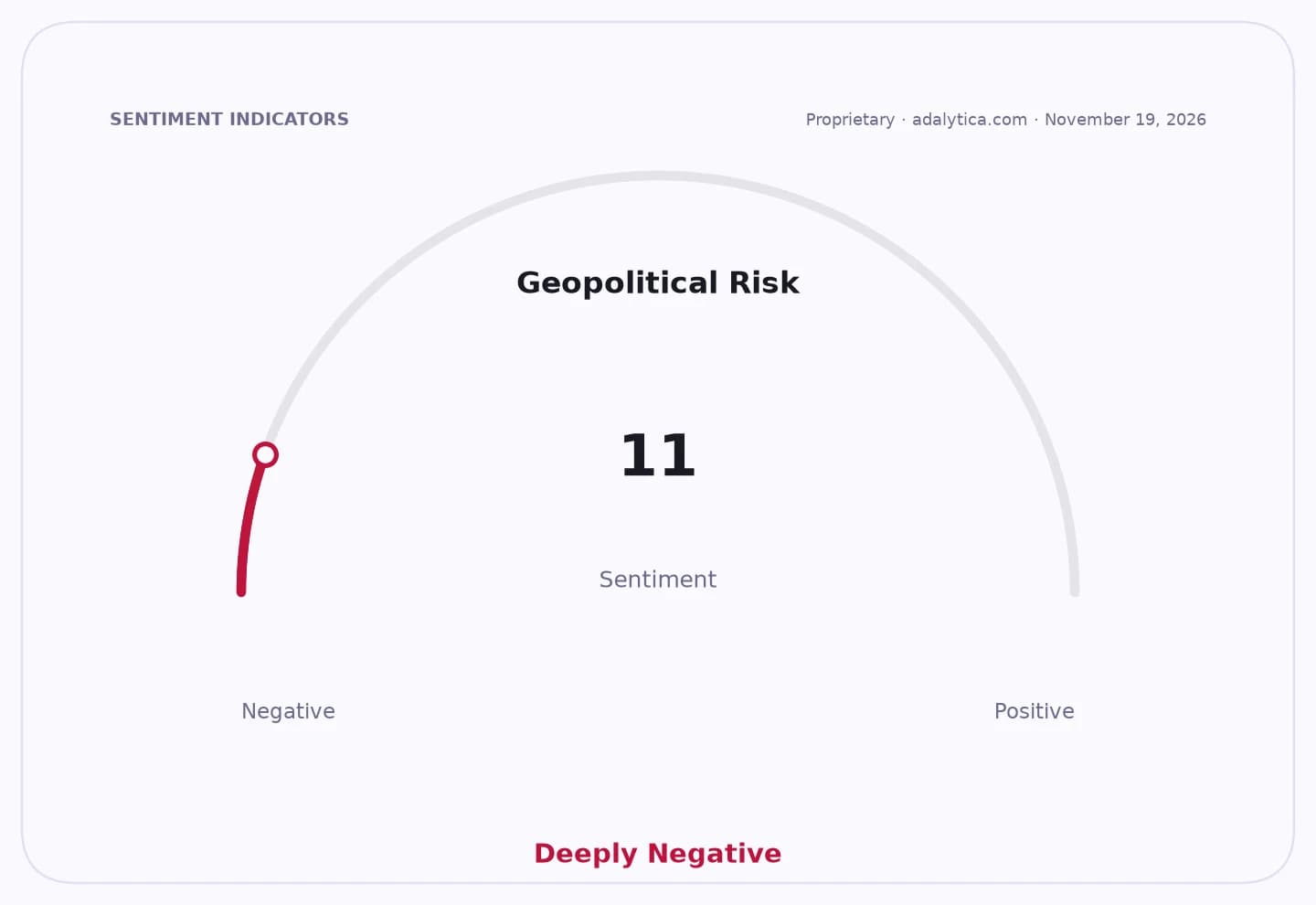
That is the core message from analysts cited in Egyptian media, who say Iran is seeking to turn stalled nuclear diplomacy into a tool of deterrence and internal cohesion rather than a path to quick compromise. The stakes are economic as much as geopolitical: any escalation around Iran’s nuclear program, shipping lanes or regional proxies can quickly feed into oil prices, Treasury yields and risk appetite, especially when markets are already pricing a fragile balance in the Middle East.
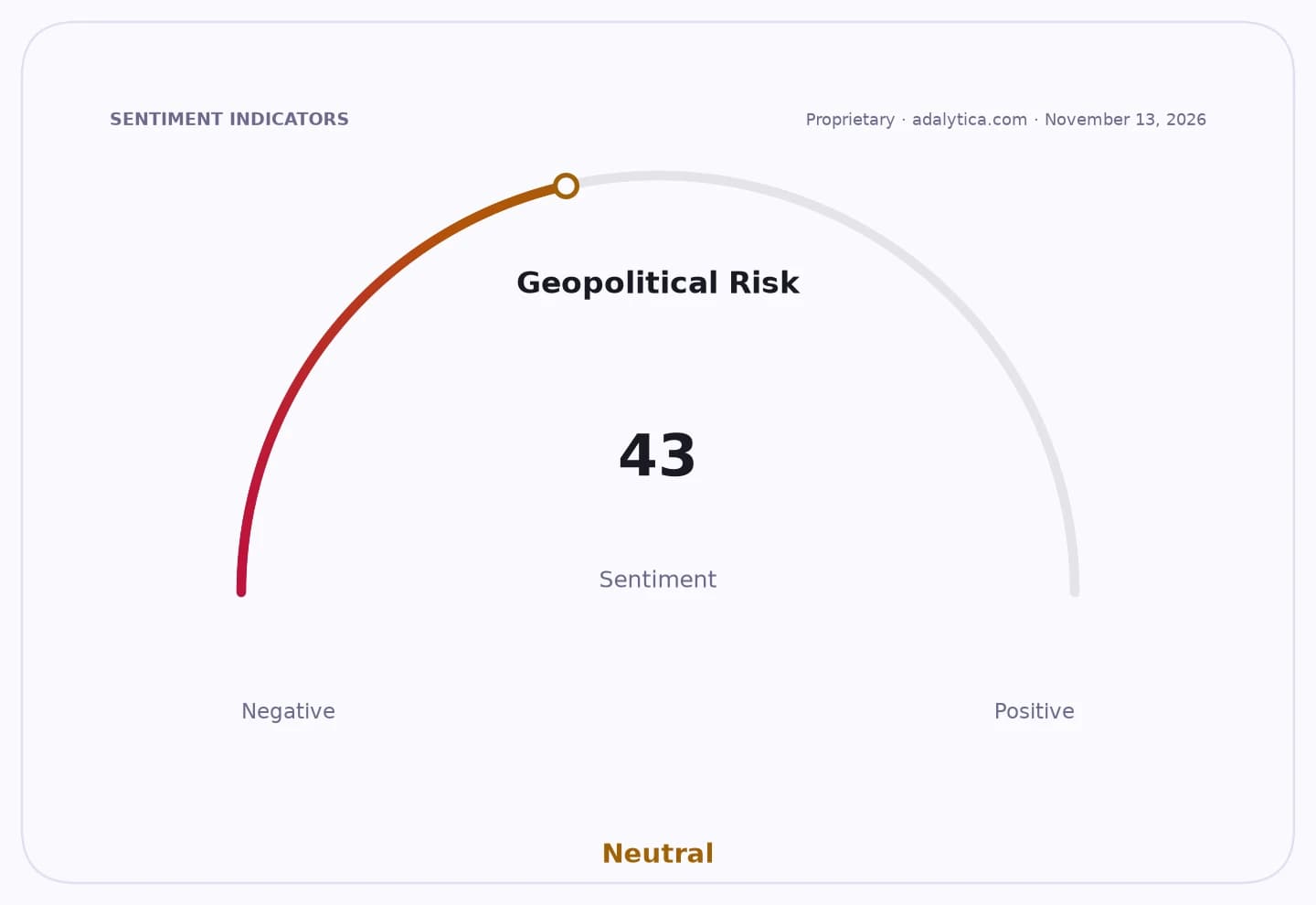
Sentiment Indicators
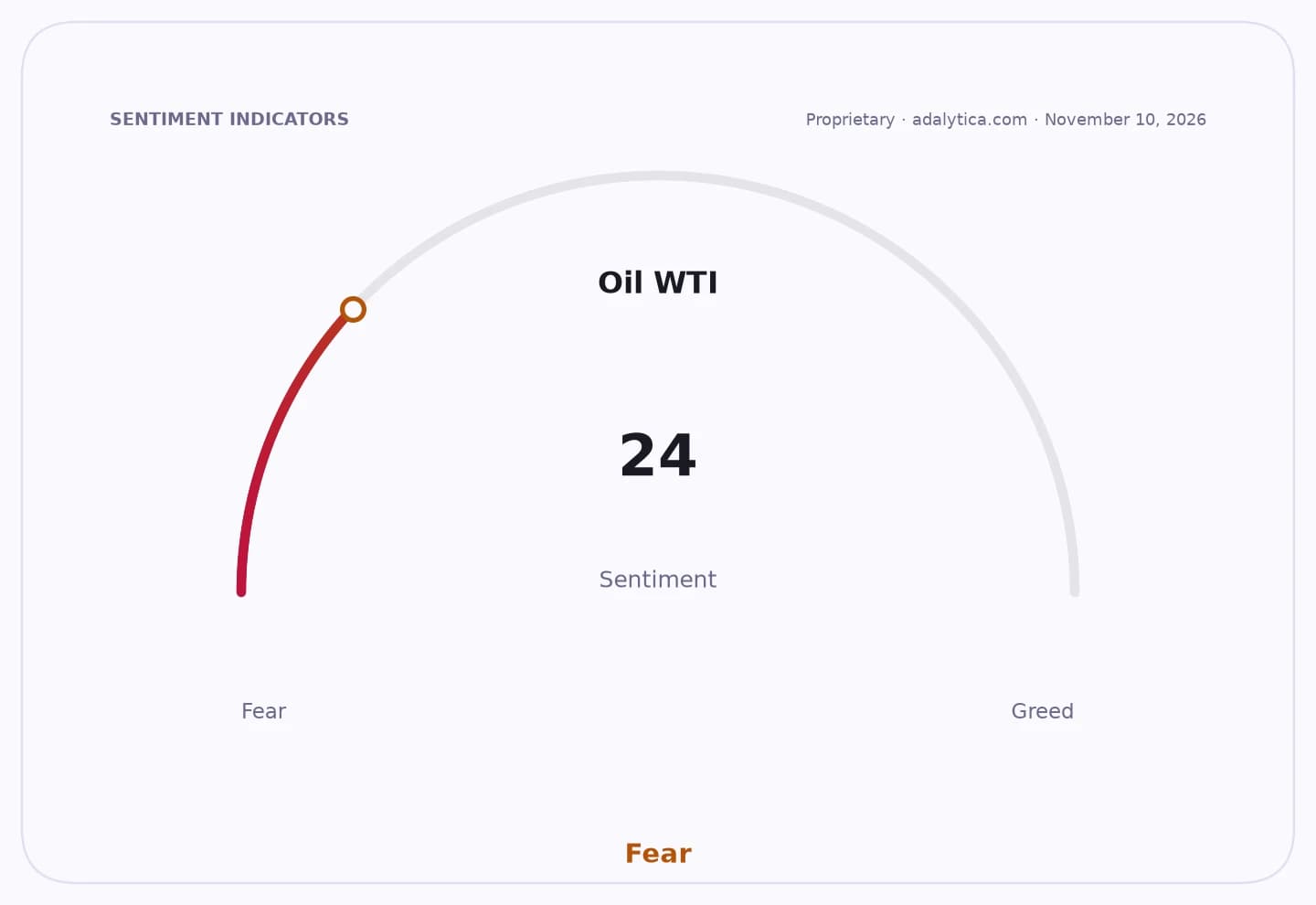
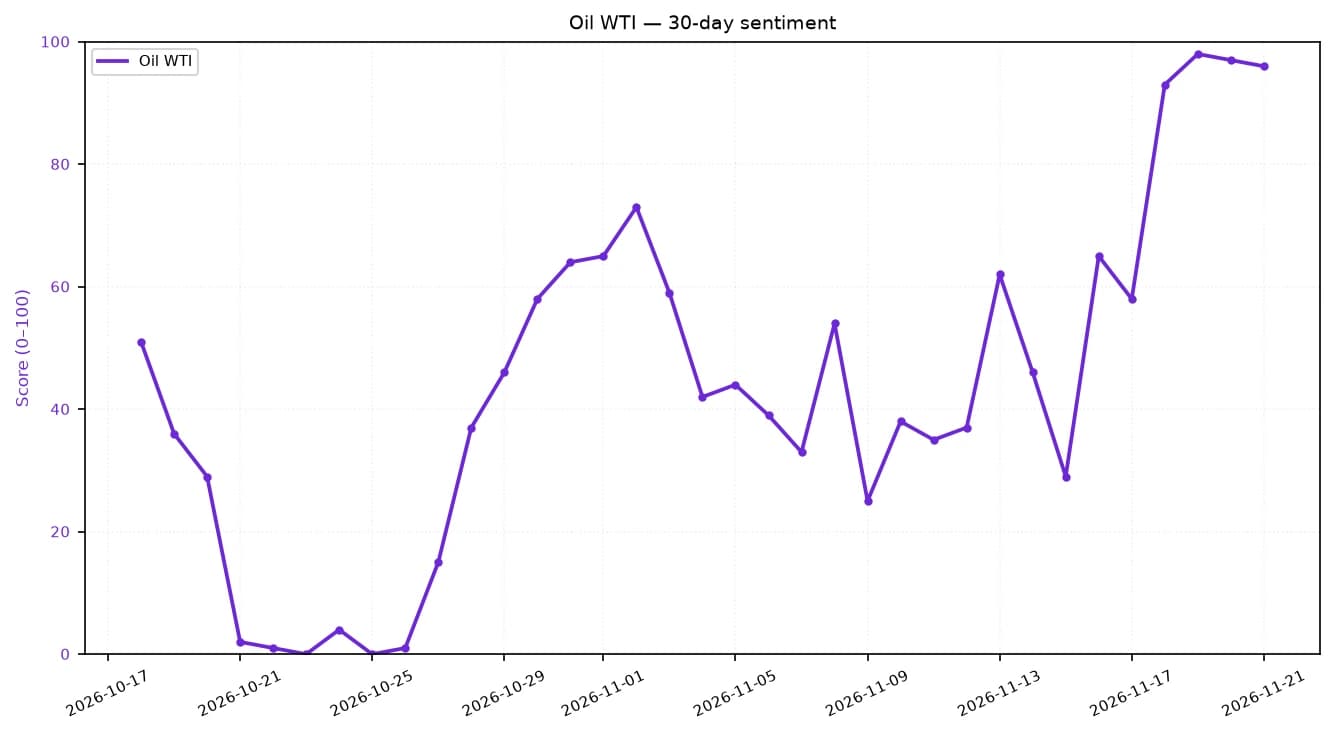
Oil WTI
The immediate issue is not whether talks exist, but whether either side is willing to pay the price of a deal. The analyst, Rami Ashour, argued that Tehran wants to negotiate from a position that allows it to impose its conditions, while Washington under Donald Trump is unlikely to ease its pressure campaign. That leaves a familiar impasse: Iran needs relief from sanctions and isolation, but cannot afford to appear weak; the U.S. wants verifiable constraints on Iran’s nuclear and regional behavior, but is unlikely to concede enough to satisfy Tehran’s demands.
For investors, the significance lies in the premium attached to unresolved confrontation. Crude has already shown how quickly headlines on Iran can move energy markets. USO, the oil ETF, closed at $139.63 on Nov. 20, far above its 50-day moving average of $151.67 and still well above its 200-day average of $129.19, reflecting a market that has spent months repricing geopolitical risk. Yet recent technical readings also show momentum has cooled sharply, with RSI at 29.7 and the MACD still negative, suggesting traders are waiting for a catalyst rather than chasing the rally.

That hesitation fits the broader market backdrop. WTI-related sentiment in Adalytica’s trade snapshot remains at 96, labeled “Extreme Greed,” while awareness sits at 10, or “Extreme Fear,” a combination that points to intense positioning but limited confidence. At the same time, the U.S. 10-year Treasury yield is holding near 5.07%, a level that keeps financial conditions tight and makes any further energy shock more relevant for inflation expectations, rate bets and equity valuations.
The market reaction across energy-linked equities has been more nuanced. XLE, the energy sector ETF, closed at 60.51 on Nov. 20, below both its 50-day average of 64.66 and 200-day average of 59.23, while OIH, the oilfield services ETF, fell to 329.73, far under its 50-day average of 383.23 and 200-day average of 398.95. That suggests investors are no longer bidding up the entire energy complex uniformly, but are instead demanding proof that higher oil prices will persist and translate into earnings. Producers may benefit from any renewed disruption; service names, which are more sensitive to capital spending cycles, remain more vulnerable if tensions ebb without a lasting supply shock.
Ashour’s point about internal cohesion helps explain why Tehran may prefer drawn-out diplomacy to a quick settlement. By presenting itself as open to dialogue but unwilling to surrender core demands, the Iranian leadership can argue it has not capitulated to external pressure. That matters in a country where sanctions have damaged infrastructure, constrained imports and fed public frustration over living standards. A deal that looks too one-sided could trigger political costs at home even if it briefly eases sanctions abroad.
The nuclear file remains the biggest unresolved lever. Ashour said Iranian acceptance of International Atomic Energy Agency inspections could deprive Washington of a key justification for military action or broader Western alignment against Tehran. But he also warned Trump could shift to another rationale, such as maritime security in the Strait of Hormuz. That underscores the broader investor problem: even if one pressure point is reduced, the confrontation can migrate to another.
The near-term market implication is that oil, defense and shipping risk will continue to trade on headline sensitivity rather than fundamentals alone. If talks remain stuck, the upside bias in crude and related assets stays intact, even if technical indicators argue the market is stretched. If Iran signals a genuine concession on inspections or enrichment limits, the immediate winners would likely be importers, airlines and rate-sensitive assets that benefit from lower energy costs. If Washington hardens its stance or a regional proxy attack escalates, energy producers, defense contractors and safe-haven assets would likely outperform again.
| Entity | Gains | Losses |
|---|---|---|
| Iran | ▲internal cohesion; bargaining leverage | ▼sanctions relief; investor confidence |
| U.S. hawks | ▲pressure on Tehran; deterrence leverage | ▼chance of quick deal |
| Oil producers | ▲higher risk premium; firmer crude prices | ▼consumers and importers |
| Airlines/importers | ▲lower fuel costs if talks ease | ▼margin pressure from any escalation |