Inflation is still running ahead of wages in the final stretch before Tuesday’s midterm elections, leaving Donald Trump vulnerable to voter frustration even as the economy continues to expand.
Inflation, wages, and Trump’s midterm risk

That gap is the core political risk. Prices rose 3.7% in September from a year earlier, according to the Bureau of Labor Statistics, while average hourly earnings in the private sector climbed 3%. The economy grew at a 3.4% annualized pace in the third quarter, but the benefits have not filtered evenly through to households facing higher costs for gasoline, electricity and housing.
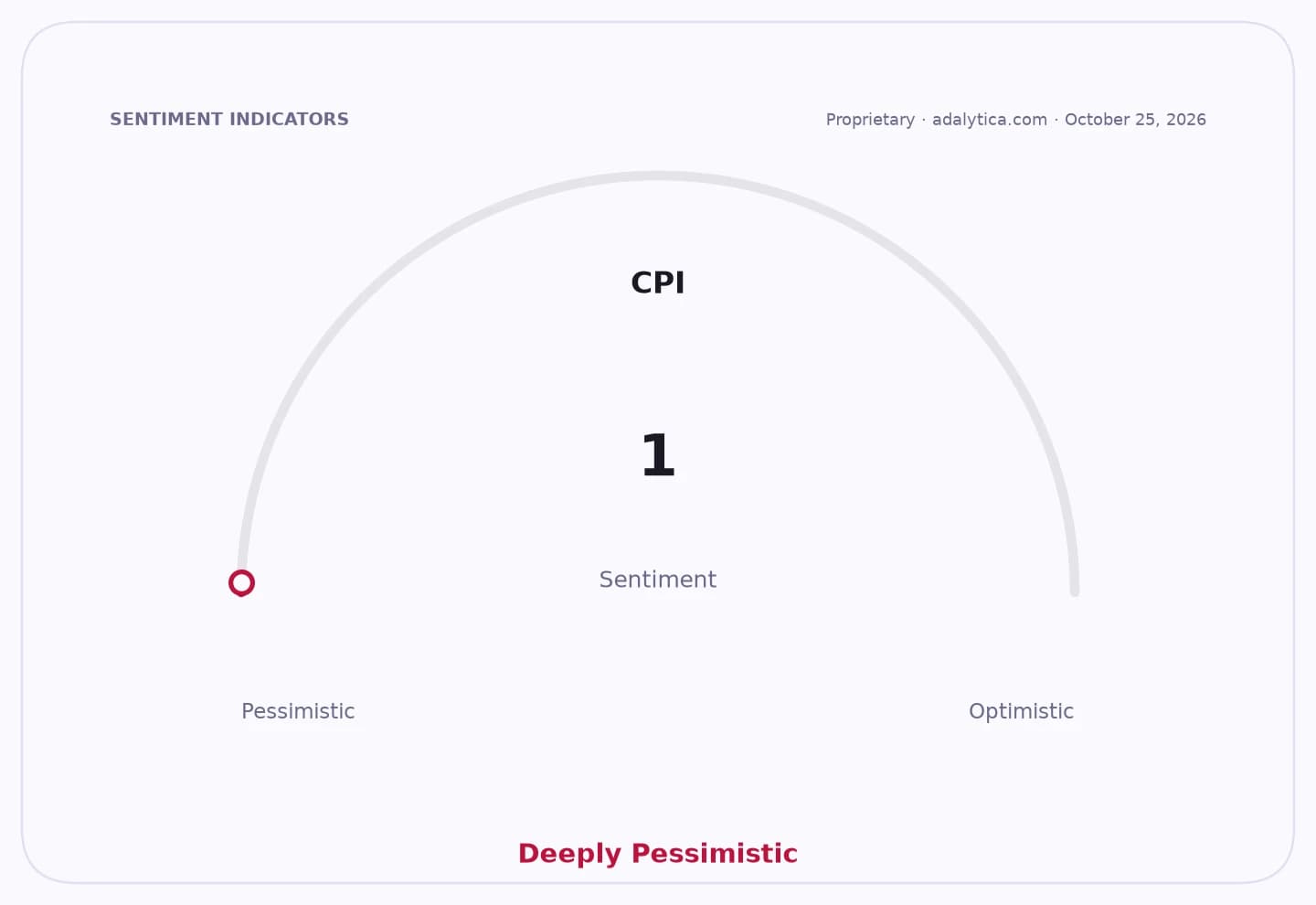
Sentiment Indicators
The most visible pressure point is fuel. Gasoline prices jumped 34.2% over the past 12 months and accounted for more than half of September’s monthly inflation increase, according to the BLS. That matters because transport costs hit workers who drive to work far more directly than headline inflation suggests. Food prices were up 2.5% and housing costs 3.2%, keeping a broad set of essentials elevated even as growth held firm.
That combination helps explain why Trump’s economic message is under strain. A Reuters/Ipsos poll completed Oct. 26 showed his approval at 32%, with Democrats leading Republicans 47% to 36% among registered voters on the congressional ballot. For investors, the polling matters because it raises the odds of a divided or adversarial Washington, which could shape fiscal policy, regulation and the administration’s room to maneuver on trade and spending.
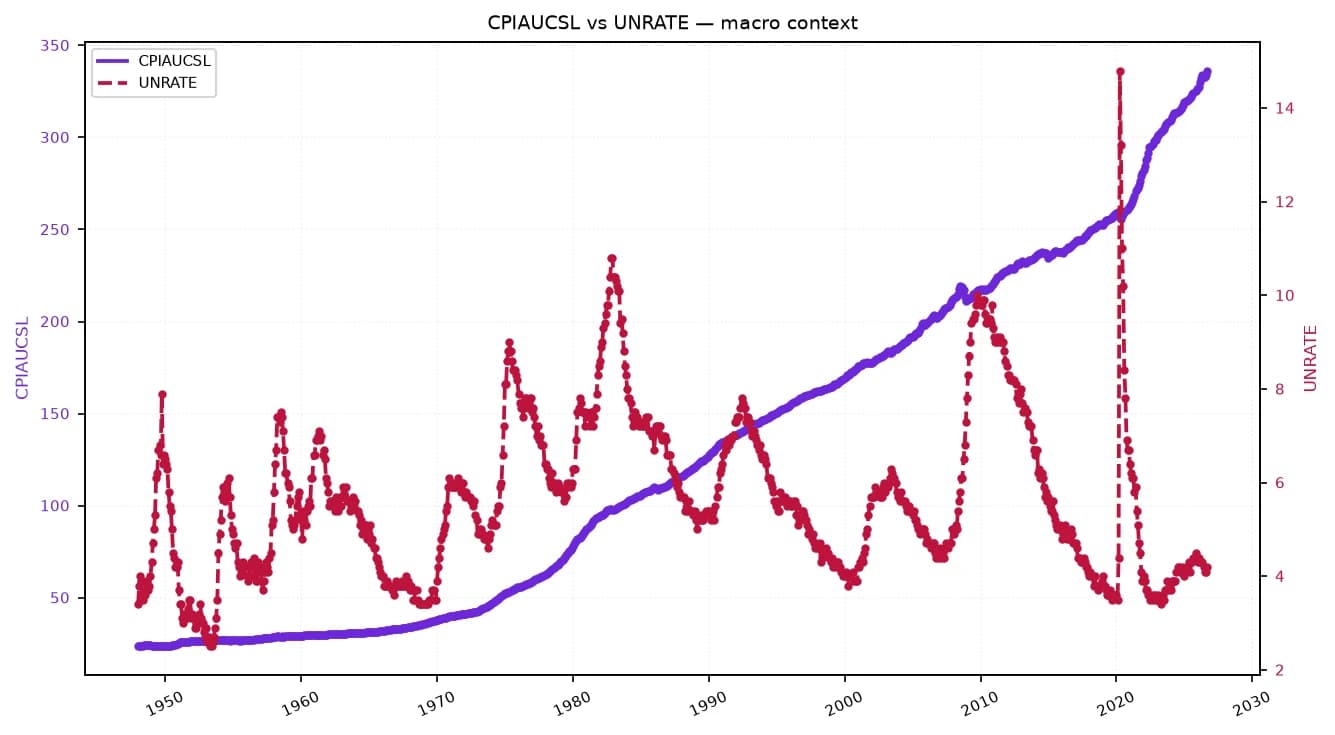
CPIAUCSL vs UNRATE — macro contextadalytica.com
Explore this data interactively — full history, time series and cross-market comparisons.
Employment is adding to the sense of economic inconsistency. The unemployment rate was 4.2% in September, but nonfarm payrolls increased by just 29,000, well below the 45,000 monthly average of the previous year. That suggests a labor market that is not breaking down, but is losing momentum. For households, it means job security has not translated into strong bargaining power; for markets, it points to slower consumer-income growth and a weaker cushion for discretionary spending.
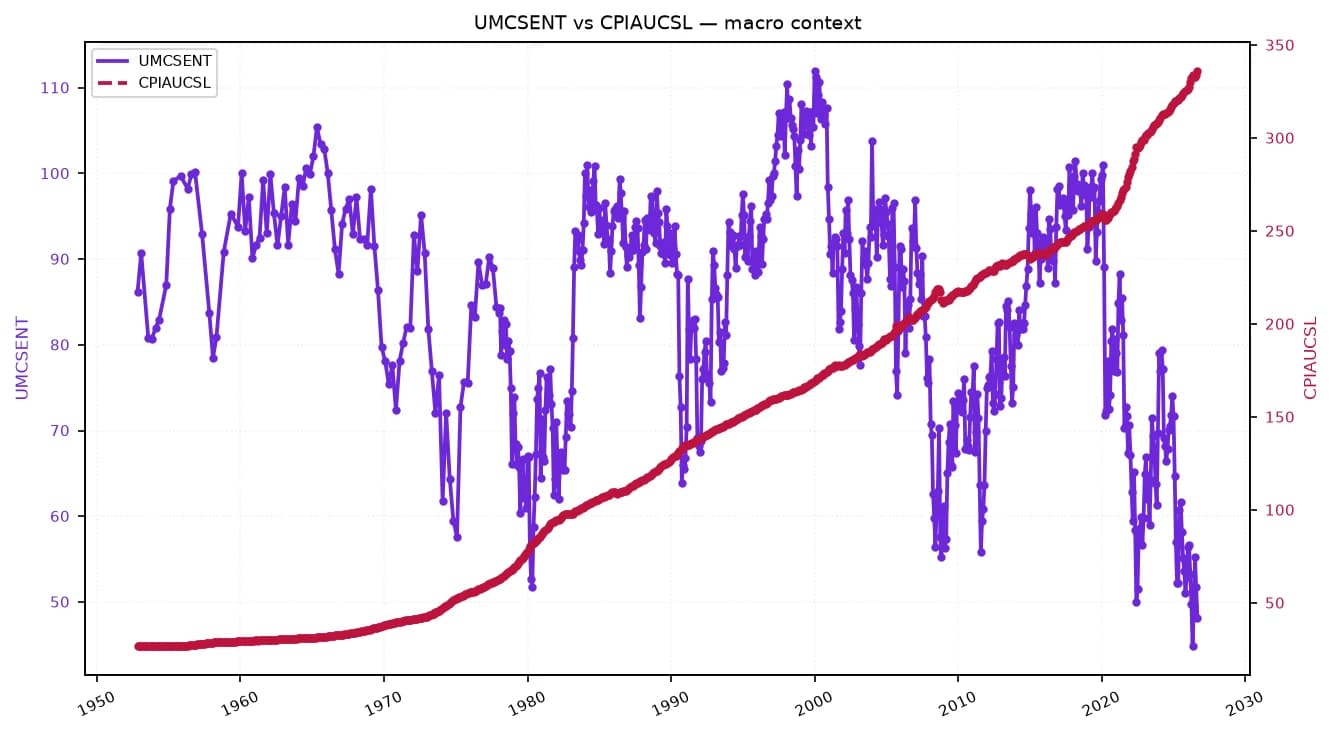
The stock market has been signaling that same tension. The S&P 500, tracked by SPY, has pulled back to 752.10 as of Nov. 2 from 769.36 on Oct. 29, with its relative strength index at 32.6 and the MACD slipping below its signal line, both conventional technical indicators that point to fading near-term momentum. Financials have held up better, with XLF closing at 57.56, while consumer discretionary has lagged, with XLY at 118.16 and still below its 200-day moving average. That divergence fits a market that is pricing in resilience at the top end of the economy but caution around consumer demand.
The timing is politically awkward for Trump. The next employment report arrives after the vote, on Nov. 6, and the next inflation reading on Nov. 10, meaning September data will be the last major economic snapshot voters have when they head to the polls. That leaves the administration defending an economy that is growing, but not yet delivering the broad-based real income gains needed to neutralize inflation anger.
If the current pattern holds, the immediate winners are households with pricing power and sectors tied to financial margins, while wage earners, commuters and consumer-facing businesses remain exposed. The key question after the election is whether slower job growth and sticky inflation begin to force a more defensive policy stance, or whether Trump can still sell a narrative of expansion strong enough to outweigh the squeeze on household budgets.
| Entity | Gains | Losses |
|---|---|---|
| Wage earners | ▲Some nominal pay growth | ▼Real purchasing power |
| Commuters and households | ▲Stronger GDP backdrop | ▼Higher fuel and utility bills |
| Financials | ▲Steady rate environment | ▼Risk-off sentiment if growth slows |
| Trump and Republicans | ▲If growth narrative sticks | ▼Voters focused on inflation and jobs |