Indonesia’s current account deficit is set to widen sharply over the next two years, a shift that could deepen pressure on the rupiah just as foreign capital remains skittish and reserves come under strain.
Indonesia current account deficit seen widening in 2026
Permata Bank economist Faisal Rachman said the deficit may expand to 2.49% of GDP in 2026 from 0.09% in 2025, then stay around that level in 2027, warning that weaker external balances could reinforce risk-off sentiment and trigger more capital outflows.
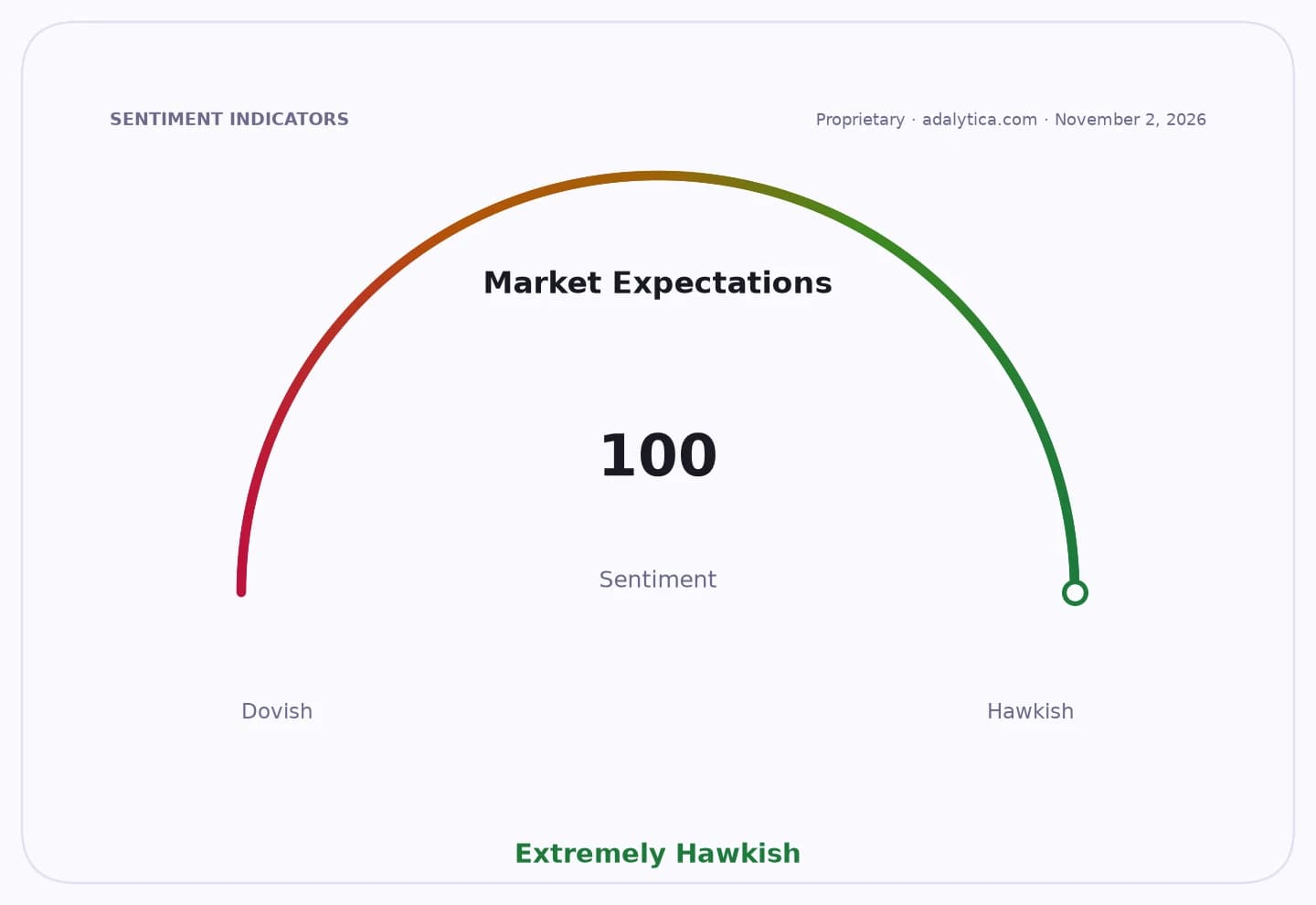
Sentiment Indicators
That matters because Indonesia’s trade cushion is thinning fast. The country booked a $3.36 billion surplus in September, but the January-September 2026 surplus fell to $10.61 billion from $33.54 billion a year earlier, underscoring how quickly export support is fading while imports remain resilient.
A wider CAD and a shift from portfolio inflows to net outflows would also put the central bank’s war chest under pressure. Permata Bank sees foreign-exchange reserves slipping to $143 billion-$147 billion by end-2026 from $156.47 billion at end-2025, with further declines in 2027.
For markets, the implication is a more fragile rupiah path and less room for complacency on Indonesian assets. Permata Bank expects Bank Indonesia to raise its policy rate once more to 6.00% before end-2026, and says an additional 50 basis-point hike could be needed in 2027 if external and domestic uncertainty intensifies.
The rupiah has already been volatile, trading around Rp18,161 per dollar on the latest data, with technical readings showing it near the upper end of its recent Bollinger Band range and above both the 50-day and 200-day moving averages. Permata Bank’s baseline forecast is Rp18,200-Rp18,400 per dollar, but it says the odds of the currency breaking Rp19,000 in 2027 are rising if the global backdrop stays hostile.
The broader backdrop is a mix of geopolitical tension, hawkish U.S. monetary policy and uncertainty over Indonesia’s MSCI classification, all of which could keep foreign investors defensive through at least the first half of 2027.
| Entity | Gains | Losses |
|---|---|---|
| Exporters with dollar revenue | ▲Higher rupiah hedging gains | ▼Weaker foreign demand outlook |
| Importers and USD borrowers | ▲— | ▼Higher import costs, currency risk |
| Bank Indonesia | ▲Policy flexibility if tightening works | ▼Reserves and rupiah under pressure |
| Foreign investors in Indonesia | ▲Potential higher yields | ▼FX losses, capital outflow risk |