Indonesia’s push to turn coal into gasoline is the biggest energy-policy signal to come out of President Prabowo Subianto’s weekend remarks, because it points to a country trying to lock in fuel self-sufficiency just as global oil and diesel markets tighten.
Indonesia Coal-to-Gasoline Plan After Prabowo Remarks
That matters economically because Indonesia is not simply chasing a science project. It is building on the success of its B50 biodiesel program, which uses palm-oil-derived FAME blended at 50%, and on an earlier move to cut diesel imports entirely from July 1. If Jakarta can reproduce even part of that playbook for gasoline, it would reduce exposure to imported refined fuels, support the local coal value chain, and keep more energy spending at home instead of sending it abroad.
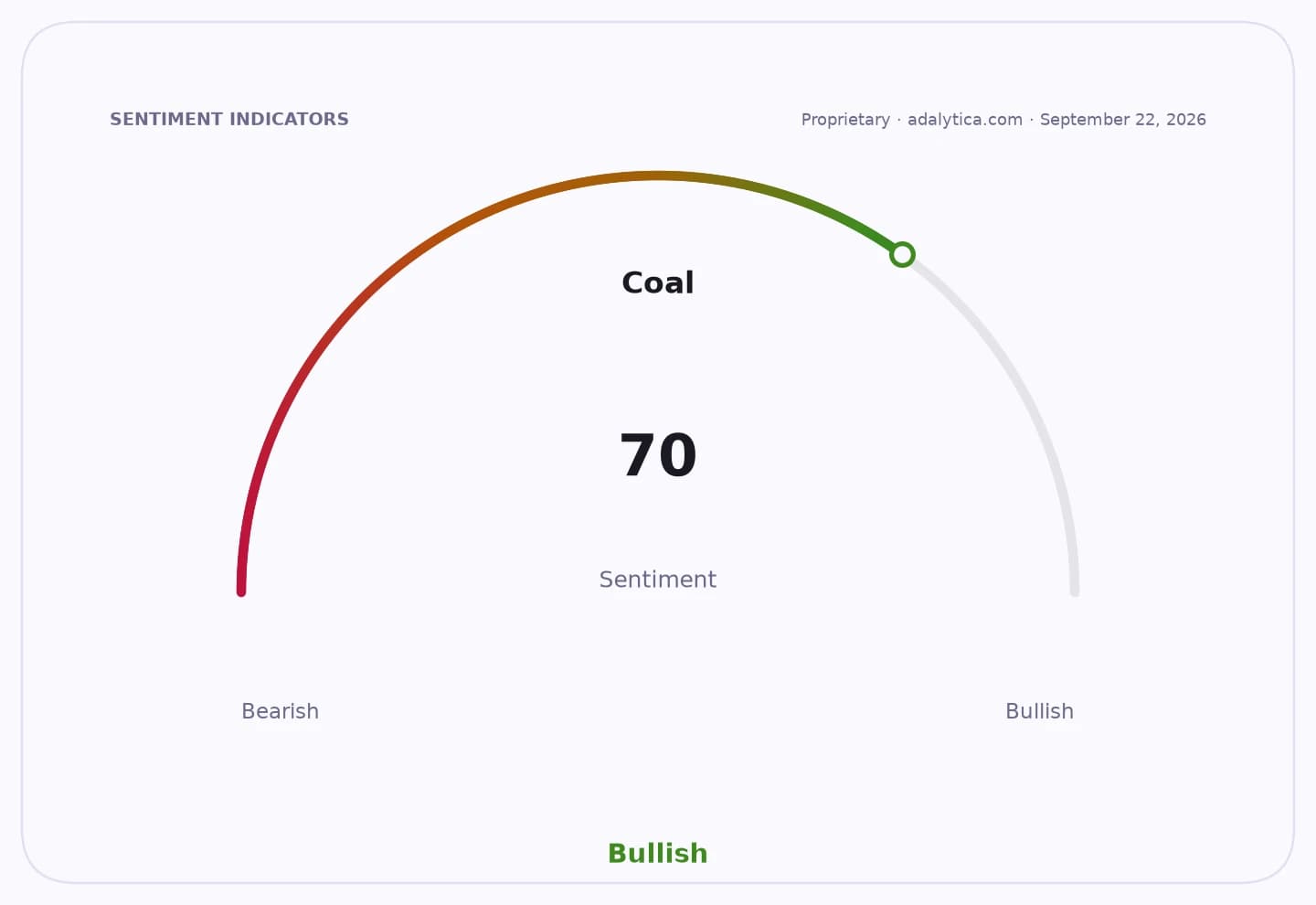
Sentiment IndicatorsⓘProprietary · adalytica.com · September 22, 2026
This is a snapshot — live sentiment, awareness and momentum for 130+ markets update continuously in the dashboard.Open AlphaPulse

Prabowo told a ceremony in East Java that Indonesia had already managed to make diesel from palm oil and had also developed gasoline from palm oil, adding that the next target was gasoline from coal. He also called palm oil a “miracle crop” with dozens of derivatives, including fuel. The comments are politically important because they frame energy policy as an industrial strategy, not just a subsidy or climate issue. For a resource-rich country, the message is that domestic commodities should be converted into higher-value finished products.
For investors, the immediate implication is that Indonesia is signaling stronger long-term demand for local coal, even as developed-market economies keep talking about decarbonization. That does not mean coal is suddenly a clean-energy winner. It does mean the government is willing to defend coal’s strategic role, which could support miners, coal logistics companies and any state-backed conversion projects tied to new fuel technologies.
The market backdrop helps explain why this theme has traction. Adalytica’s Coal Fear & Greed Index is still neutral at 70, but awareness has jumped sharply over the past week, suggesting the policy story is getting more attention. Brent-linked oil signals are also neutral, while WTI sits around $101 a barrel in the context data, a reminder that imported fuel remains expensive enough to keep energy security high on the agenda. At the same time, Indonesia’s own ban on diesel imports is the kind of policy shift that investors tend to watch for signs of follow-on action in gasoline.
There are real obstacles, of course. Converting coal into gasoline at scale is technically complex, capital intensive and likely slower to commercialize than biodiesel blending. It also raises environmental questions that will matter to foreign investors, lenders and trading partners. But as a long-term investment story, the important point is the direction of travel: Jakarta wants to turn domestic resources into domestic fuel, and it is increasingly willing to push technology, state policy and commodity flows in that direction.
For investors, that makes Indonesia a country to watch for energy security, coal demand and downstream industrial policy. The near-term trade may be in the rhetoric, but the longer-term opportunity — if the government follows through — could be in the companies and supply chains that help convert abundant raw materials into products Indonesians use every day. Worth watching for anyone interested in energy transition winners, resource nationalism and commodity-linked growth.
| Entity | Gains | Losses |
|---|---|---|
| Indonesian coal producers | ▲Potential new fuel demand | ▼Policy uncertainty |
| State fuel planners | ▲Energy self-sufficiency push | ▼Execution risk |
| Oil importers | ▲Less upside from imports | ▼Lost fuel sales |
| Energy transition skeptics | ▲Coal stays relevant | ▼Faster decarbonization narrative |