Indonesia’s food agency has ordered state buyer Bulog to push more premium rice into modern retail outlets, a move aimed at keeping shelves stocked after regulators began scrutinizing rice products suspected of not matching their labels.
Indonesia orders Bulog to boost premium rice supply
The immediate economic significance is twofold: the government is trying to prevent a retail supply gap in a politically sensitive staple, while also reasserting control over pricing and product standards in a market that has come under stress from enforcement actions. For investors in Indonesia’s consumer and grocery supply chain, that means a state-led intervention that can affect volumes, channel mix and near-term pricing power for rice distributors and retailers.
Bapanas chief and Agriculture Minister Andi Amran Sulaiman said Bulog should “optimize” supply of premium rice to modern retail networks, stressing that consumer needs must be met. The directive comes as authorities inspect products marketed as fortified rice after finding, according to Amran, signs that some goods did not match their labels when tested in four laboratories.
That matters economically because rice remains one of Indonesia’s most important inflation-linked food items. When the government steps in to safeguard supply, it is not only managing availability but also trying to damp volatility in the consumer price basket. The administration is already leaning on three levers: the government rice reserve, premium rice distribution and the SPHP stabilization program for medium-grade rice.
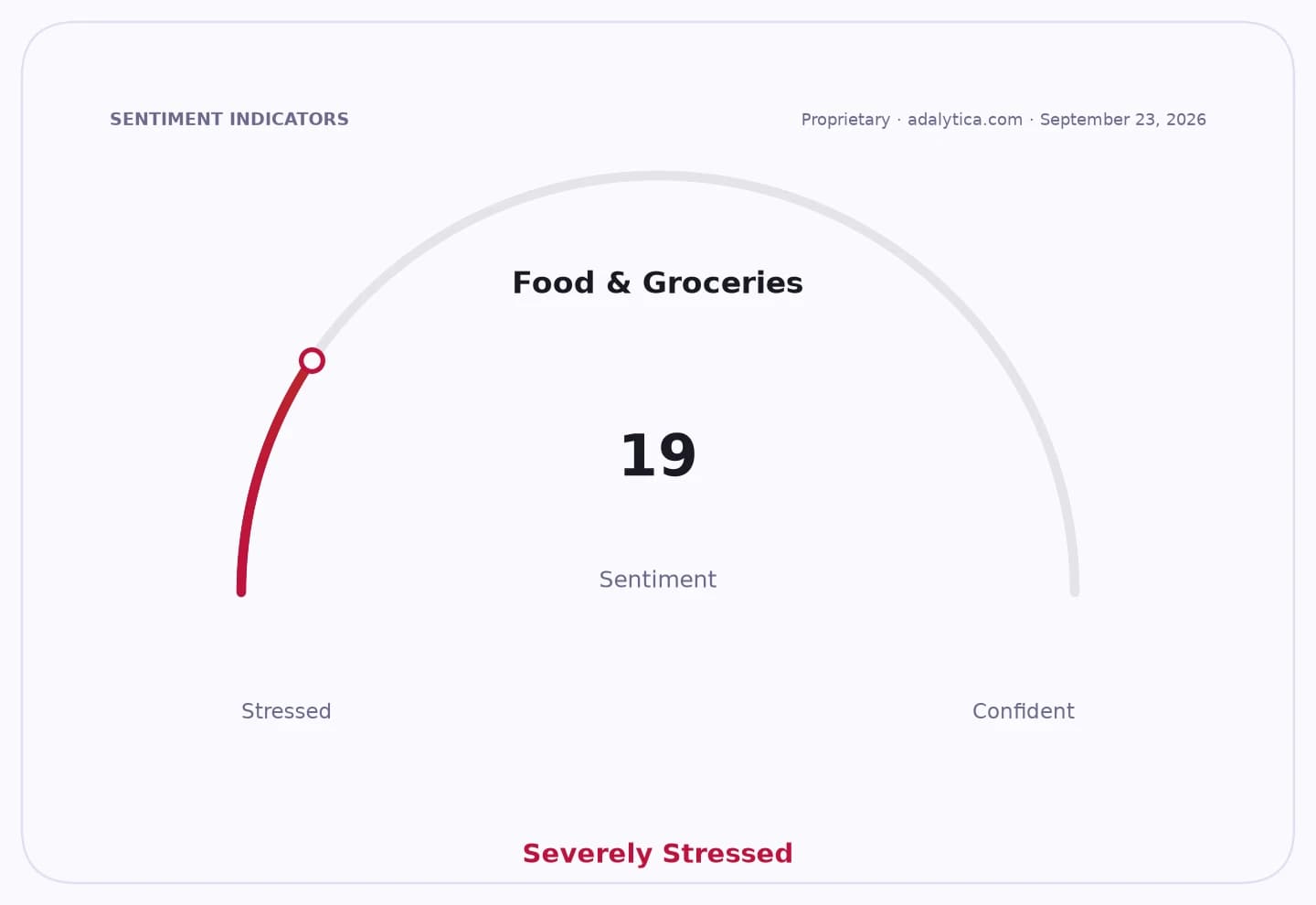
Food & Groceries — 30-day sentimentadalytica.com
Explore this data interactively — full history, time series and cross-market comparisons.Open AlphaPulse
Bapanas said Bulog’s government rice reserves stood at about 4.6 million tons as of Sept. 18, with roughly 2.3 million tons distributed so far this year. Officials are also processing an additional 1 million tons of SPHP rice for regions with high demand. That reserve position gives Jakarta room to intervene if prices rise or distribution is disrupted, reducing the risk of a sharper food inflation shock.
For markets, the key point is not just the size of the reserve but where the supply is going. Bulog said it is channeling premium rice through modern retail chains in major cities including Jakarta, Surabaya, Bandung, Semarang and Makassar, with allocations of up to 75,000 tons a month across chains such as Indomaret, Super Indo, Alfamart operator Midi Utama and Hero Retail. That suggests a deliberate effort to steer supply toward urban consumers who are more exposed to branded retail pricing.
The policy also has a competitive angle. By expanding Bulog’s presence in premium retail shelves, the government is effectively setting a floor for supply in a segment where private labels and branded millers compete. That could ease shortages for consumers, but it may also pressure private suppliers if regulatory checks force withdrawals or product relabeling, especially in premium and fortified categories.
The backdrop is broader uncertainty around food inflation and consumer spending. Adalytica’s food and grocery spending sentiment gauge remains in fear territory, while CPI sentiment is elevated, reflecting concern that food prices are still capable of unsettling household budgets and policy makers. If supply is successfully widened, it should help limit upward pressure on grocery inflation and support consumption stability, particularly in urban areas.
The bull case for the policy is that Bulog’s scale and reserve buffer can quickly normalize retail availability and reduce speculation. The bear case is that tighter oversight may expose more labeling problems, leading to temporary disruptions and forcing the state to keep intervening longer than planned.
For investors, the near-term read-through is that Indonesia’s rice market is moving deeper under administrative management, which should favor consumers and state channels, while keeping private retailers and suppliers under stricter compliance pressure. The next catalysts will be the pace of the 1 million-ton SPHP expansion, the extent of any further lab findings on rice products and whether retail shelf supply stabilizes without pushing up procurement costs.
| Entity | Gains | Losses |
|---|---|---|
| Bulog | ▲Bigger retail role | ▼Higher execution burden |
| Consumers | ▲Better premium rice access | ▼Risk of price volatility |
| Private rice brands | ▲Compliance clarity | ▼Margin and shelf pressure |
| Retail chains | ▲More reliable supply | ▼Tighter product oversight |