Indonesia has laid out the most detailed framework yet for its 2027 minimum-wage calculation, codifying 268 household cost components that will feed into a formula designed to balance workers’ living expenses with business conditions.
Indonesia sets 2027 minimum wage formula
The move matters because it turns a politically sensitive wage-setting process into a more rules-based exercise at a time when inflation, labor-market conditions and corporate cost pressures are all in play. By spelling out the 268 Kebutuhan Hidup Layak, or decent living needs, items — 177 for food, 22 for health and education, 54 for other basic necessities and 15 for housing — the labor ministry is giving unions, employers and regional governments a common reference point ahead of next year’s wage announcements.
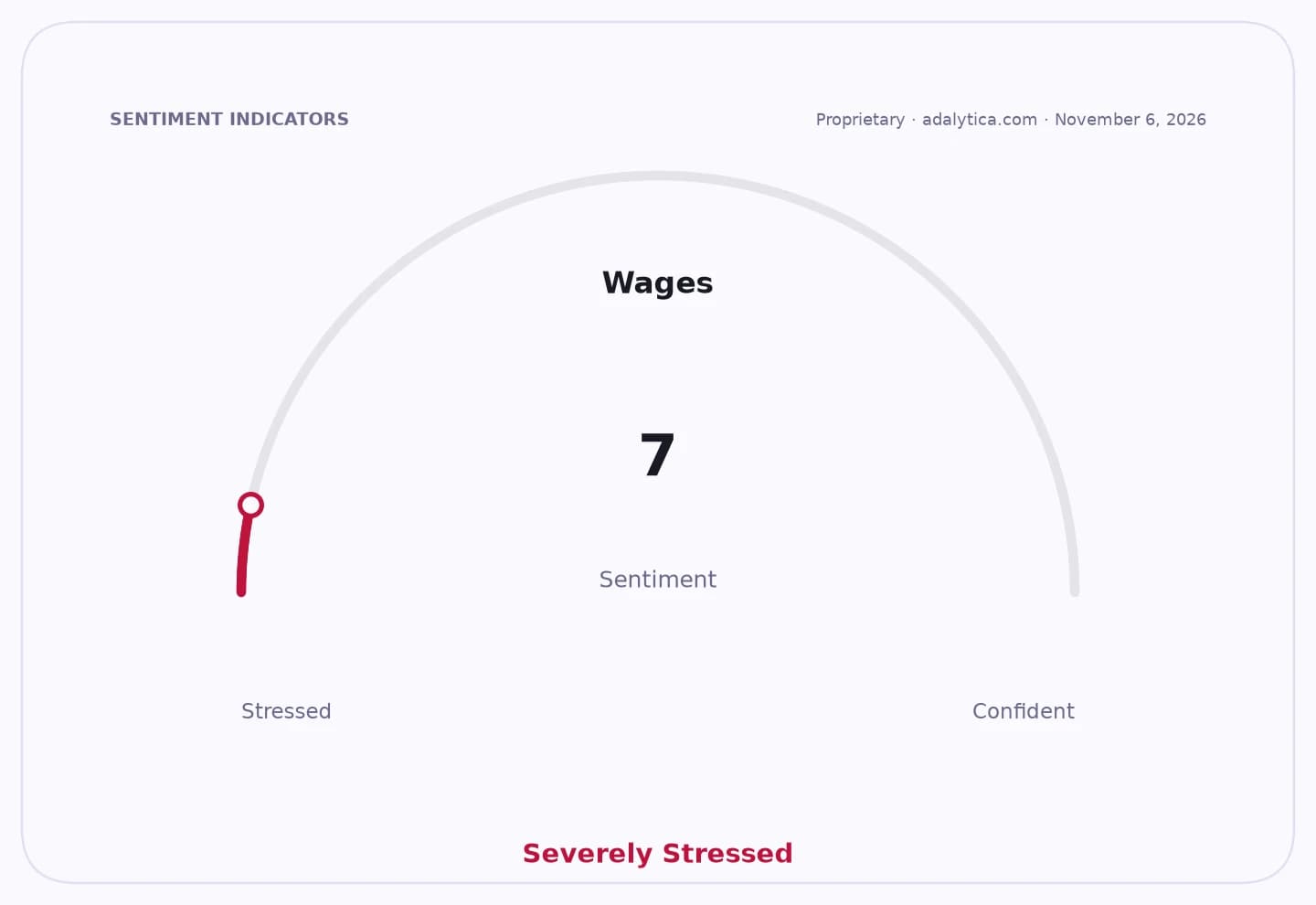
Sentiment Indicators
Labor Minister Yassierli said the framework draws on a 2025 International Labour Organization study and has been adapted to Indonesia’s conditions. The methodology will be used jointly by the manpower ministry, statistics agency BPS and the National Economic Council to calculate wage floors at both provincial and regency-city level, underscoring how central the issue is to local labor markets as well as the national policy mix.
The formula is economically significant because it ties wage growth to inflation and regional economic growth, multiplied by a specific index, alpha, that ranges from 0.5 to 1 under the 2026 labor protection law. That leaves room for policymakers to calibrate increases rather than impose a blanket rise, a structure that could temper shocks to employers while still giving workers some protection against erosion in real incomes. The ministry also said the living-cost measure must be weighed alongside regional employment conditions, explicitly acknowledging the trade-off between wage adequacy and business viability.
For investors, the stakes extend beyond Indonesia’s industrial relations. Minimum-wage changes can ripple through consumer spending, payroll costs and margin assumptions in labor-intensive sectors such as retail, food service, logistics and manufacturing. Companies with large workforces in Indonesia will be watching whether the final index leans toward the upper end of the range, which would pressure operating costs, or nearer the floor, which could dampen household demand. The timeline also matters: governors must set provincial minimum wages by Nov. 21, 2026, with district and city wages due by Nov. 25, and the new levels take effect on Jan. 1, 2027.
The government’s emphasis on law enforcement raises the financial cost of non-compliance. Employers paying below the minimum face prison terms of up to four years and fines of as much as 200 million rupiah, while companies can be fined up to 2 billion rupiah. That hardens the floor under wages and reduces the room for employers to delay or sidestep the new rates.
The broader narrative is one of a labor market trying to formalize wage-setting while avoiding a clash between worker demands and corporate affordability. In a year when inflation expectations, consumer purchasing power and employment growth will all shape policy debates, the 268-item living-cost basket is less a technical detail than the template for how Indonesia intends to manage that tension.
| Entity | Gains | Losses |
|---|---|---|
| Workers | ▲Higher wage floor | ▼Slower wage gains if index is low |
| Employers | ▲Predictable formula | ▼Higher payroll costs |
| Regional governments | ▲Clearer guidance | ▼Less discretion in negotiations |
| Consumers | ▲Better purchasing power | ▼Possible price pass-through |