India’s economy is still running on domestic demand, and October’s GST haul shows it in hard numbers. Gross goods and services tax collections surged 22.9% from a year earlier to ₹2.31 lakh crore, the strongest sign yet that festival spending, compliance gains and resilient household consumption are offsetting inflation, higher borrowing costs and a soft global backdrop.
India October GST collections jump 22.9%

That matters because tax collections are one of the cleanest real-time readings on activity in the world’s fastest-growing major economy. Net GST revenue rose 25.6% to ₹2.03 lakh crore after refunds, while domestic collections climbed 15.8% and import-linked collections jumped 42.2%, underscoring that demand is broad enough to lift both local sales and inbound shipments. For the government, the numbers improve fiscal room. For investors, they argue that India’s growth story remains consumption-led rather than export-dependent.
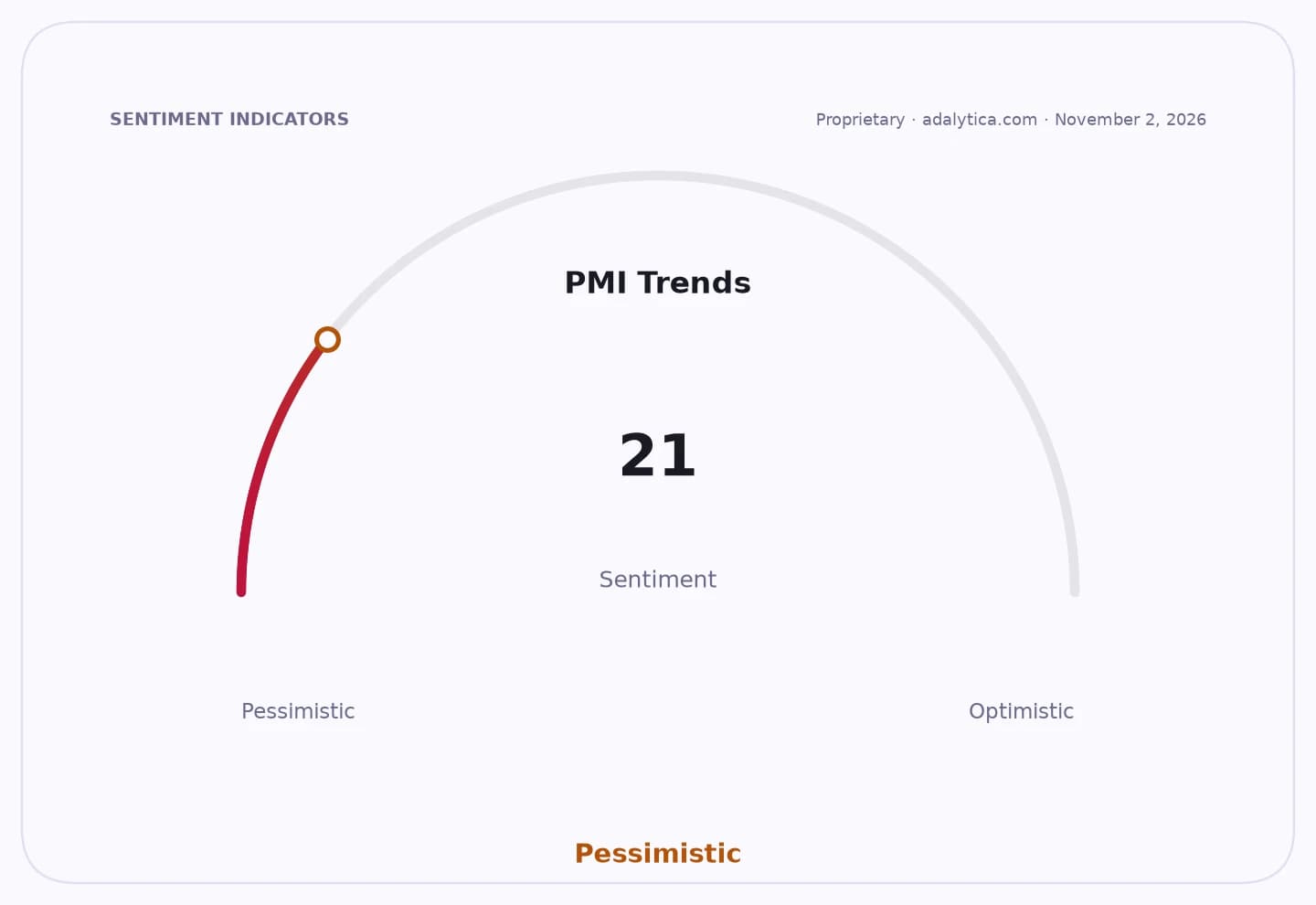
Sentiment Indicators
The tax data was reinforced by a cluster of other high-frequency indicators that all pointed the same way. Passenger car sales rose about 14% to an all-time high of more than 525,000 units in October. Digital payments hit a record 25.47 billion transactions, up 23%, with transaction value rising 16% to ₹31.53 lakh crore. Power consumption jumped nearly 22% to 160 billion units, while diesel sales increased 11.7% on year. Even after a poor monsoon and a 25-basis-point repo-rate increase by the Reserve Bank of India last month, the consumer has not cracked.
That resilience is especially important because it gives policymakers more confidence that inflation and tighter monetary policy are not yet choking off demand. Consumer inflation touched a 23-month high of 5.5% in September, and the RBI has shifted to a “calibrated tightening” stance. Yet October’s activity data suggests that households are still spending through the pressure, helped by the festival season and a labor market that has not deteriorated sharply enough to derail consumption.
For investors, the implication is straightforward: the market may still be underestimating the durability of India’s domestic-demand cycle. Consumption-linked sectors, payment networks, autos, logistics, banks and consumer staples all stand to benefit if this pattern holds into the December quarter. The stronger import collections also hint at healthier trade flows, though they may equally reflect commodity costs and product mix rather than purely volume growth.
The bigger takeaway is that India is entering the back half of the year with momentum, not fragility. If GST collections stay above the fiscal-year average and festival spending carries into the next quarter, the case for India as a relatively insulated growth market only strengthens. For portfolios looking for secular exposure away from the global slowdown, the message from October is clear: India’s consumer engine is still firing.
| Entity | Gains | Losses |
|---|---|---|
| Indian consumer stocks | ▲Stronger sales outlook | ▼Higher input costs |
| Banks and payment firms | ▲Higher transaction volumes | ▼Margin pressure from rates |
| Government finances | ▲Better revenue mobilisation | ▼Less urgency for stimulus |
| Importers | ▲Rising demand flows | ▼Weaker pricing power |