AI spending is no longer just a growth story — the IMF is warning it is helping push global inflation to 4.7% this year and keeping interest rates elevated at a moment when sovereign debt is already nearing a postwar peak.
IMF says AI spending is lifting inflation and rates
That matters because the market’s favorite secular theme is now colliding with the oldest macro problem in finance: the cost of money. Kristalina Georgieva said the surge in AI-related demand, combined with energy supply shocks tied to Middle East tensions, is forcing tighter monetary policy in many countries and lifting bond yields in developed markets to multidecade highs. In other words, the AI buildout is not merely boosting productivity expectations; it is also adding to the inflation pulse that central banks must lean against.
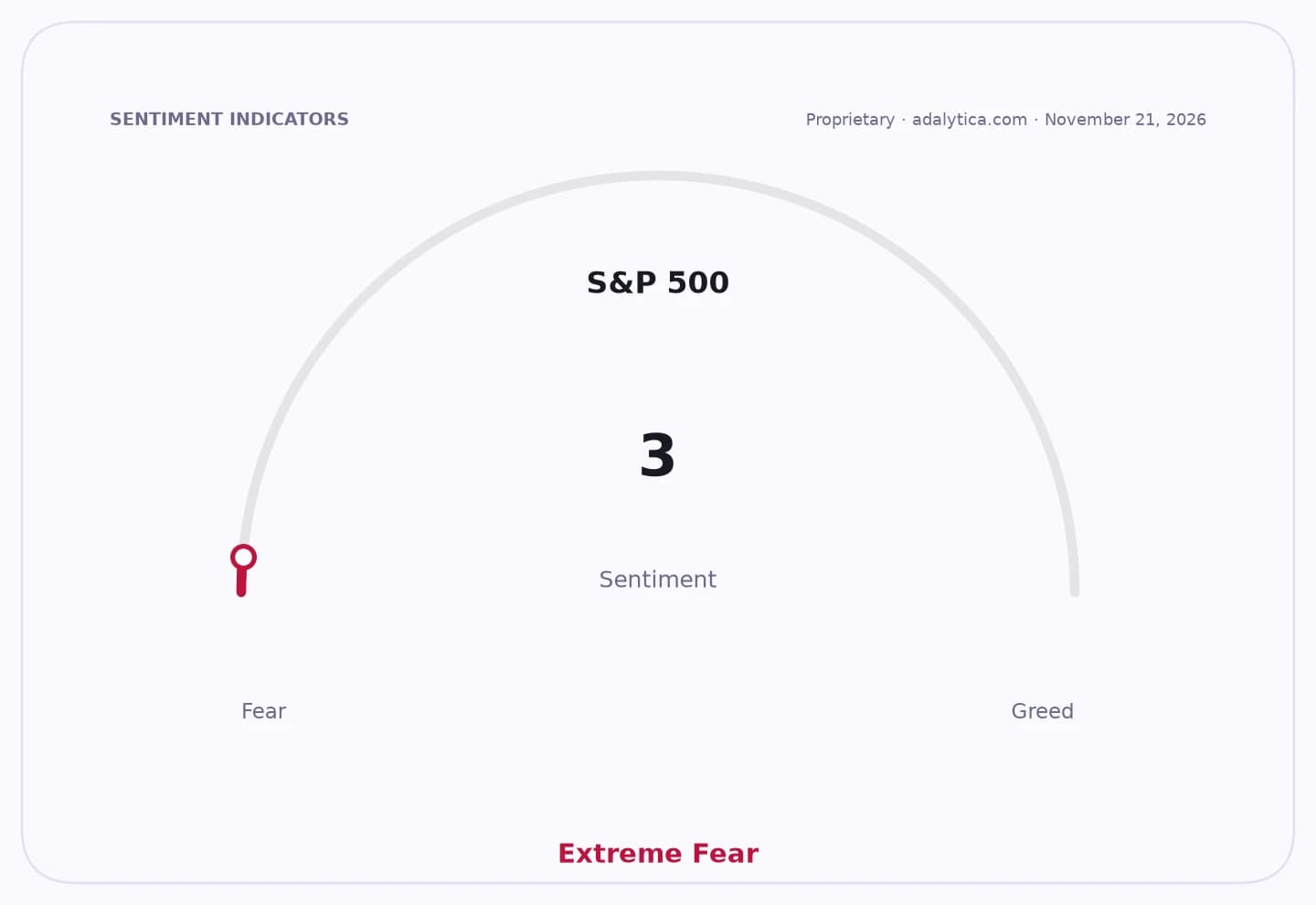
Sentiment Indicators
CPI
For investors, the message is clear: AI remains the dominant capex cycle, but the winners are increasingly those that sell the picks and shovels of the boom — chips, data centers, networking gear, power infrastructure and cloud platforms — while the losers are rate-sensitive assets and capital-intensive sectors exposed to higher financing costs. The IMF said debt globally is heading toward 100% of GDP, the highest since World War II, which means every extra basis point in borrowing costs bites harder at the sovereign and corporate level.
That creates a sharp split in the market. Nvidia, Microsoft and Advanced Micro Devices remain central to the AI trade, but their shares have also been hit by the broader risk-off move as investors reassess valuation against a world of higher real rates. Nvidia closed at $145.98 on Nov. 19, down sharply from its spring peak, while Microsoft ended the session at $498.30 and AMD at $489.19 after recent volatility. The selloff does not invalidate the AI thesis; it highlights how quickly the macro discount rate can overwhelm even the strongest earnings narrative.
The IMF’s warning also gives fresh weight to the Federal Reserve’s own unease about AI-driven inflation. Fed officials have already signaled that AI investment may be stoking prices before productivity gains arrive, and some policymakers have floated the risk of further tightening if inflation proves sticky. That is the crux of the new regime: AI can lift output, but in the near term it can also lift demand for electricity, chips, construction, labor and financing faster than supply can adjust.
The investment implication is that the AI boom is becoming a macro infrastructure story, not just a software story. That favors companies with pricing power and hard assets tied to the expansion of compute capacity, while pressuring borrowers and markets that depend on cheap capital. It also strengthens the case for selective exposure to energy producers, grid equipment makers and data-center supply chains, especially in countries integrated into the AI buildout.
The deeper narrative is that AI is acting like a global demand shock at the same time energy markets remain fragile. If growth continues to outperform, the inflation problem may last longer than consensus expects; if rates keep rising, the financing burden on governments and companies will only intensify. Either way, the market should stop treating AI as purely disinflationary productivity magic. It is also a catalyst for higher nominal growth, higher bond yields and a very different investing environment from the one bulls assumed at the start of the cycle.
| Entity | Gains | Losses |
|---|---|---|
| AI chipmakers | ▲Higher demand for accelerators | ▼Valuation pressure from higher rates |
| Energy exporters | ▲Stronger pricing power | ▼Energy importers |
| Governments with heavy debt | ▲Inflation-linked revenues | ▼Higher interest expense |
| Rate-sensitive equities | ▲— | ▼Higher discount rates |