Huawei is moving its next-generation Ascend 960DT AI chip up to the first quarter of 2027, an earlier-than-planned launch that underscores how fast China’s domestic semiconductor push is advancing and why Nvidia remains under pressure in its second-biggest market.
Huawei Ascend 960 chip launch moved up to 2027
The Chinese telecoms and chip group said at its Huawei Connect conference that development of the Ascend 960 has outpaced its internal targets, with performance doubling as planned. The company had previously aimed to release the 960DT in the fourth quarter of 2027, but now says it will be ready three quarters sooner, while the Ascend 960PR is due in the third quarter of 2027, one quarter ahead of schedule.
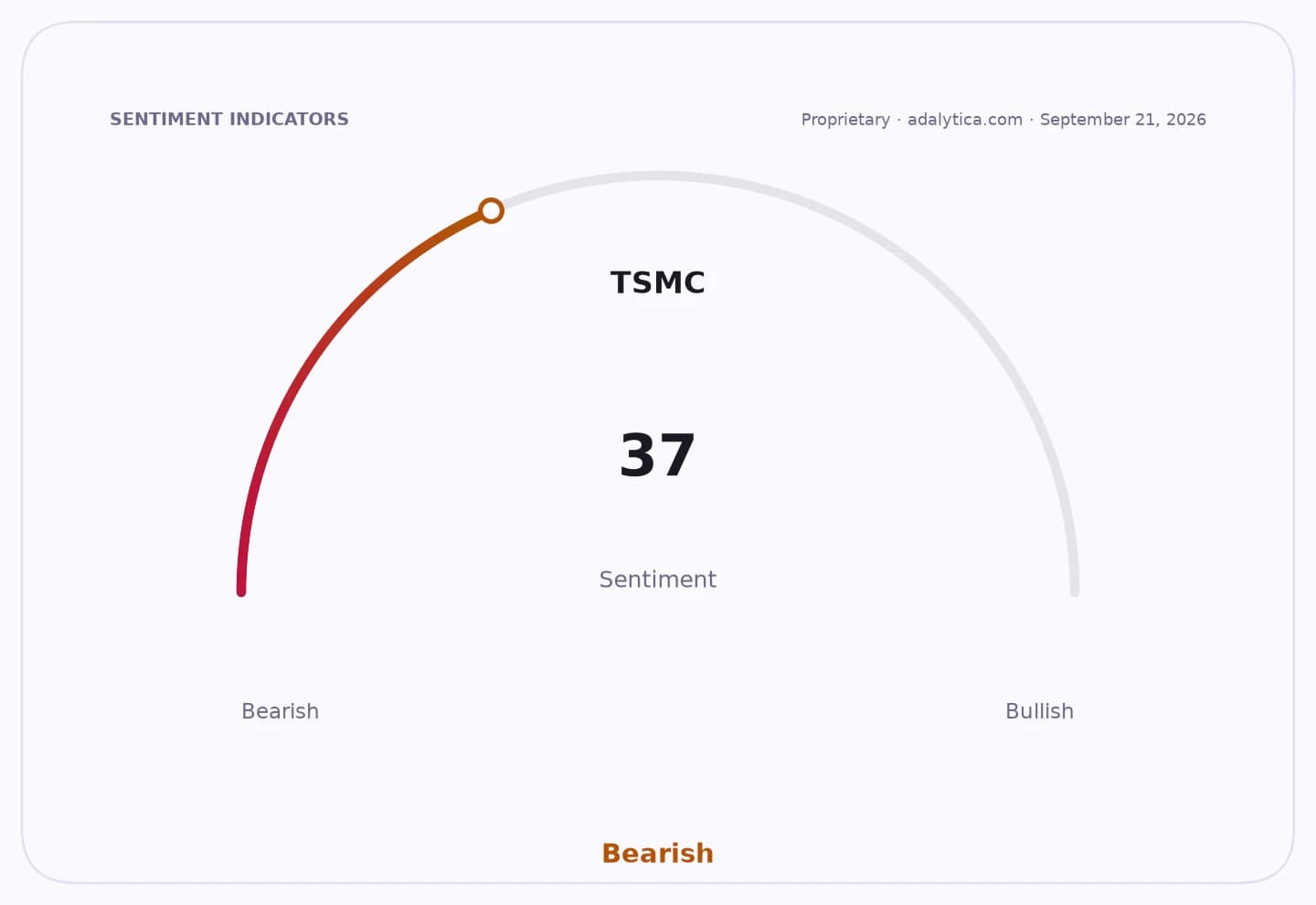
Sentiment IndicatorsⓘProprietary · adalytica.com · September 21, 2026
This is a snapshot — live sentiment, awareness and momentum for 130+ markets update continuously in the dashboard.Open AlphaPulse
For investors, the significance is less about one product cycle than the pace of Huawei’s broader attempt to build a full-stack AI computing ecosystem inside China. Huawei also laid out a longer roadmap that includes the Ascend 970 in 2028 and the Ascend 980 in 2029, with each generation set to double performance and memory capacity. That suggests a sustained competitive campaign against Nvidia, not a one-off hardware release.
Huawei paired the chip update with new infrastructure for AI training and inference, including the Atlas 960E SuperPoD, which it says uses 4,096 NPUs and delivers 8 exaflops in FP8, plus up to 1 petabyte of HBM memory. The company said multiple SuperPoDs could be linked into systems scaling to 512,000 cards and, with multiway topology, as many as 1 million NPUs.
The timing lands in a market already focused on supply-chain geopolitics and U.S.-China technology rivalry. Washington has tightened scrutiny of advanced AI chips sold to China, while U.S. President Donald Trump this week said the United States was “supering” China in AI and wanted to keep it that way. Huawei’s accelerated roadmap is a direct answer to that pressure and to China’s drive for semiconductor self-sufficiency.
Nvidia shares have been volatile as investors weigh that competition against still-strong AI demand. The stock last closed at $226.40, above its 50-day moving average of $214.38 and 200-day moving average of $198.25, while Adalytica’s NVIDIA Earnings Sentiment snapshot showed a fear reading of 19, reflecting caution even as the stock has rallied. TSMC, which manufactures advanced chips for global AI customers, ended at $442.80, also above its 50-day and 200-day averages, while ASML, a key supplier of chipmaking tools, closed at $1,707.36.
The immediate investor question is whether Huawei’s earlier delivery schedule translates into real production scale and customer adoption, or remains mostly a strategic message. The next checkpoints are whether Huawei can hit its 2027 timelines, how much performance it can sustain against Nvidia, and whether U.S. export controls continue to slow China’s access to the highest-end AI hardware.
| Entity | Gains | Losses |
|---|---|---|
| Huawei | ▲Faster AI roadmap | ▼Execution risk |
| Nvidia | ▲Stronger demand narrative | ▼China competitive pressure |
| TSMC | ▲More AI chip demand | ▼Geopolitical export risk |
| U.S. policymakers | ▲Leverage on controls | ▼Slower tech containment |