HCLTech is pushing deeper into one of enterprise technology’s most expensive bottlenecks, rolling out AI agents designed to automate mainframe operations and help large customers cut the cost and complexity of running legacy systems.
HCLTech launches AI agents for mainframe operations
The move matters because mainframes still sit at the core of banks, insurers, retailers and public-sector systems, even as companies accelerate spending on AI and cloud migration. Automating the workloads that keep those systems alive could reduce labor intensity, speed up code changes and lower the risk of outages — all while giving HCLTech a way to monetize generative AI beyond pilot projects and consulting slides.
Sentiment Indicators
For investors, the launch underscores a broader shift in the services industry: the winner may not be the firm with the most AI buzz, but the one that can convert automation into recurring delivery revenue and defend margins on sticky enterprise accounts. It also highlights intensifying competition across Indian IT services and global peers such as Accenture, IBM and DXC Technology, all of which are trying to attach AI software and agentic workflows to their installed base.
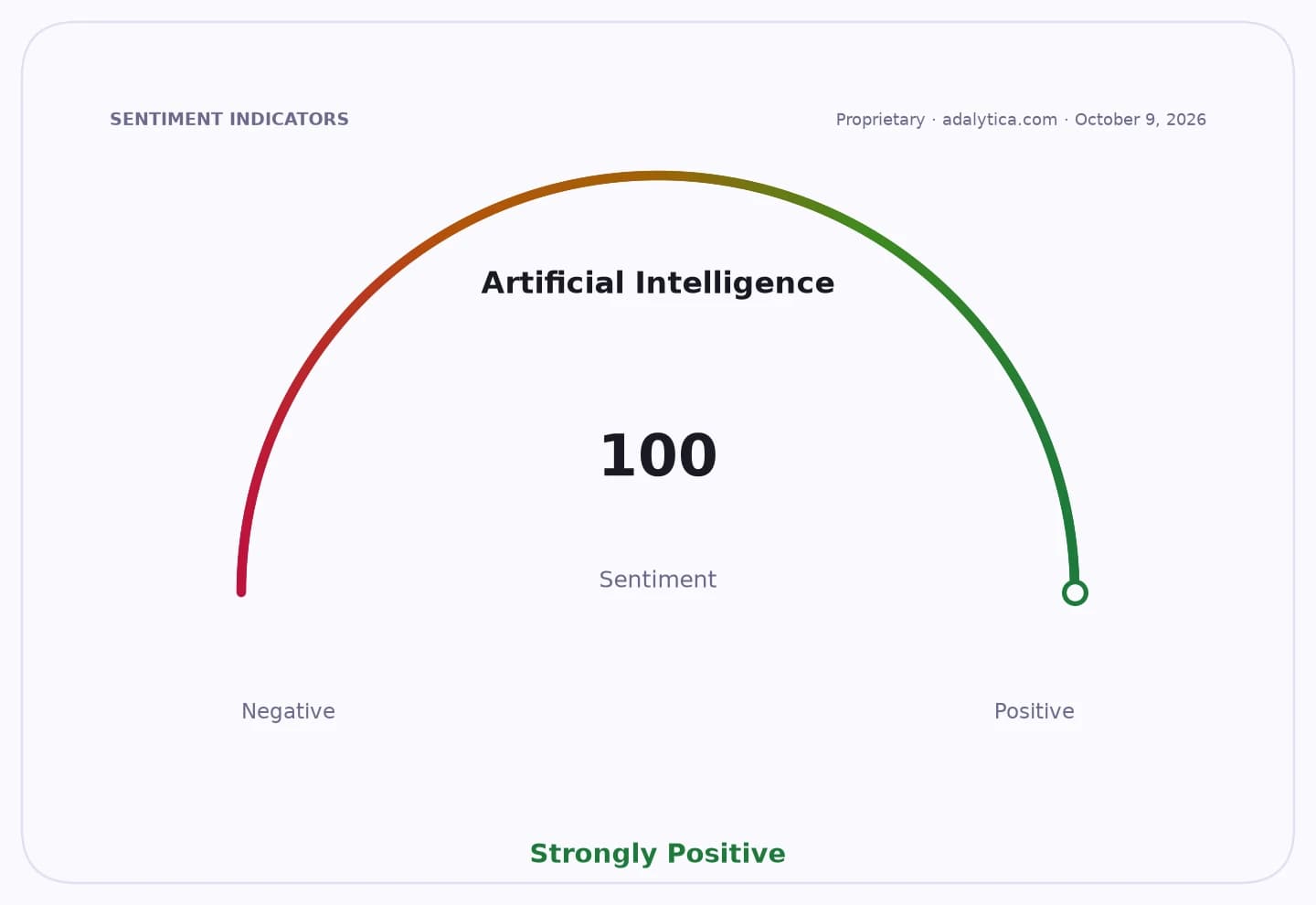
The timing is notable. Market sentiment around AI has turned sharply more cautious, with Adalytica’s AI gauge showing “Extreme Fear” and a steep drop in awareness over the past month. That does not change the structural case for enterprise AI adoption, but it does raise the bar for proof that these tools improve productivity and generate measurable savings rather than simply adding another layer of technology spending.
HCLTech’s bet is that mainframe modernization remains one of the easiest places to show that proof. Unlike greenfield AI projects, legacy automation can be tied to clear operating metrics: fewer manual tasks, faster incident resolution, lower maintenance spend and reduced dependence on scarce mainframe specialists. For large enterprises, those are budgetable outcomes, especially as CIOs face pressure to fund AI while keeping core systems stable.
The opportunity is also strategic. Mainframe estates are notoriously hard to replace, which gives services providers a long-lived relationship with clients and a chance to expand from maintenance into transformation work. If HCLTech’s agents can automate patching, testing, documentation or other repetitive tasks, the company could deepen its share of wallet without waiting for customers to complete full platform migrations.
That said, the bull case depends on execution. Enterprises are likely to demand tight governance, security controls and auditability before letting AI agents touch mission-critical code or transaction systems. The same factors that make mainframes lucrative — their importance to business continuity — also make buyers conservative. Any misstep could slow adoption or push clients toward cautious, narrowly scoped deployments.
The competitive backdrop is already getting crowded. IBM has been pitching watsonx tools and AI orchestration to connect agents, models and workflows, while Accenture has said AI-enabled delivery is reshaping how it serves clients. DXC, another legacy enterprise services player, is also trying to stabilize and grow around modernization demand. HCLTech’s differentiation will depend on whether it can turn a feature into a repeatable platform rather than a bespoke consulting exercise.
For investors, the key question is whether AI agents become a margin lever or simply another marketing label. If HCLTech can use automation to lower delivery costs and lock in modernization programs, the launch could support operating leverage across its infrastructure and applications businesses. If adoption proves slow or pricing pressure rises, the near-term impact may be more symbolic than financial.
What to watch next is customer uptake, implementation timelines and whether HCLTech begins disclosing measurable productivity gains from the new tools. In a market that is growing wary of AI hype, the companies that can show hard savings on old systems may end up with the clearest path to monetization.
| Entity | Gains | Losses |
|---|---|---|
| HCLTech | ▲Higher automation revenue | ▼Compressed if adoption lags |
| Enterprise clients | ▲Lower mainframe labor costs | ▼Upfront integration burden |
| IBM, Accenture, DXC | ▲Validation of AI-services demand | ▼More competition for legacy work |