Google Cloud is bringing OpenAI’s GPT models onto its platform, letting enterprise customers run rival systems from OpenAI, Anthropic and Google in one place as the cloud market shifts from model-building to model distribution.
Google Cloud adds OpenAI GPT models

The deal matters because it changes how companies buy and deploy AI. Instead of stitching together separate contracts, billing streams and security controls across multiple vendors, customers can source models through Google Cloud Marketplace and fold usage into existing cloud commitments, including Flexible Savings Plans.
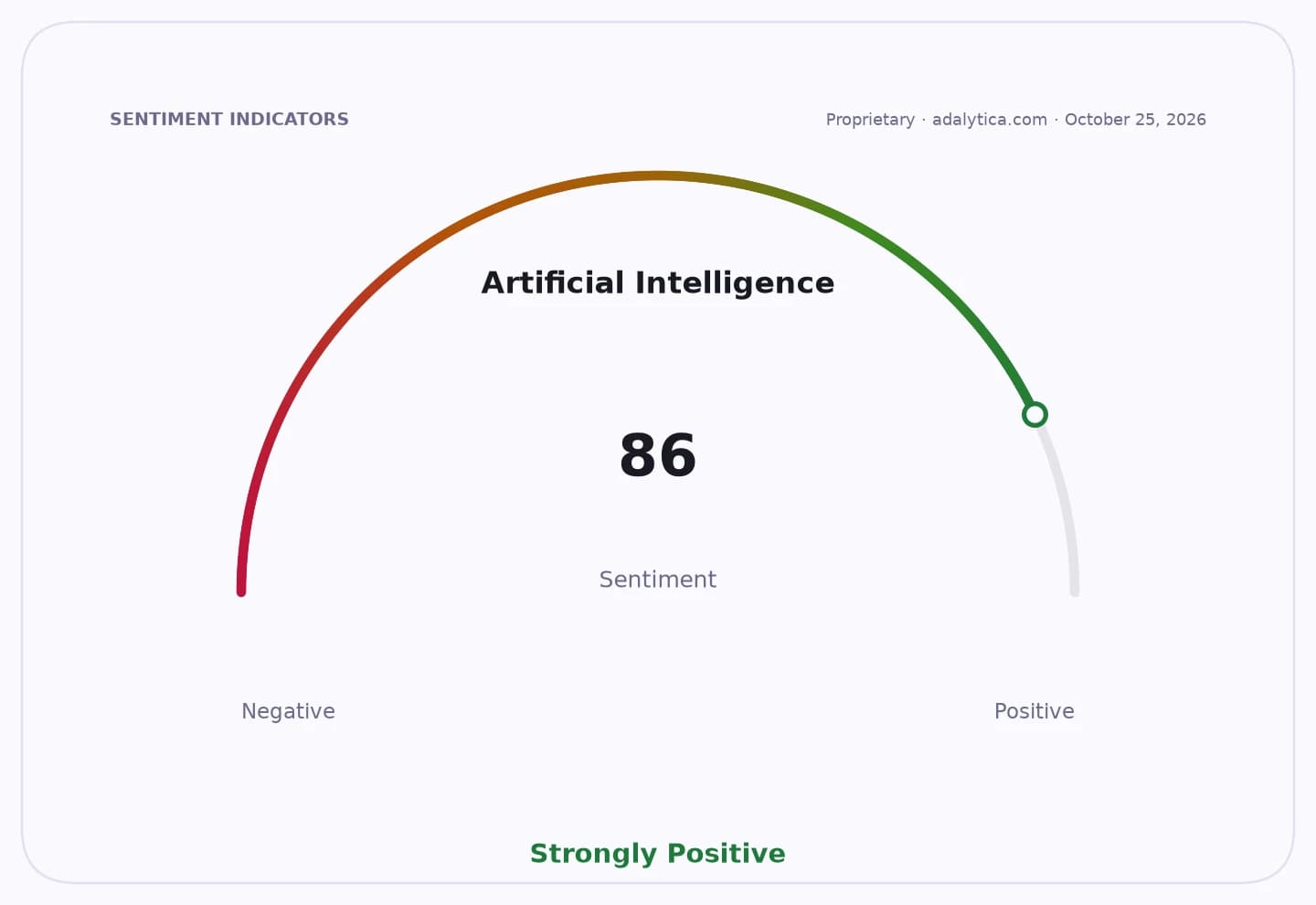
Sentiment Indicators
Google said the rollout starts with three OpenAI models in private preview for a limited group of enterprise clients. The company is positioning itself as the only major cloud provider offering access to all three leading model families — GPT, Gemini and Claude — alongside more than 200 other models from Google, third parties and open source.
For investors, the move is both defensive and offensive. It gives Google Cloud a stronger pitch to large customers that want flexibility, cost control and less dependence on a single AI supplier, while also creating another route for OpenAI to reach enterprise developers without forcing customers to migrate workloads off Google’s infrastructure.
The integration extends beyond model access. Google said developers will be able to switch models dynamically inside applications, and that data, prompts and outputs will stay within the designated data boundary and not be used to train foundation models. The company also plans to add zero data retention and confidential computing features later.
The timing underscores how cloud leaders are using openness as a sales tool in an increasingly crowded AI market. Microsoft has its own deep tie-up with OpenAI, Amazon Web Services has broadened its model choices, and Google is trying to counter the risk that enterprises standardize on a rival stack by becoming the broker for multiple model providers.
Alphabet shares have held above their 50-day moving average and 200-day moving average even as recent technical readings show momentum has cooled, with the stock ending Monday at $316.80 and RSI at 23.3, a level that typically reflects oversold conditions. Microsoft rose to $532.60, while Amazon closed at $249.09.
The next catalyst will be whether Google can convert the partnership into meaningful enterprise usage beyond the limited preview stage, and whether similar model-agnostic offerings become a standard feature across cloud platforms rather than a differentiator.
| Entity | Gains | Losses |
|---|---|---|
| Google Cloud | ▲More enterprise customers; stronger AI lineup | ▼More competition in own platform |
| OpenAI | ▲Wider enterprise distribution | ▼Less exclusive access |
| Microsoft, Amazon | ▲Pressure to match broader model choice | ▼Loss of differentiation |
| Enterprise customers | ▲Single billing; more model flexibility | ▼Less vendor lock-in |