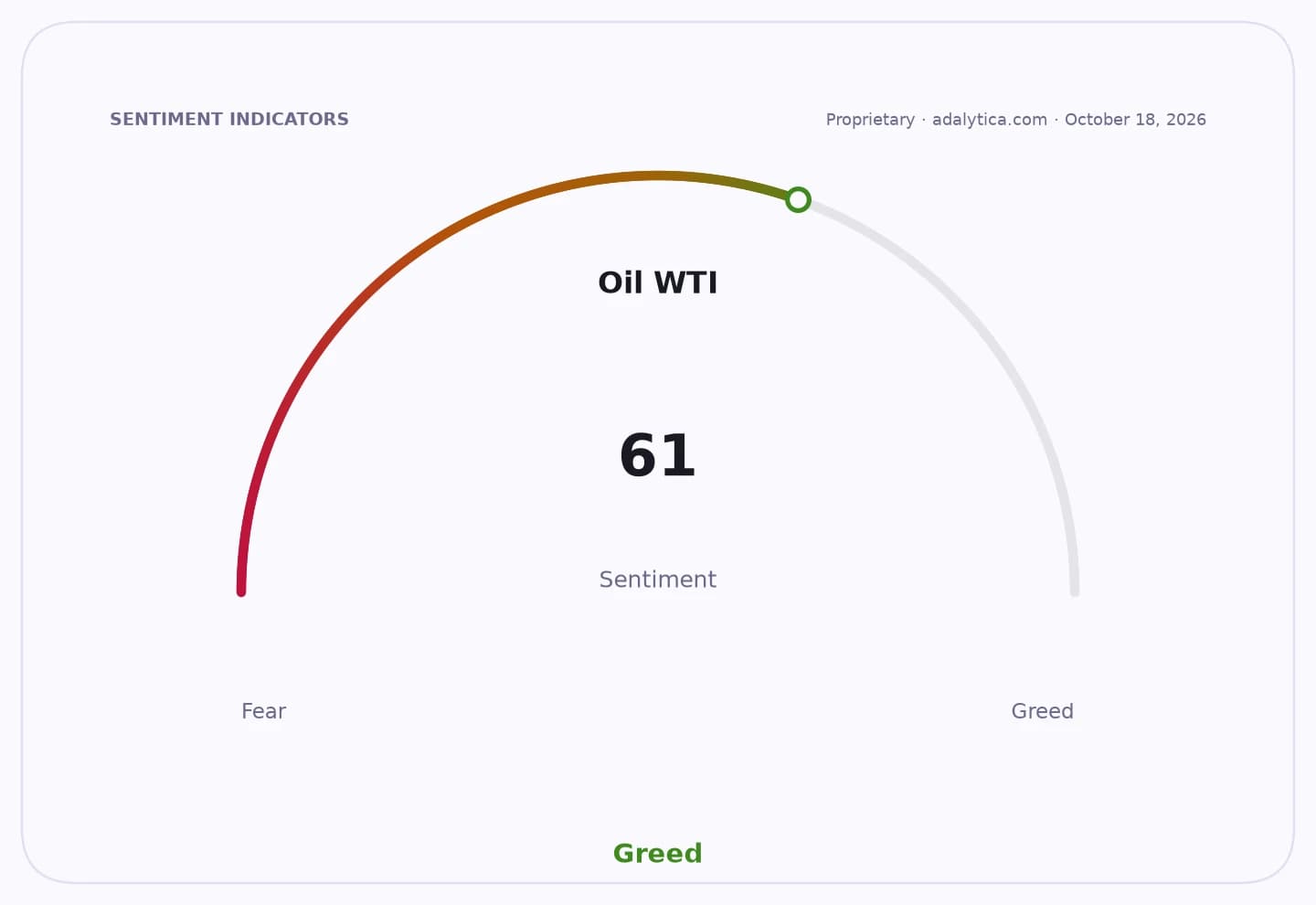
Goldman Sachs lifted its Brent crude forecast to $105 a barrel by year-end, underscoring how geopolitical risk is now doing more to set the oil market than the usual balance between supply and demand.
Goldman raises Brent forecast to $105 a barrel

The bank’s new call, up from $90, reflects the view that disruptions tied to the Middle East, along with spillover risks from Russia’s war in Ukraine, can keep a meaningful risk premium embedded in prices for longer than traders had expected. Goldman also raised its 2027 Brent average forecast to $88 a barrel, implying that tightness may not be a short-lived shock but a more persistent feature of the market.
Sentiment Indicators
The timing matters. Brent had already risen 14% in October to a six-month high even as physical crude supply from the Middle East had largely recovered toward pre-conflict levels. That rally suggests the market is pricing not just current barrels lost, but the probability of further attacks on shipping lanes and energy infrastructure after the U.S. election cycle. Goldman’s analysts said the difficulty of pinpointing when and where supply interruptions might hit justified baking in a 1 million barrel-a-day global disruption assumption in their base case for 2027.
For investors, the forecast is another signal that oil producers and related equities may continue to outperform while refiners, airlines and other fuel-intensive users face margin pressure. Brent futures were trading around $110 a barrel in the latest session after a pullback, while U.S. crude and energy-sector proxies have remained firm. BP’s latest filings showed realized liquids prices well above a year earlier, and the broader sector has benefited from the same price move that is squeezing consumers and downstream buyers.
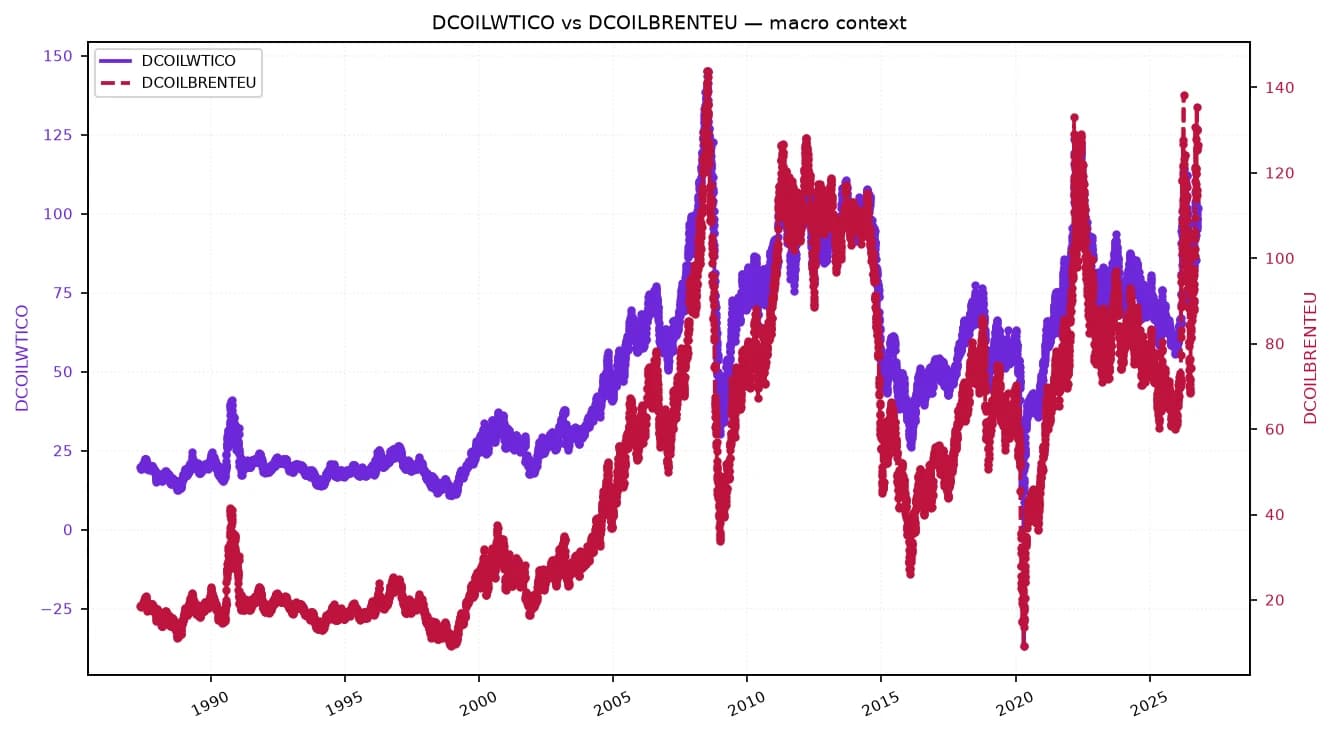
DCOILBRENTEU vs DCOILWTICO — macro contextadalytica.com
Explore this data interactively — full history, time series and cross-market comparisons.
Goldman is not alone in becoming more constructive. Morgan Stanley and ANZ have also raised their Brent outlooks to $105, reinforcing the idea that this is a broad re-pricing rather than a single bank’s outlier call. The near-term question is whether diplomacy or deterrence can reduce the risk premium faster than new disruptions can restore it. If not, oil’s next leg may be driven less by inventories than by headlines.
| Entity | Gains | Losses |
|---|---|---|
| Oil producers | ▲Higher realized prices | ▼None from the move |
| Energy equities | ▲Stronger cash flows | ▼Valuation risk if rally fades |
| Fuel users | ▲— | ▼Higher input costs |
| Consumers/importers | ▲— | ▼More expensive energy bills |