Gold’s slide has deepened into a broad risk-off trade in the metal, leaving recent buyers nursing losses as higher US rates, a firmer dollar and forced selling in tech stocks accelerate the unwind.
Gold falls on rates, dollar and forced selling
Spot gold fell to $3,537 an ounce after touching $3,502, the weakest level since September 2025, extending a four-day decline that has wiped more than 9% from the price in a week, the steepest weekly drop in eight months. In Vietnam, where local prices move with a lag but often amplify global swings, SJC bullion was cut by 700,000 dong a tael to 133.5 million dong for sellers, while the gap between bid and offer widened to 5 million dong on bars and a record 6 million dong on four-nines rings, underscoring how quickly retail holders can be trapped by the spread.
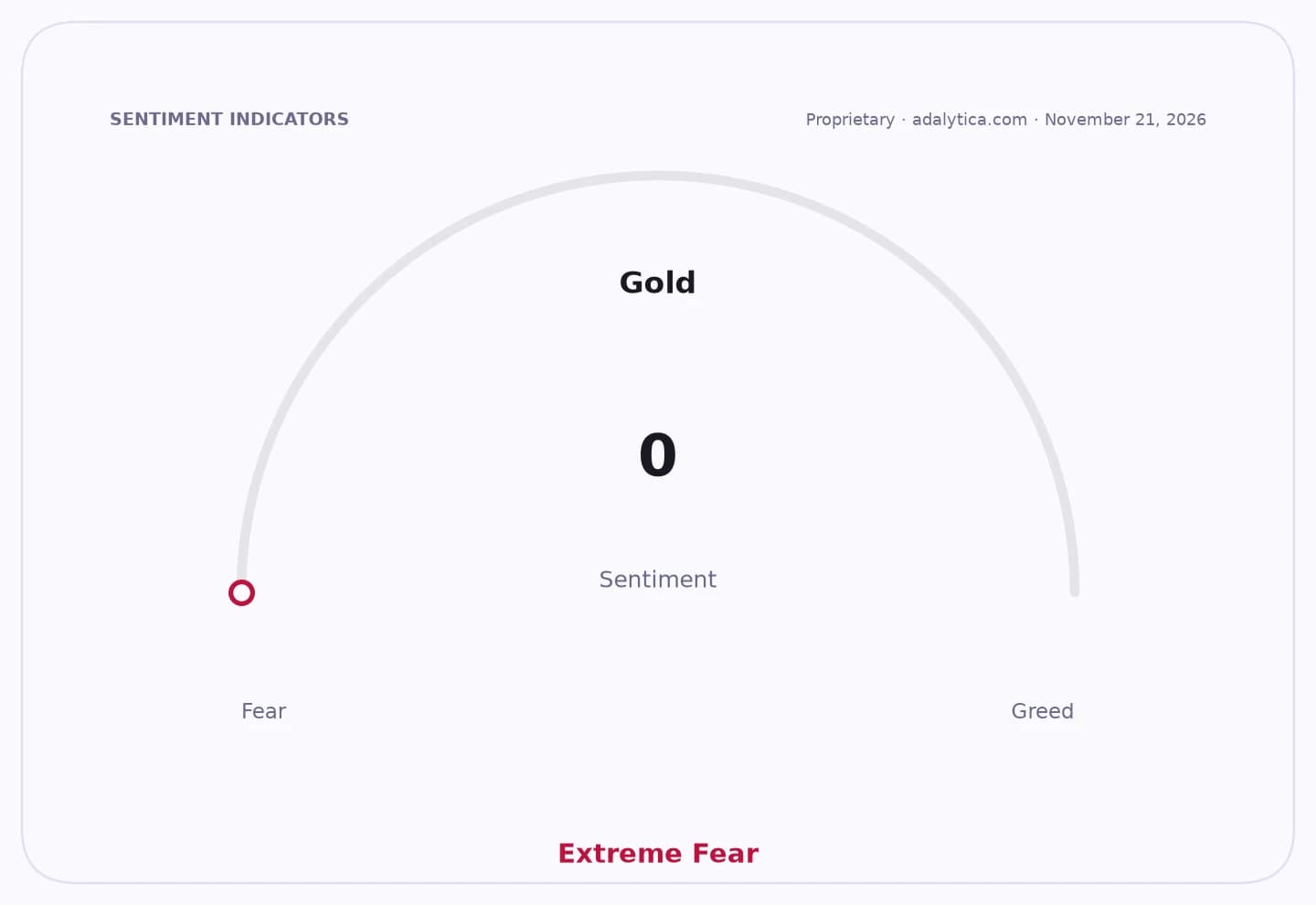
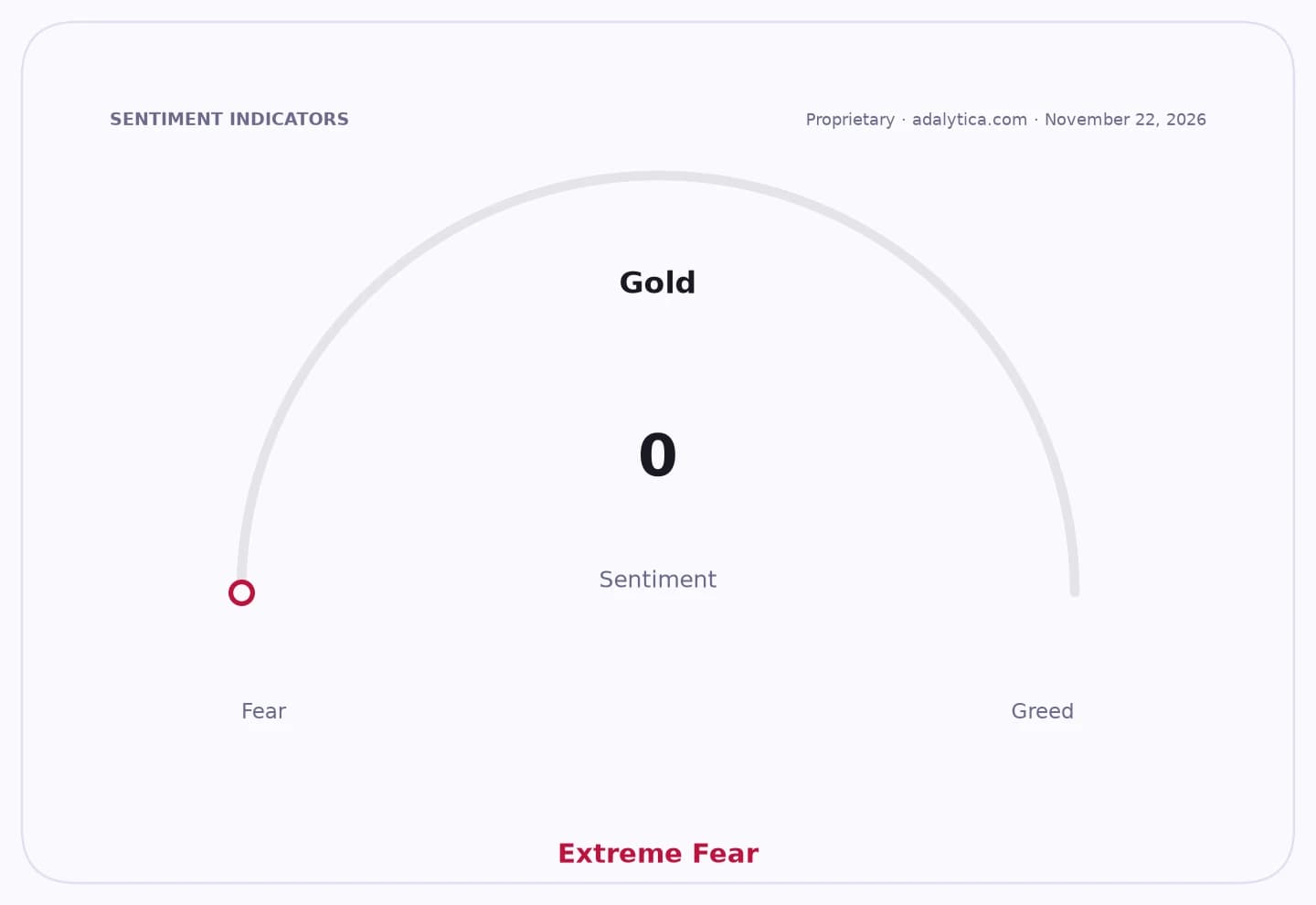
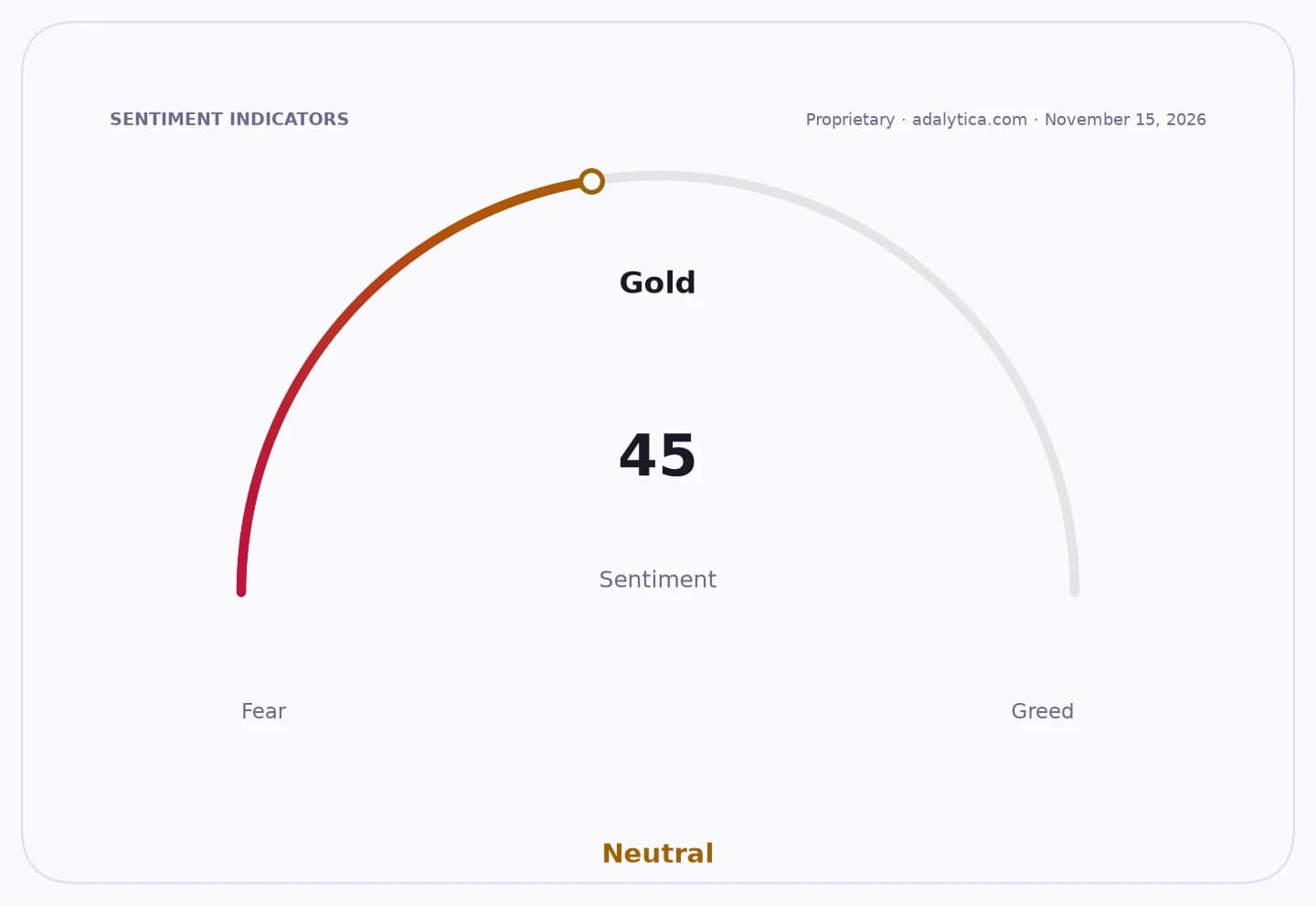
Sentiment Indicators
The economic driver is straightforward: gold pays no yield, so when markets price in tighter monetary policy and higher Treasury returns, the opportunity cost of owning bullion rises. Traders are now assigning a 96% probability to another quarter-point Federal Reserve rate increase in December, while the 10-year Treasury yield has held around 5%, levels that pressure non-interest-bearing assets and strengthen the dollar. That combination typically weighs on bullion demand from non-US buyers and can trigger further liquidation from leveraged holders.
The pressure has been compounded by a spillover from the sell-off in artificial-intelligence stocks, which forced some investors to sell gold to cover losses elsewhere. That matters because it turns a macro trade into a liquidity event: when one crowded asset class is under stress, even traditional havens can be sold to raise cash. The result is visible in exchange-traded products tied to gold, with GLD recently slipping below its 50-day moving average and the relative strength index falling into oversold territory, while the miners' ETF GDX has broken below both its 50-day and 200-day moving averages, a sign that equity investors are cutting exposure across the complex.
For investors, the sharp move is a reminder that gold can behave less like a safe haven and more like a crowded macro position when real yields rise. That is painful for holders who bought near recent highs: in Vietnam, buyers over the past 10 months are sitting on paper losses of roughly 36.3 million dong a tael, or nearly 4.5% on an immediate round trip once spreads are included. The wider retail spread also means the local market can fall faster for buyers than it rises for sellers.
Still, the bear case may not last indefinitely. Physical demand has started to re-emerge in India and China as the price drop lures bargain hunters, and Goldman Sachs is still projecting a longer-term recovery, arguing that central-bank buying will keep underpinning the market. The bank sees official-sector purchases averaging 60 tons a month from 2026 to 2028, far above the pre-2022 norm, and says gold could reach $4,650 an ounce by the end of 2027 if policy eventually shifts toward easing. For now, though, the near-term trade is being set by the Fed, the dollar and forced de-risking — not by safe-haven demand.
| Entity | Gains | Losses |
|---|---|---|
| US dollar | ▲Higher-rate support | ▼Bullion demand |
| Fed hawks | ▲Policy traction | ▼Gold bulls |
| Physical buyers in Asia | ▲Lower entry prices | ▼Recent holders |
| Gold miners | ▲Longer-term rebound potential | ▼Near-term margins and shares |